
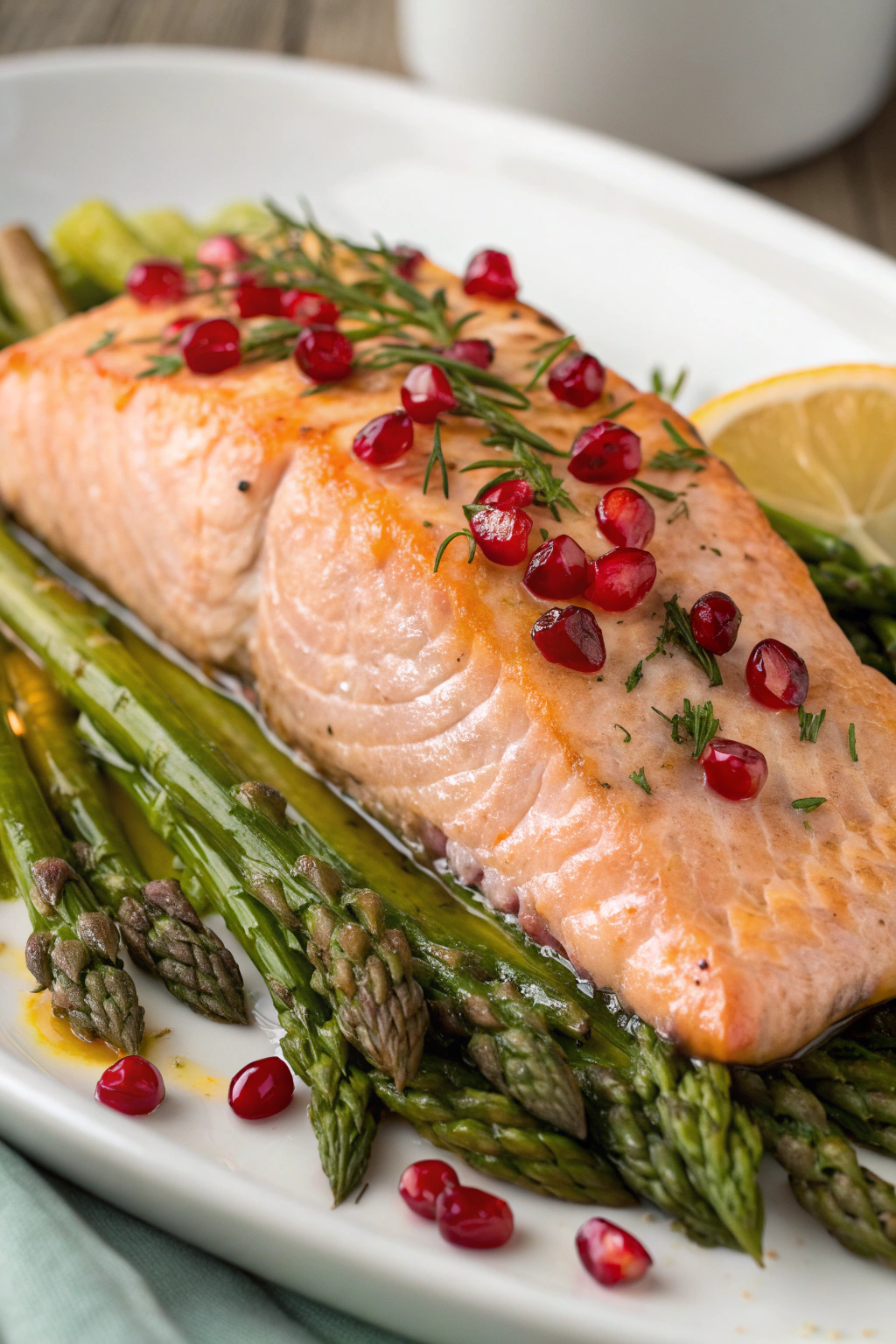
Pomegranate and Orange Glazed Salmon Recipe hits that sweet, tangy, and savory balance that tastes like a fancy restaurant meal but fits a busy weeknight, clocking in at about 30 minutes from start to finish. It works for anyone who wants a healthy salmon dinner that still feels special enough for guests or a date night at home. I first tested this version on a Tuesday in sweatpants, and my family asked when the “special occasion” started.
Why Pomegranate and Orange Glazed Salmon Recipe Is Worth It
This salmon tastes bright, citrusy, and slightly tart, with caramelized edges and juicy, tender flesh. The pomegranate and orange glaze clings to the fish and gives each bite a sweet pop that pairs perfectly with the rich salmon.
You cook it in one pan, so cleanup stays easy and fast. The recipe uses simple ingredients that you probably recognize, but the flavor feels restaurant level without any fussy techniques.
“This Pomegranate and Orange Glazed Salmon Recipe tasted like something from a fancy bistro, but I made it in 25 minutes after work.” – Sarah ★★★★★
Ingredients You Need

Salmon
- 4 salmon fillets, skin on, about 5 to 6 ounces each
- Choose center-cut fillets for even cooking.
- Wild salmon tastes richer and cooks faster, while farmed salmon stays a bit fattier and more forgiving.
- 1 tablespoon olive oil
- 1 teaspoon kosher salt
- ½ teaspoon black pepper
Pomegranate and Orange Glaze
- ½ cup pomegranate juice
- ½ cup fresh orange juice
- About 1 large orange or 2 small ones.
- 1 tablespoon orange zest
- Zest the orange before you juice it, life stays easier that way.
- 2 tablespoons honey
- 1 tablespoon soy sauce or tamari
- Tamari keeps the recipe gluten free.
- 1 tablespoon rice vinegar or apple cider vinegar
- 2 cloves garlic, minced
- 1 teaspoon fresh ginger, grated
- Use ginger paste from a tube as a shortcut if you like.
- ¼ teaspoon crushed red pepper flakes
- Adjust to taste if you want more heat or skip for kids.
Garnishes and Extras
- ¼ cup pomegranate arils
- 2 tablespoons fresh parsley or cilantro, chopped
- Orange slices or wedges for serving
- Lemon wedges if you prefer extra acidity
Pantry shortcuts and notes
- Use bottled pomegranate juice and store-bought orange juice if you do not have fresh fruit.
- Garlic and ginger paste from tubes save time and still taste great.
- Low sodium soy sauce gives you more control over salt.
- If you keep frozen salmon fillets on hand, thaw them overnight in the fridge and pat dry before cooking.
Equipment
- Large oven-safe skillet, cast iron or stainless steel
- Small saucepan for the glaze
- Microplane or fine grater for zest and ginger
- Citrus juicer or reamer
- Tongs or a thin spatula
- Instant-read thermometer for perfect doneness
Quick Tips & substitutions
- Pat the salmon very dry so the skin crisps and the glaze sticks.
- Bring salmon close to room temperature for 15 minutes before cooking so it cooks evenly.
- Use tamari and gluten free soy sauce to keep the recipe gluten free.
- Swap honey with maple syrup or agave if you need a different sweetener.
- Replace pomegranate juice with cranberry juice in a pinch, but expect a slightly sharper flavor.
- Use blood orange juice when it is in season for a deeper color and flavor.
- Line the pan with a thin coat of oil, not parchment, so the salmon browns properly.
- Cook the glaze until it coats the back of a spoon and looks syrupy, not watery.
- Pull the salmon from the oven when it hits 125 to 130°F in the thickest part for moist, tender results.
- If the glaze thickens too much, thin it with a tablespoon of water or orange juice.
How to Make Pomegranate and Orange Glazed Salmon

1: Mix the glaze
Add pomegranate juice, orange juice, orange zest, honey, soy sauce, vinegar, garlic, ginger, and red pepper flakes to a small saucepan. Stir everything together over medium heat. Bring the mixture to a gentle simmer and cook until it reduces by about half and thickens slightly, about 8 to 10 minutes, stirring occasionally.
When the glaze coats the back of a spoon and leaves a light trail when you run your finger through it, turn off the heat. Taste and adjust with a pinch of salt or a bit more honey if you want it sweeter. Keep the glaze warm on the lowest heat or set it aside and rewarm gently before brushing on the salmon.
2: Prep the salmon
Preheat your oven to 400°F. Pat the salmon fillets very dry with paper towels, including the skin side. Drizzle the fillets with olive oil and rub it all over.
Season both sides with kosher salt and black pepper. Place the salmon skin side up on a plate while your skillet heats. This quick rest helps the salt start to season the fish all the way through.
3: Sear the salmon
Heat a large oven-safe skillet over medium-high heat and add a light drizzle of oil if the pan looks dry. When the oil shimmers and a drop of water sizzles, place the salmon fillets in the pan skin side down. Press each fillet gently with a spatula for the first 20 to 30 seconds so the skin stays flat and crisp.
Let the salmon cook without moving it for about 3 to 4 minutes, until the skin turns crisp and releases easily from the pan. Flip the fillets carefully so the flesh side faces up. Turn off the heat under the skillet.
4: Glaze and roast
Brush the tops of the salmon generously with the warm pomegranate and orange glaze. Spoon a little around the sides of the fillets so it pools in the pan. Transfer the skillet to the hot oven.
Roast for 6 to 8 minutes, depending on thickness, until the salmon flakes easily with a fork and reaches 125 to 130°F in the thickest part. If you want a deeper caramelized top, switch the oven to broil for the last 1 to 2 minutes and watch closely so the glaze does not burn.
5: Finish
Remove the skillet from the oven and let the salmon rest for 3 minutes. Spoon a bit more glaze over each fillet. Sprinkle with pomegranate arils and chopped herbs.
Add orange slices or wedges to the plate for extra color and brightness. Serve the salmon hot with your favorite sides and any remaining glaze on the table for drizzling.
Recipe Variations
- Gluten free: Use tamari or certified gluten free soy sauce and check labels on vinegar and juice.
- Dairy free: The base recipe already stays dairy free, so you do not need changes.
- Lower carb: Reduce the honey to 1 tablespoon and skip extra sweet sides like rice or sweet potatoes.
- No pomegranate juice: Use cranberry juice and keep the pomegranate arils for garnish if you can find them.
- Citrus twist: Swap half the orange juice with grapefruit juice for a slightly bitter edge.
- Spicy version: Add extra red pepper flakes or a teaspoon of chili garlic sauce to the glaze.
- Sheet pan shortcut: Place salmon on a lined sheet pan, pour some glaze over, and roast without searing, then brush more glaze halfway through.
Ways to Serve Pomegranate and Orange Glazed Salmon
- Serve over fluffy jasmine rice or brown rice with steamed broccoli.
- Pair with quinoa and roasted Brussels sprouts for a hearty, nutrient-packed plate.
- Spoon the salmon over a big green salad with mixed greens, cucumber, and avocado.
- Add it to a grain bowl with farro, roasted carrots, and a squeeze of fresh orange.
- Flake leftovers into lettuce cups with cucumber and extra pomegranate arils.
Storage Success
Let the salmon cool to room temperature for about 20 minutes, then store it in an airtight container in the fridge for up to 3 days. Keep any extra glaze in a separate small container so you can warm and drizzle it over leftovers. Reheat the salmon gently in a 275°F oven for 10 to 12 minutes or in a covered skillet over low heat so it stays moist. Enjoy leftovers cold over salad if you want zero effort and still crave big flavor.
Pomegranate and Orange Glazed Salmon Recipe
Ingredients
Instructions
- Pat the salmon fillets dry with paper towels. Rub both sides with olive oil, then season with salt and black pepper. Set aside while you prepare the glaze.
- In a small saucepan, combine the pomegranate juice, orange juice, orange zest, honey, soy sauce, Dijon mustard, garlic, and ginger (if using).
- Bring the mixture to a simmer over medium heat, stirring occasionally. Cook for 6–8 minutes, or until the glaze is reduced by about half and slightly thickened enough to lightly coat the back of a spoon. Remove from heat.
- Preheat a large skillet over medium-high heat. Place the salmon fillets in the hot skillet, skin-side down if using skin-on fish. Cook for 3–4 minutes, until the edges begin to turn opaque.
- Flip the salmon and cook for another 2–3 minutes. Lower the heat to medium, then spoon about half of the warm pomegranate orange glaze over the tops of the fillets.
- Continue cooking for 1–2 minutes more, basting with additional glaze, until the salmon is just cooked through and flakes easily with a fork (internal temperature about 125–130°F for medium).
- Transfer the salmon to serving plates. Drizzle with any remaining glaze from the pan and from the saucepan.
- Garnish with pomegranate arils and chopped parsley or dill, if desired. Serve immediately with your favorite sides.
Notes
Approximate per serving (1 salmon fillet with glaze): 360 calories; fat 18 g; saturated fat 3 g; carbohydrates 18 g; fiber 0 g; sugars 15 g; protein 30 g; sodium 430 mg. Values are estimates and will vary based on exact ingredients, brands, and portion sizes.