
Homemade Croissants Recipe tastes buttery, flaky, and crisp on the outside with soft, stretchy layers inside that pull apart in the most satisfying way. This recipe suits patient bakers who want bakery style croissants at home in about 2 days from start to finish, with mostly chilling and resting time. I still remember my first batch collapsing into buttery pancakes, so if you feel nervous, you have good company.
Why Make This Homemade Croissants Recipe at Home
Homemade croissants give you flavor and texture that beat most grocery store options. You control the butter quality, the sweetness, and the size, and you enjoy that fresh from the oven magic that disappears after a few hours.
You also spread the work over two relaxed days, which makes the process feel manageable. The dough rests while you live your life, and you come back to it for short bursts of folding, rolling, and shaping.
Flaky, buttery, and full of layers that rival my favorite bakery, this Homemade Croissants Recipe turned a weekend into something special. ★★★★★
Ingredients You Need
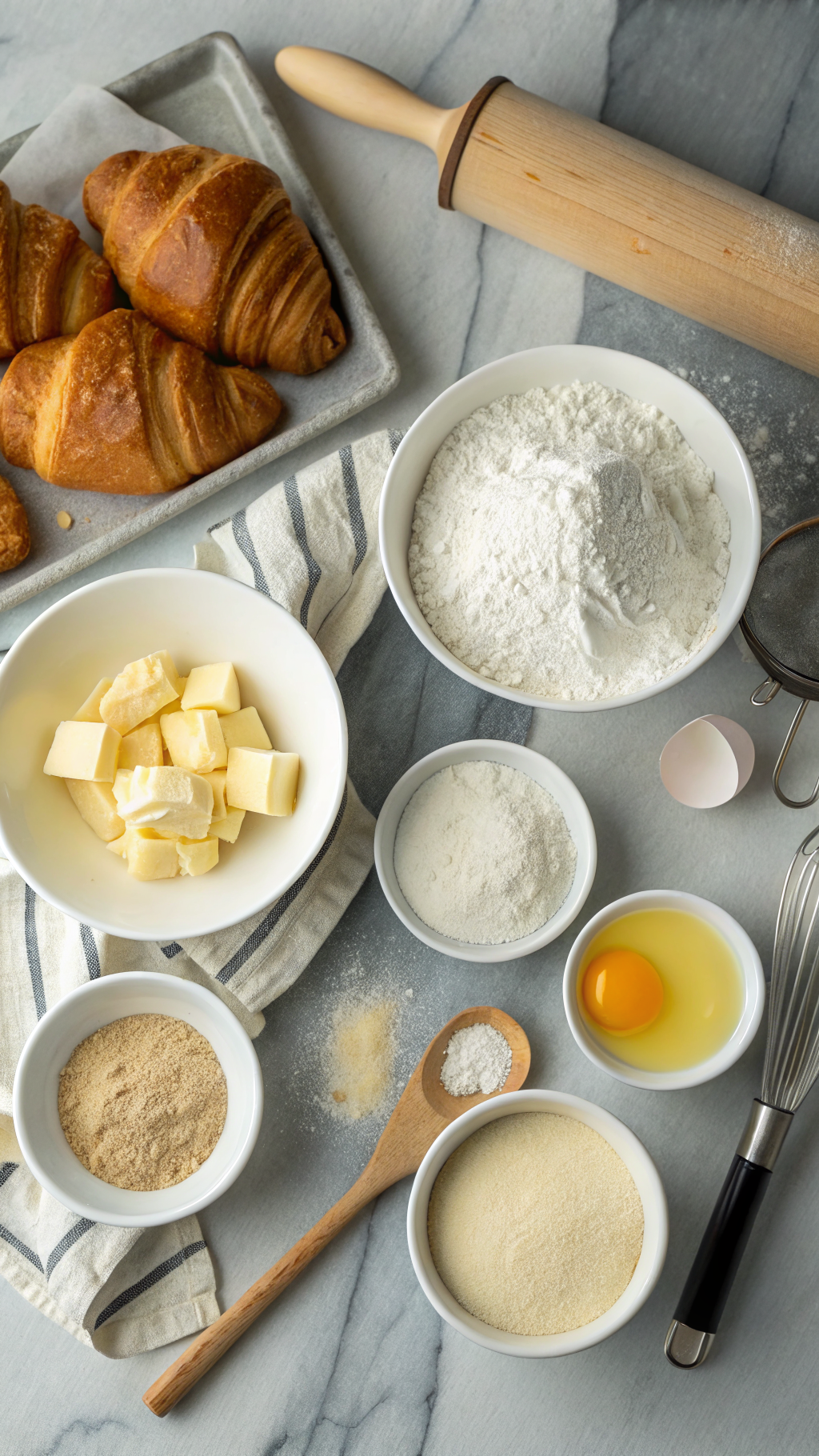
Dough ingredients
- Bread flour: 3 1/4 cups (about 390 g)
- Bread flour gives stronger gluten and better layers than all purpose. Use King Arthur or Bob’s Red Mill for consistent results.
- Granulated sugar: 1/4 cup (50 g)
- Fine sea salt: 1 1/2 teaspoons
- Avoid iodized table salt, which can taste harsh.
- Instant yeast: 2 1/4 teaspoons (1 standard packet, 7 g)
- You can use active dry yeast in the same amount, but proof it in warm milk first.
- Whole milk, warm: 1 cup (240 ml), about 100 to 110°F
- Whole milk gives richer flavor. Use 2% in a pinch, but skip skim.
- Unsalted butter, softened: 3 tablespoons (about 42 g)
- This butter goes into the dough and should feel soft but not melted.
Butter block ingredients
- Unsalted European style butter: 1 cup (225 g), cold
- European style butter with higher fat content like Kerrygold or Plugrá gives better flavor and cleaner layers.
- Use standard unsalted butter if needed, but keep it very cold and firm.
Egg wash
Whisk these together right before baking. The salt helps break the egg and gives a more even shine.
Pantry shortcuts and substitutions
- Use instant yeast to skip proofing and save a step.
- Swap half the milk for water if you run low on milk, but expect slightly less richness.
- If you only have all purpose flour, add 1 extra tablespoon of flour to the dough and knead gently to avoid a weak structure.
- Use a silicone baking mat to prevent sticking and to reduce the need for extra flour on the counter.
Equipment list
- Digital kitchen scale for accurate measurements
- Large mixing bowl
- Stand mixer with dough hook (optional but very helpful)
- Rolling pin, at least 18 inches long
- Parchment paper or silicone baking mats
- Ruler or tape measure for even triangles
- Plastic wrap or reusable covers
- Large baking sheet, preferably light colored
- Sharp knife or pizza cutter
- Pastry brush for egg wash
Tips & Mistakes
- Chill the dough and butter block fully before each fold so the butter stays in layers and does not melt into the dough.
- Use firm but pliable butter for the butter block so it bends with the dough instead of cracking or oozing.
- Roll from the center out and lift the dough often to prevent sticking, instead of forcing it and tearing the layers.
- Dust off excess flour with a soft brush so the layers stick to each other and rise higher.
- Keep the dough in a neat rectangle at every stage so you get even layers and consistent baking.
- Proof the shaped croissants until they look puffy and jiggly when you shake the tray gently, not until they double in size.
- Bake on a light colored sheet so the bottoms do not burn before the tops brown.
- Avoid a hot kitchen during lamination, or the butter will soften too much and smear into the dough.
- Do not rush the chilling times, or you lose definition in the layers and get bread rolls instead of croissants.
- Use fresh yeast that you stored in the fridge or freezer, since old yeast gives weak rise and dense texture.
How to Make Homemade Croissants
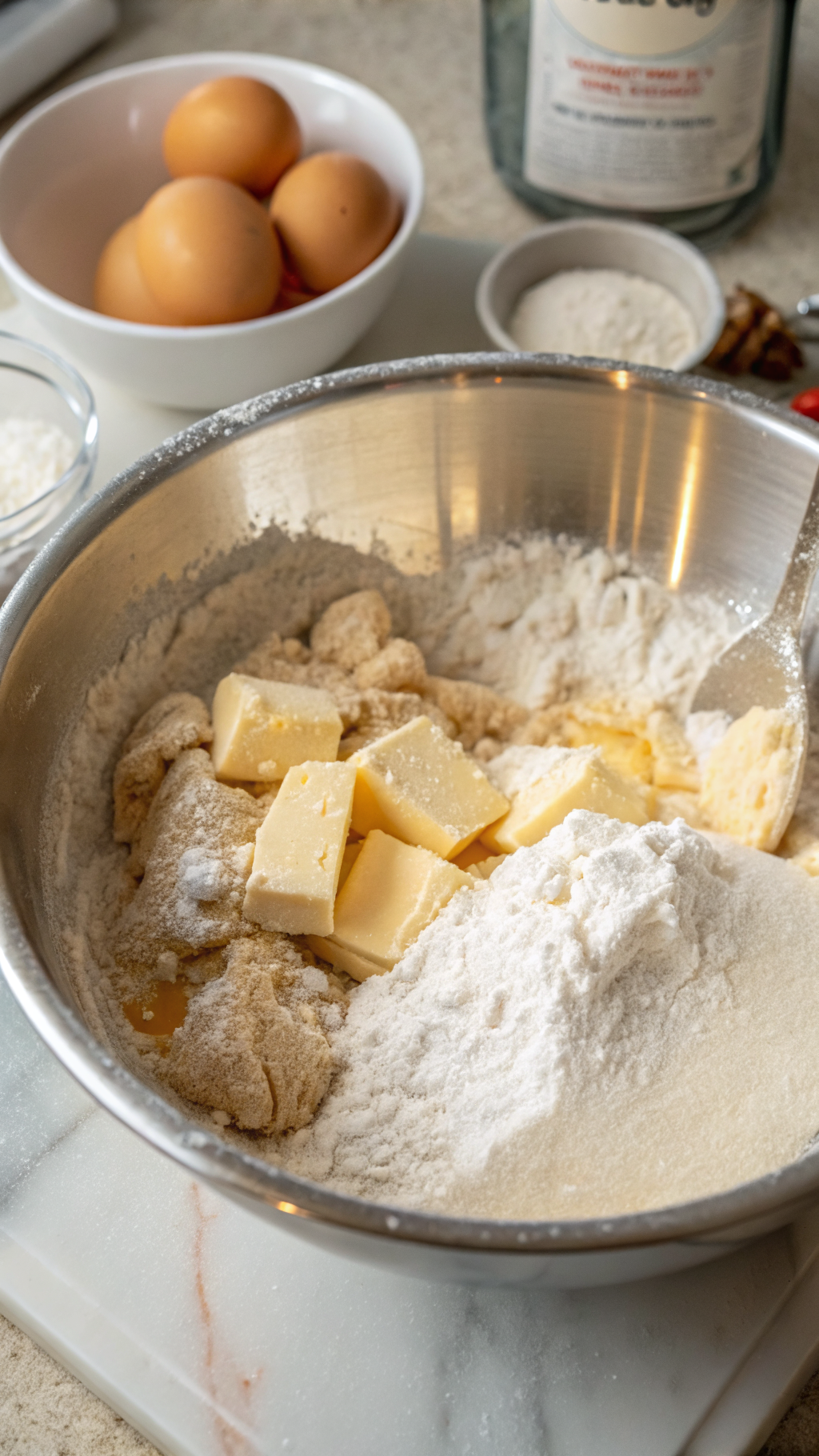
1: Mix the dough
Add warm milk, sugar, and yeast to a large bowl and stir until the sugar dissolves. Add flour, salt, and softened butter, then mix until a shaggy dough forms. Knead by hand for 8 to 10 minutes or in a stand mixer for 5 to 6 minutes until the dough feels smooth and slightly tacky but not sticky.
Shape the dough into a ball and place it in a lightly oiled bowl. Cover tightly and chill in the fridge for at least 1 hour and up to 8 hours. The dough will firm up and become easier to roll.
2: Make the butter block
Place the cold butter between two sheets of parchment paper. Tap it with a rolling pin to flatten, then roll it into a 6 by 6 inch square. Trim the edges to square it off and patch any gaps with the trimmings.
Chill the butter block in the fridge for 20 to 30 minutes until it feels firm but bends slightly when you press it. You want the butter and dough at similar firmness so they roll together nicely. If the butter feels rock hard, let it sit at room temperature for a few minutes.
3: Enclose the butter
Lightly flour your work surface. Roll the chilled dough into a 9 by 9 inch square. Place the 6 by 6 inch butter block in the center at a 45 degree angle so it looks like a diamond inside the square of dough.
Fold each corner of the dough over the butter toward the center, like you close an envelope. Pinch the seams together so the butter stays inside. You now have a neat package of dough with butter fully enclosed.
4: First roll and fold
Lightly flour the surface again and place the butter package seam side down. Roll it gently into a rectangle about 8 by 24 inches. Use even pressure and work from the center out, lifting and turning the dough as needed.
Fold the rectangle into thirds like a letter, short side toward the center, then the other short side over that. This counts as your first turn. Wrap the dough in plastic and chill it for 30 to 45 minutes.
5: Second and third turns
After chilling, place the dough with the open edge facing you like a book. Roll it again into an 8 by 24 inch rectangle. Fold it into thirds again the same way.
Chill for another 30 to 45 minutes, then repeat the rolling and folding one more time for a total of three turns. Wrap the dough tightly and chill it for at least 2 hours or overnight. Longer chilling improves flavor and makes shaping easier.
6: Roll and cut the triangles
When you feel ready to shape, line two baking sheets with parchment or silicone mats. Place the chilled dough on a lightly floured surface and roll it into a large rectangle about 9 to 10 inches wide and 24 inches long. Trim the edges with a sharp knife or pizza cutter to square them off.
Measure along the long side and mark every 4 inches on one edge. On the opposite long edge, make a mark at 2 inches, then every 4 inches after that. Cut diagonal lines between the marks to form long, skinny triangles.
7: Shape the croissants
Take one triangle and gently stretch it lengthwise to elongate it slightly. Cut a small 1/2 inch notch in the center of the wide base. Roll the triangle from the base toward the tip, gently tugging the tip as you roll to keep tension.
Place the shaped croissant on the baking sheet with the tip tucked underneath so it does not unroll. Curve the ends slightly inward to form a crescent shape. Repeat with the remaining triangles, spacing them a few inches apart.
8: Proof the croissants
Cover the trays loosely with lightly oiled plastic wrap or a clean towel. Let the croissants rise at room temperature for 1 1/2 to 2 1/2 hours, depending on your kitchen temperature. They should look puffy, feel airy, and jiggle slightly when you nudge the tray.
The croissants should not double in size, or they may collapse in the oven. If your kitchen runs cool, move the trays to a warm but not hot spot, like near the oven while it preheats. If the butter starts to soften too much, chill the trays for 10 to 15 minutes.
9: Egg wash and bake
Preheat your oven to 400°F with a rack in the middle. Whisk the egg, milk, and pinch of salt until smooth. Gently brush the tops and sides of the croissants with a thin layer of egg wash, taking care not to deflate them.
Bake one tray at a time for 18 to 22 minutes until the croissants look deep golden brown and feel light when you lift one. Rotate the tray halfway through baking for even color. Let them cool on the tray for 5 minutes, then move them to a wire rack.
10: Cool
Let the croissants cool for at least 15 to 20 minutes before you tear into them. The interior finishes setting during this time and keeps its honeycomb texture. Serve warm or at room temperature and listen for that little crackle when you bite in.
Variations I’ve Tried
I sometimes sprinkle a little grated sharp cheddar inside the base of each triangle before rolling for cheese croissants that work perfectly with eggs. I also tuck a strip of good quality dark chocolate along the base for a pain au chocolat style treat. For a sweet brunch version, I spread a thin line of almond paste or frangipane inside and top the baked croissants with sliced almonds and a dusting of powdered sugar.
You can also roll smaller triangles for mini croissants, which bake a bit faster and suit snack platters. I sometimes brush the tops with a light honey butter right after baking for a glossy, slightly sweet finish. Sesame seeds or poppy seeds on top give a bakery look and a little crunch.
How to Serve Homemade Croissants
Serve this Homemade Croissants Recipe warm with good quality butter and your favorite jam or fruit preserves. Pair them with hot coffee, tea, hot chocolate, or a cold glass of milk for kids. Use day old croissants for breakfast sandwiches with scrambled eggs, cheese, and sliced tomato. You can also slice them and use them as the base for croissant French toast or a sweet bread pudding.
How to store
- Store leftover croissants at room temperature in an airtight container for up to 2 days; keep them loosely covered so they do not turn soggy.
- For the fridge, wrap each croissant in plastic or foil and store in an airtight container for up to 4 days, then reheat before serving.
- For the freezer, wrap each croissant tightly in plastic, then place them in a freezer bag and freeze for up to 2 months.
- Reheat at 325°F in the oven or toaster oven for 6 to 10 minutes from room temperature, or 12 to 15 minutes from frozen, until the exterior feels crisp and the center feels warm.
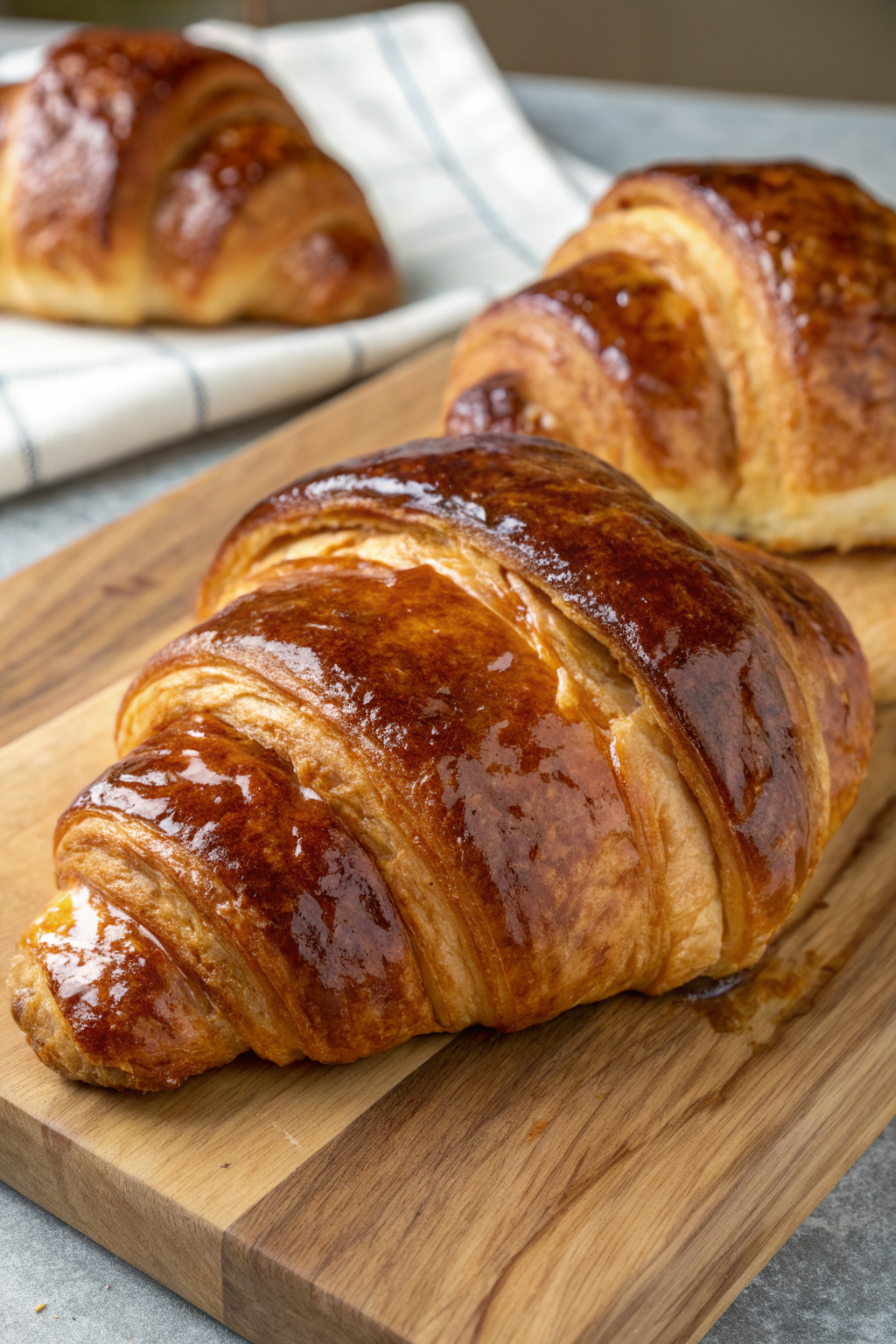
Homemade Croissants Recipe
Ingredients
Instructions
- In a large bowl, whisk together flour, sugar, yeast, and salt, keeping the salt and yeast on opposite sides at first.
- Add warm milk, eggs, and softened butter. Mix until a rough dough forms, then knead by hand or mixer for 5–7 minutes until smooth and elastic.
- Shape into a disk, cover tightly, and chill in the refrigerator for at least 1 hour.
- Cut the cold butter into slices and arrange them in a rectangle on parchment paper (about 5x8 inches).
- Cover with another sheet of parchment and pound/roll with a rolling pin into an even, thin block. Chill until firm but pliable.
- On a lightly floured surface, roll the chilled dough into a rectangle about twice the size of the butter block.
- Place the butter block in the center and fold the dough over it like an envelope, sealing the edges.
- Roll into a long rectangle, then fold into thirds like a letter. This is the first turn. Wrap and chill for 30–45 minutes.
- Repeat rolling and folding into thirds two more times, chilling between each turn to keep the butter cold and dough firm.
- After the final chill, roll the dough into a large rectangle about 1/4 inch thick.
- Trim the edges, then cut long triangles (base about 3–4 inches wide).
- Gently stretch each triangle, then roll up from the wide base to the tip, slightly curving into a crescent shape.
- Place on parchment-lined baking sheets, tip side down, spacing them apart.
- Cover loosely and let rise at room temperature until puffy and slightly jiggly, 1–2 hours, keeping them in a cool place so the butter doesn’t melt.
- Preheat oven to 400°F (200°C). Brush croissants gently with egg wash.
- Bake for 15–20 minutes until deeply golden and flaky, rotating the pans halfway through for even browning.
- Cool on a wire rack for at least 10 minutes before serving.
Notes
Approximate per 1 croissant (1 of 12): 320 calories; fat 19 g; saturated fat 12 g; carbohydrates 30 g; fiber 1 g; sugars 5 g; protein 7 g; sodium 260 mg. Values are estimates and will vary based on exact ingredients, butter content, and portion size.