
Seafood Potato Salad tastes creamy, briny, and bright, with tender potatoes, sweet shrimp, and a lemony dressing that keeps every bite lively. It works for busy home cooks who want a make-ahead side or light main in under 45 minutes, start to finish. I tested this version on my picky family in New Jersey, and nobody left the table with leftovers in sight.
Why Make This Seafood Potato Salad at Home
Homemade seafood potato salad gives you control over the seafood mix, the seasoning level, and the texture of the potatoes. You skip the gloopy deli versions and build a salad that tastes fresh, balanced, and actually full of seafood.
You stretch pricier seafood by pairing it with budget-friendly potatoes and pantry staples. The salad chills well, so you cook once and eat happily for a couple of days.
“This seafood potato salad tastes like a summer cookout in a bowl, even in the middle of winter.” ★★★★★
Ingredients You Need
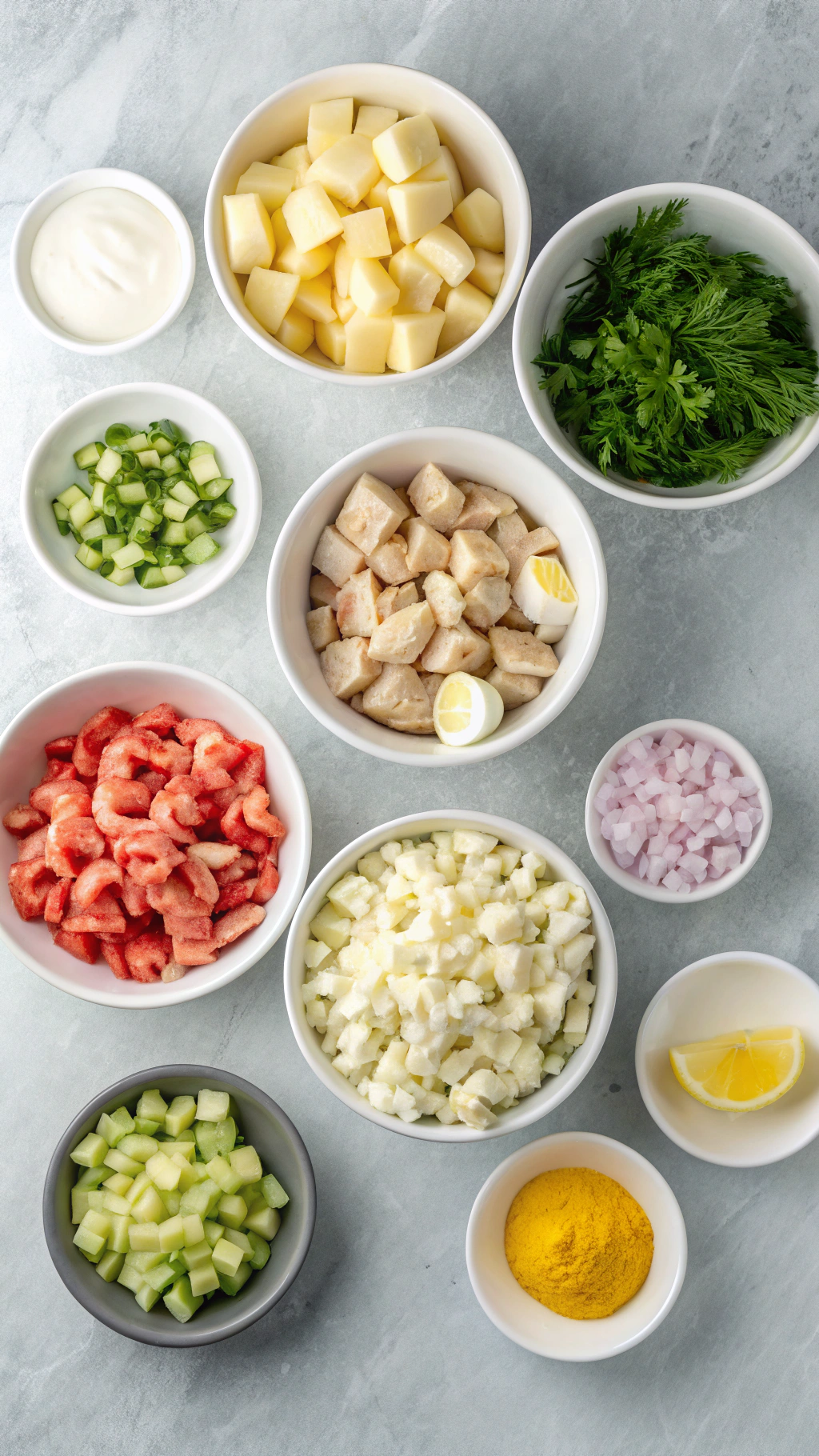
Potatoes and Seafood
- Yukon Gold potatoes: 2 pounds, peeled if you like and cut into 1-inch chunks.
- They hold shape and stay creamy inside. Russets break down faster and turn more fluffy, so use them only if you prefer a softer salad.
- Shrimp: 1 pound, medium size, peeled and deveined.
- Frozen shrimp work great; thaw in cold water and pat dry. I like 31–40 count shrimp for bite-size pieces.
- Imitation crab or lump crab meat: 8 ounces, chopped.
- Imitation crab keeps the recipe budget-friendly and still gives a sweet seafood flavor. Use real crab for a splurge.
- Firm white fish (optional): 1/2 pound, such as cod or haddock, cut into bite-size pieces.
- This adds variety and a flaky texture. Skip it if you want a shrimp-and-crab-only salad.
Vegetables and Mix-ins
- Celery: 3 ribs, finely diced for crunch.
- Red bell pepper: 1 small, finely diced for color and sweetness.
- Red onion: 1/2 small, very finely minced.
- Soak in cold water for 10 minutes if you want a milder bite.
- Dill pickles or sweet relish: 1/4 to 1/3 cup, chopped.
- Fresh herbs:
- Fresh dill: 2 tablespoons, chopped.
- Fresh parsley: 2 tablespoons, chopped.
- These brighten the salad and cut through the richness.
Dressing Ingredients
- Mayonnaise: 3/4 to 1 cup.
- Use a brand you like the taste of, since it leads the dressing. I often use Hellmann’s or Duke’s.
- Sour cream or plain Greek yogurt: 1/3 cup.
- Dijon mustard: 1 to 2 teaspoons.
- Old Bay or seafood seasoning: 1 to 1 1/2 teaspoons.
- This gives that classic seafood potato salad flavor.
- Lemon juice: 2 to 3 tablespoons, freshly squeezed.
- Lemon zest: 1 teaspoon, finely grated.
- Garlic powder: 1/2 teaspoon.
- Onion powder: 1/2 teaspoon.
- Paprika: 1/2 teaspoon, plus more for garnish.
- Salt and black pepper: to taste.
Optional Add-ins
- Hard-boiled eggs: 2 to 3, chopped.
- These add protein and a classic potato salad vibe.
- Capers: 1 to 2 tablespoons, rinsed and chopped.
- Great if you enjoy a briny, punchy flavor.
- Frozen peas: 1/2 cup, thawed.
- They add color and a little sweetness.
Pantry Shortcuts and Substitutions
- Use frozen seafood mix if you find it at your store; thaw, pat dry, and cook gently.
- Swap bottled lemon juice only in a pinch; fresh lemon gives brighter flavor.
- Use pre-cooked shrimp to save time; just rinse quickly, pat dry, and chill.
- If you avoid mayo, use half Greek yogurt and half olive oil based dressing, then adjust seasoning.
Equipment List
- Large pot for boiling potatoes
- Medium pot or skillet for cooking seafood
- Colander
- Large mixing bowl
- Small bowl for dressing
- Sharp knife and cutting board
- Rubber spatula or large spoon
- Zester or fine grater for lemon zest
Tips & Mistakes
- Boil potatoes in well salted water so they taste seasoned all the way through.
- Start potatoes in cold water, then bring to a simmer, so they cook evenly and do not split on the outside.
- Stop cooking when potatoes feel just fork tender; overcooked potatoes turn mushy and break apart in the salad.
- Drain potatoes well and cool them slightly before mixing, or the dressing can turn oily and thin.
- Pat seafood very dry after cooking so extra moisture does not water down the dressing.
- Cook shrimp only until they turn pink and opaque, then pull them off the heat so they stay tender.
- Chill seafood and potatoes before final mixing if you want a firmer, chunkier salad.
- Season the dressing boldly; cold salads always need a touch more salt and acid than warm dishes.
- Fold the salad gently so you keep chunks of seafood and potato instead of a mash.
- Taste again after chilling and adjust lemon, salt, or Old Bay, since flavors mellow in the fridge.
- Keep seafood potato salad cold at gatherings; set the bowl over ice if it sits out for more than 1 hour.
- Use fresh lemon juice and herbs when possible, since they keep the salad bright and not heavy.
How to Make Seafood Potato Salad
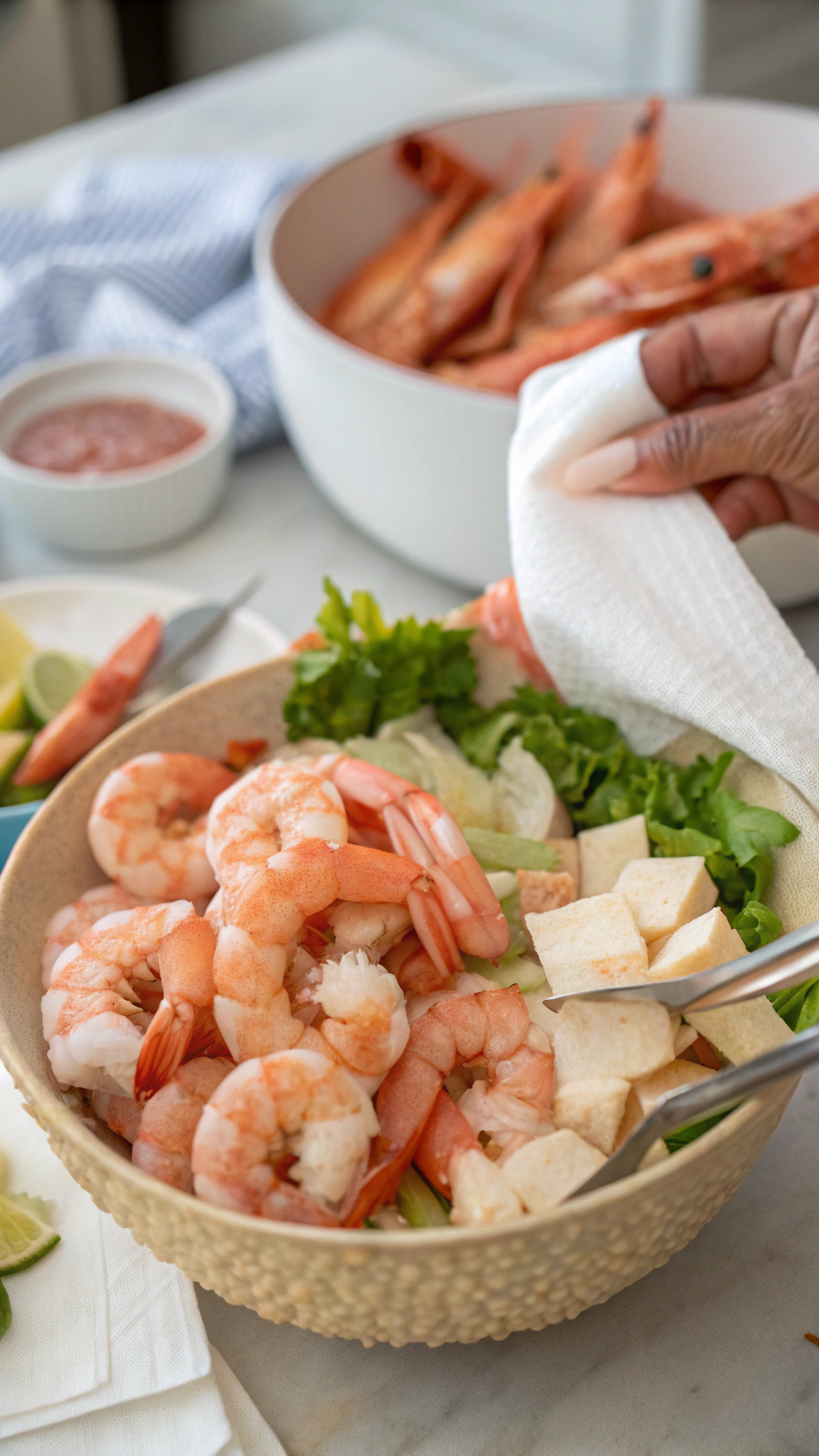
1: Cook the Potatoes
Place the potato chunks in a large pot and cover them with cold water by about 1 inch. Stir in a generous spoonful of salt. Bring the pot to a gentle boil, then lower to a simmer and cook 10 to 15 minutes, until a fork slides into a piece with just a little resistance.
Drain the potatoes in a colander and let them steam off for a few minutes. Spread them on a tray or large plate so they cool faster and do not keep cooking in the center. Drizzle a tablespoon of lemon juice over them while warm for extra flavor.
2: Cook the Seafood
Bring a medium pot of lightly salted water to a gentle simmer. Add the shrimp and cook 2 to 3 minutes, until they turn pink and opaque. Scoop them out with a slotted spoon and place them on a plate to cool.
If you use white fish, simmer it in the same pot for 3 to 4 minutes, until it flakes easily. Drain well and let it cool, then flake into bite-size pieces. Pat shrimp and fish dry with paper towels so they do not water down the salad.
If you use imitation crab or cooked crab, chop it into bite-size pieces. Add it to the plate with the other seafood and chill everything in the fridge while you prep the rest.
3: Prep Veggies and Aromatics
Dice celery, red bell pepper, and red onion into small, even pieces. Chop dill pickles or measure relish, then chop fresh dill and parsley. If the onion tastes strong, soak it in cold water for 10 minutes, then drain and pat dry.
Place all the chopped vegetables and herbs in a large mixing bowl. This bowl will hold the final seafood potato salad, so pick one with plenty of room for folding.
4: Mix the Dressing
In a small bowl, whisk together mayonnaise, sour cream or yogurt, Dijon mustard, Old Bay, lemon juice, lemon zest, garlic powder, onion powder, paprika, salt, and pepper. Taste and adjust seasoning; the dressing should taste slightly stronger than you want the final salad. Add more lemon for brightness or more mayo for richness.
If you like a thinner dressing, whisk in a tablespoon of cold water at a time. Keep the dressing chilled while you finish the other components.
5: Combine Potatoes and Dressing
Add cooled potatoes to the bowl with the vegetables. Spoon about two thirds of the dressing over the top. Use a rubber spatula to fold everything together gently, coating the potatoes without smashing them.
If the salad looks dry, add more dressing a spoonful at a time. You can save a little dressing to refresh leftovers the next day.
6: Add Seafood and Optional Mix-ins
Cut shrimp into bite-size pieces if they seem large. Add shrimp, crab, and any cooked white fish to the bowl. Sprinkle in chopped hard-boiled eggs, capers, or peas if you use them.
Fold the salad gently so you keep visible chunks of seafood and potato. Taste again and adjust salt, pepper, Old Bay, and lemon juice. Sprinkle extra dill, parsley, and a light dusting of paprika over the top for color.
7: Chill
Cover the bowl and chill the seafood potato salad for at least 1 hour. This rest time lets the flavors settle and the dressing cling to the potatoes. Stir once more before serving and adjust seasoning if needed.
Variations I’ve Tried
- Spicy Cajun seafood potato salad: Swap Old Bay for Cajun seasoning, add a dash of hot sauce, and stir in chopped green onion. This version pairs well with grilled chicken or simple roasted veggies.
- Mediterranean style seafood potato salad: Use olive oil and lemon heavy dressing with a little mayo, add capers, chopped olives, and extra parsley. This tastes lighter and works nicely as a main dish with a green salad.
- Smoky bacon seafood potato salad: Add crisp bacon bits and a touch of smoked paprika. The smoky flavor plays nicely with sweet shrimp and creamy potatoes.
- Avocado seafood potato salad: Fold in diced avocado at the end and use a bit more lemon juice to keep it bright. This version feels extra rich without more mayo.
How to Serve Seafood Potato Salad
Serve seafood potato salad chilled or cool, never warm, so the dressing stays creamy and the seafood tastes fresh. Spoon it into a big serving bowl and top it with extra herbs, lemon slices, and a sprinkle of paprika. Pair it with grilled chicken, burgers, hot dogs, or simple roasted vegetables for a cookout style meal. For a light lunch, pile it on crisp lettuce leaves or serve it with sliced tomatoes and cucumber.
How to store
- Fridge: Store seafood potato salad in an airtight container in the refrigerator for up to 2 days.
- Freezer: Skip freezing, since mayo based dressings and potatoes change texture and turn grainy after thawing.
- Reheating: Serve this salad cold; do not reheat, since reheating seafood and mayo together affects both safety and texture.
- Make ahead: Cook potatoes and seafood up to 1 day in advance, keep them chilled separately, then mix with dressing a few hours before serving.
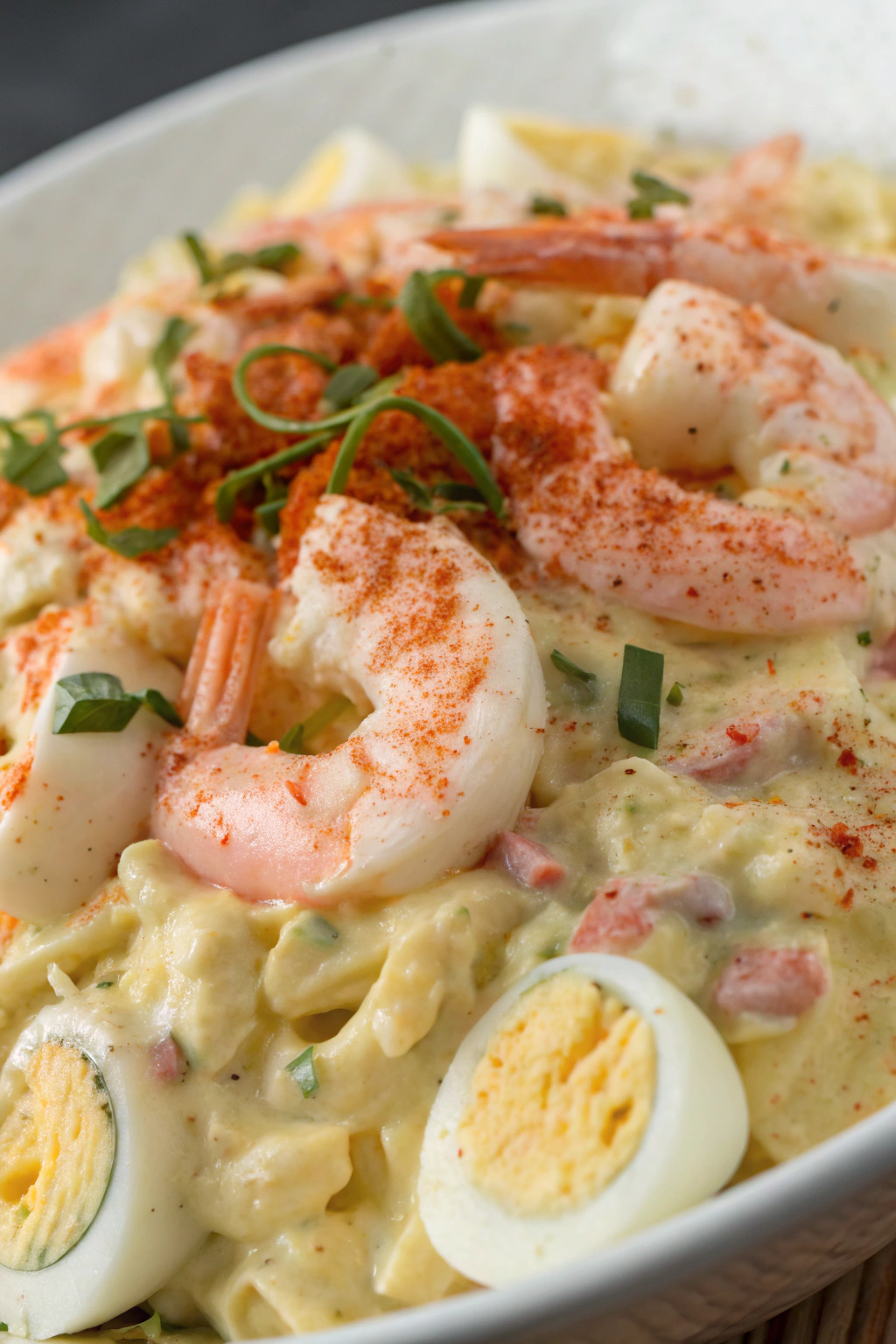
Seafood Potato Salad
Ingredients
Instructions
- Place the potato cubes in a large pot, cover with cold water by about 1 inch, and add 1 tablespoon of kosher salt.
- Bring to a boil over medium-high heat, then reduce to a simmer and cook for 10–15 minutes, or until the potatoes are just fork-tender but not falling apart.
- Drain the potatoes well and spread them out on a baking sheet or large plate to cool to room temperature.
- In a large mixing bowl, whisk together the mayonnaise, sour cream or yogurt, lemon juice, Dijon mustard, Old Bay seasoning, 1/2 teaspoon salt, and black pepper until smooth.
- Add the cooled potatoes to the bowl along with the shrimp, crab meat, celery, red onion, dill pickles (if using), parsley, dill (if using), and chopped hard-boiled eggs.
- Gently fold everything together with a spatula until the potatoes and seafood are evenly coated with the dressing. Taste and adjust seasoning with additional salt, pepper, or lemon juice as needed.
- Cover and refrigerate the seafood potato salad for at least 1 hour to chill and allow the flavors to meld.
- Stir gently before serving and garnish with extra parsley or dill if desired. Serve chilled as a main dish or side.
Notes
Approximate per serving (1/6 of recipe): 320 calories; fat 18 g; saturated fat 3 g; carbohydrates 22 g; fiber 2 g; sugars 2 g; protein 16 g; sodium 760 mg. Values are estimates and will vary based on exact ingredients, brands, and portion size.