
Lemon and Dill Butter Garlic Chicken and Asparagus tastes bright, herby, buttery, and just garlicky enough to make your kitchen smell like a cozy bistro. It works for busy weeknights or casual dinner guests, and you can have it on the table in about 30 minutes. I tested this on my own picky family, and no one spoke for the first five minutes of dinner because they kept going back for more bites.
Why Lemon and Dill Butter Garlic Chicken and Asparagus Is Worth It
You get juicy chicken, crisp-tender asparagus, and a silky lemon dill butter sauce in one skillet, so cleanup stays easy. The lemon cuts through the richness of the butter, while dill and garlic keep every bite fresh and bold.
This recipe works for meal prep, date night at home, or a quick “I forgot to plan dinner” save. You only need simple ingredients, but the flavor tastes restaurant-level without any fussy steps.
“Bright, buttery, and full of flavor, this Lemon and Dill Butter Garlic Chicken and Asparagus tastes like a fancy dinner with weeknight effort. ★★★★★”
Ingredients You Need
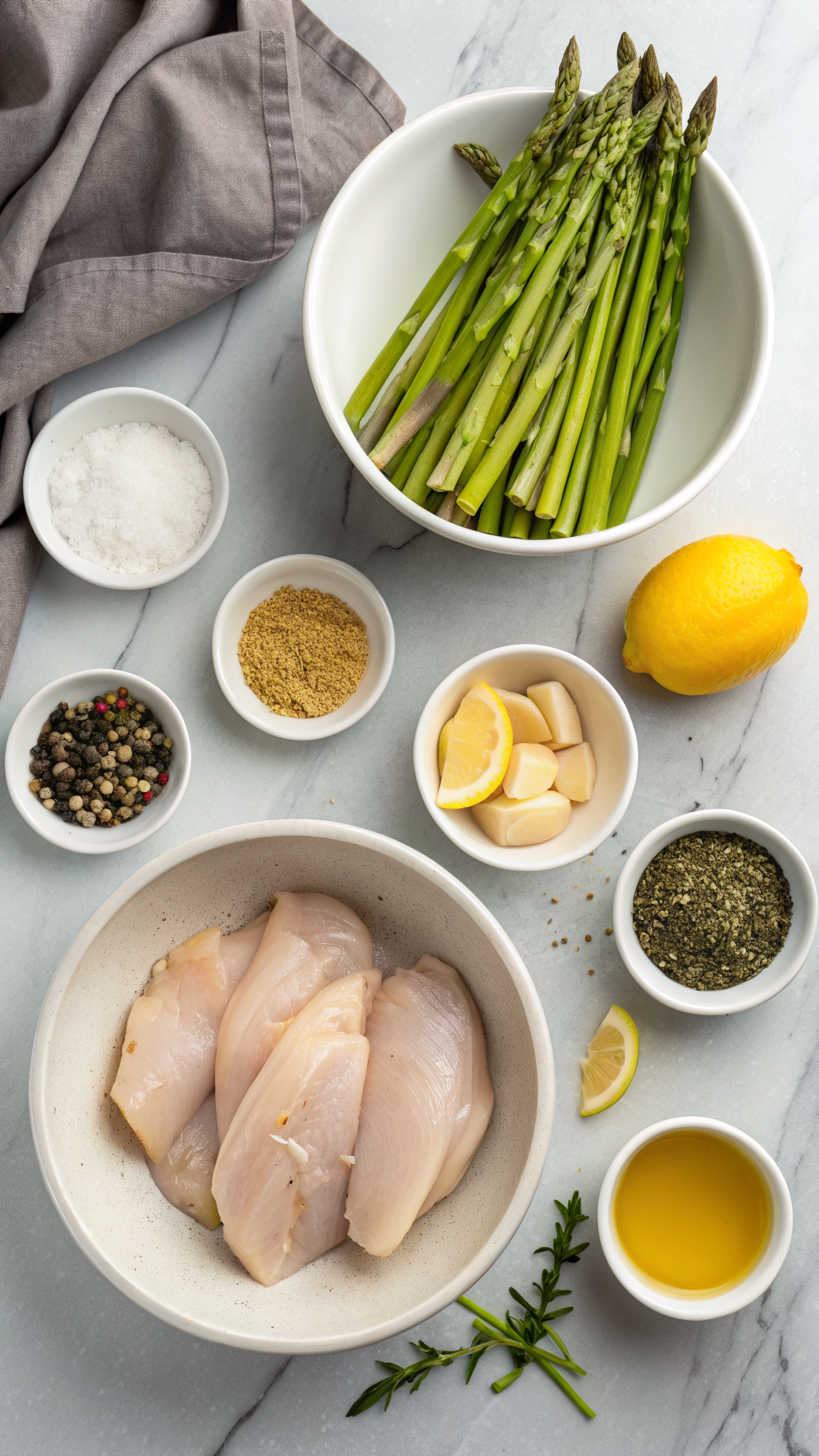
Chicken and Veg
- 1.5 pounds boneless skinless chicken breasts
- 1 bunch asparagus, woody ends trimmed
- Choose medium-thick spears so they stay crisp, not mushy.
- 2 tablespoons olive oil
- Any neutral oil works, but I like extra virgin for flavor.
Lemon Dill Butter Garlic Sauce
- 4 tablespoons unsalted butter, divided
- Use a good quality butter like Kerrygold or a store brand you trust for richer flavor.
- 4 cloves garlic, minced
- Jarred minced garlic works in a pinch, but fresh garlic gives better flavor.
- Zest of 1 lemon
- Juice of 1 large lemon (about 3 tablespoons)
- 2–3 tablespoons fresh dill, finely chopped
- Use 2 tablespoons for milder flavor, 3 if you love dill.
- 1 teaspoon Dijon mustard
- This helps the sauce cling to the chicken and asparagus.
- 1 teaspoon honey or maple syrup
- Balances the acidity of the lemon without making it sweet.
- 1/2 cup low sodium chicken broth
- Use homemade or a good boxed brand like Kettle & Fire or Pacific.
- 1/4 cup heavy cream or half-and-half (optional, for a creamier sauce)
Seasonings
- 1 teaspoon kosher salt, plus more to taste
- 1/2 teaspoon black pepper
- 1/2 teaspoon smoked paprika or sweet paprika
- 1/2 teaspoon onion powder
- Pinch of red pepper flakes (optional, for a little heat)
Pantry Shortcuts & Substitutions
- Use bottled lemon juice if you must, but pair it with at least a little fresh zest for brightness.
- Swap fresh dill with 1 to 1.5 teaspoons dried dill if needed, and add it earlier so it hydrates.
- Use ghee instead of butter if you want a richer, nutty flavor and easier reheating.
Equipment List
- Large skillet (12 inch works best, stainless steel or cast iron)
- Tongs for flipping chicken and tossing asparagus
- Small bowl and whisk for the lemon dill butter garlic sauce
- Cutting board and sharp knife
- Microplane or fine grater for lemon zest
Quick Tips & substitutions
- Pat chicken dry before seasoning so it browns nicely and does not steam.
- Slice chicken into thinner cutlets so it cooks evenly and stays tender.
- Season both sides of the chicken generously; bland chicken ruins a great sauce.
- Use fresh lemon juice and zest for the brightest flavor; bottled juice tastes flatter.
- Swap dill with parsley if you do not enjoy dill, or use half dill and half parsley for balance.
- Use chicken thighs instead of breasts if you prefer richer flavor; just cook a few minutes longer.
- Replace butter with vegan butter and broth with vegetable broth for a dairy-light version.
- Use green beans or broccolini if asparagus costs too much or looks sad at the store.
- Add extra broth instead of cream for a lighter sauce that still tastes rich.
- Taste the sauce at the end and adjust salt, lemon, and dill so it fits your preference.
How to Make Lemon Dill Butter Garlic Chicken and Asparagus
Step 1: Prep the Chicken and Asparagus
Pat the chicken breasts dry with paper towels, then slice them horizontally into thinner cutlets. Season both sides with salt, pepper, smoked paprika, and onion powder. Trim the woody ends from the asparagus by snapping or cutting off the bottom inch or two.
Drizzle the asparagus with a teaspoon of olive oil and a pinch of salt and pepper. Toss to coat and set aside. Keep everything close to the stove so the cooking flows smoothly.
Step 2: Sear the Chicken
Heat 2 tablespoons olive oil and 1 tablespoon butter in a large skillet over medium high heat. When the butter foams and sizzles, lay the chicken cutlets in a single layer without crowding. Cook the first side for 4 to 5 minutes until it turns golden and releases easily from the pan.
Flip the chicken and cook another 3 to 4 minutes until the center reaches 165°F. Adjust the heat if the pan browns too quickly. Move the cooked chicken to a plate and tent it loosely with foil to keep it warm.
Step 3: Cook the Asparagus
In the same skillet, add another 1 tablespoon butter if the pan looks dry. Add the asparagus in a single layer and cook over medium heat. Toss occasionally for 4 to 6 minutes until the spears turn bright green and crisp-tender.
If the pan browns too much, splash in a tablespoon of broth to loosen the flavorful bits. Transfer the asparagus to the plate with the chicken. Keep the browned bits in the pan because they add flavor to the lemon dill butter garlic sauce.
Step 4: Build the Lemon Dill Butter Garlic Sauce
Lower the heat to medium low and add the remaining 2 tablespoons butter to the skillet. Add the minced garlic and cook for 30 to 60 seconds until it smells fragrant and just turns golden. Stir constantly so the garlic does not burn.
Whisk in the Dijon mustard, honey, lemon zest, and lemon juice. Scrape up any browned bits from the bottom of the pan. Add the chicken broth and red pepper flakes if you use them, then let the sauce simmer for 2 to 3 minutes to reduce slightly.
Step 5: Finish the Sauce and Add Dill
Stir in the chopped dill and taste the sauce. Adjust with more salt, pepper, or lemon juice if needed. If you want a creamier sauce, pour in the heavy cream or half-and-half and simmer for 1 to 2 minutes until it thickens slightly.
Keep the heat gentle so the sauce stays smooth. The sauce should taste bright, buttery, and well seasoned. If it tastes too sharp, add a tiny splash more honey to balance it.
Step 6: Return Chicken and Asparagus to the Pan
Add the chicken and any juices from the plate back into the skillet. Nestle the asparagus around the chicken. Spoon the lemon dill butter garlic sauce over everything so the chicken and asparagus soak up the flavor.
Let everything warm together for 2 to 3 minutes over low heat. The sauce will cling to the chicken and asparagus and thicken a bit more. Finish with a sprinkle of fresh dill or extra lemon zest on top for a fresh pop.
Serve the Lemon and Dill Butter Garlic Chicken and Asparagus straight from the skillet while it stays hot and glossy. Slice the chicken if you want smaller pieces for kids or meal prep containers. Spoon extra sauce over each serving, because that sauce tastes like liquid gold.
Recipe Variations
- Gluten-free: Use gluten-free broth and serve with rice, quinoa, or mashed potatoes instead of pasta.
- Dairy-free: Use olive oil or vegan butter, skip the cream, and keep the sauce broth based.
- Low carb: Serve with cauliflower rice, zucchini noodles, or a simple green salad.
- Extra veggies: Add cherry tomatoes, zucchini slices, or baby potatoes to the pan with the asparagus.
- Extra protein: Sprinkle with crumbled feta or goat cheese right before serving.
- Spicy version: Add more red pepper flakes or a pinch of cayenne to the sauce.
- Herb swap: Replace dill with basil, tarragon, or parsley for a different flavor profile.
Ways to Serve Lemon and Dill Butter Garlic Chicken
- Over fluffy white rice, brown rice, or quinoa to soak up the lemon dill butter garlic sauce.
- With mashed potatoes or garlic smashed potatoes for a cozy comfort meal.
- Alongside a simple green salad with cucumbers and tomatoes for a lighter plate.
- Over buttered noodles or orzo for a kid friendly option.
- With crusty bread or garlic bread to swipe through every last bit of sauce.
- In meal prep containers with extra asparagus and a grain for easy lunches.
Storage Success
Store leftover Lemon and Dill Butter Garlic Chicken and Asparagus in an airtight container in the fridge for up to 3 days. Keep the chicken and asparagus with plenty of sauce so they stay moist when you reheat them. Reheat gently on the stove over low heat or in the microwave at 50 percent power so the chicken stays tender.
If you plan to freeze it, freeze just the chicken and sauce for up to 2 months and cook fresh asparagus when you reheat. Asparagus softens a lot after freezing, so fresh spears taste better. Stir in a squeeze of fresh lemon and a pinch of dill after reheating to refresh the flavors.
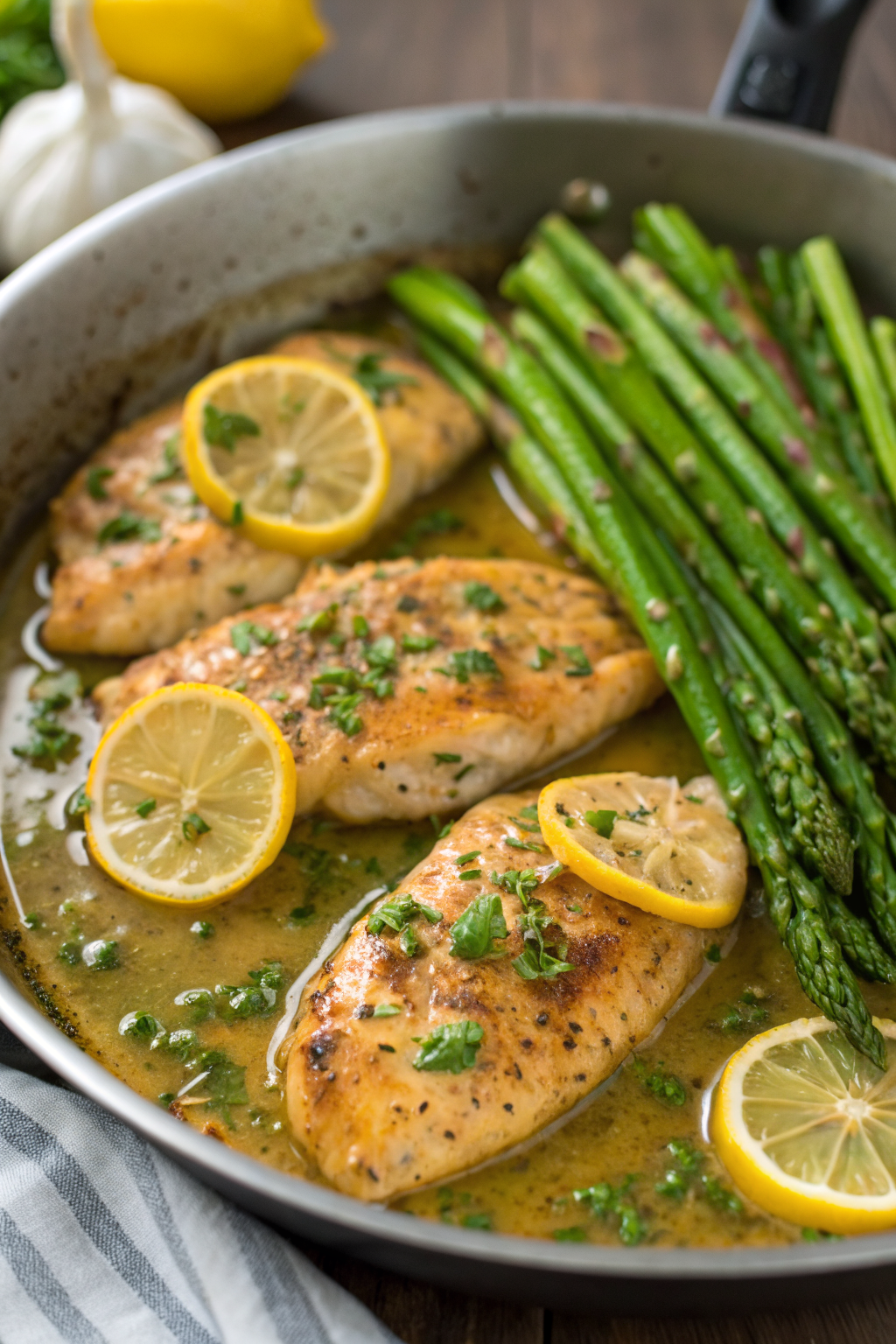
Lemon Dill Butter Garlic Chicken and Asparagus
Ingredients
Instructions
- Pat the chicken breasts dry with paper towels and season both sides with salt, black pepper, and garlic powder.
- Heat the olive oil in a large skillet over medium-high heat. Add the chicken breasts and sear for 5–6 minutes per side, until golden brown and cooked through. Transfer the chicken to a plate and cover to keep warm.
- In the same skillet, reduce the heat to medium and add the butter. Once melted, stir in the minced garlic and cook for 30–60 seconds until fragrant, stirring constantly to avoid burning.
- Add the chicken broth, lemon juice, and lemon zest to the skillet, scraping up any browned bits from the bottom. Simmer for 2–3 minutes to slightly reduce the sauce.
- Add the asparagus to the skillet, tossing it in the lemon butter garlic sauce. Cover and cook for 4–5 minutes, or until the asparagus is crisp-tender.
- Stir in the chopped dill (and parsley if using), then return the chicken breasts and any accumulated juices to the skillet, spooning the sauce over the chicken. Heat for 1–2 minutes until everything is warmed through.
- Taste and adjust seasoning with additional salt and pepper if needed. Serve the chicken topped with asparagus and plenty of lemon dill butter garlic sauce.
Notes
Approximate per serving (1/4 of recipe): 360 calories; fat 21 g; saturated fat 8 g; carbohydrates 8 g; fiber 2 g; sugars 3 g; protein 36 g; sodium 520 mg. Values will vary based on specific ingredient brands, exact weights, and portion size.