
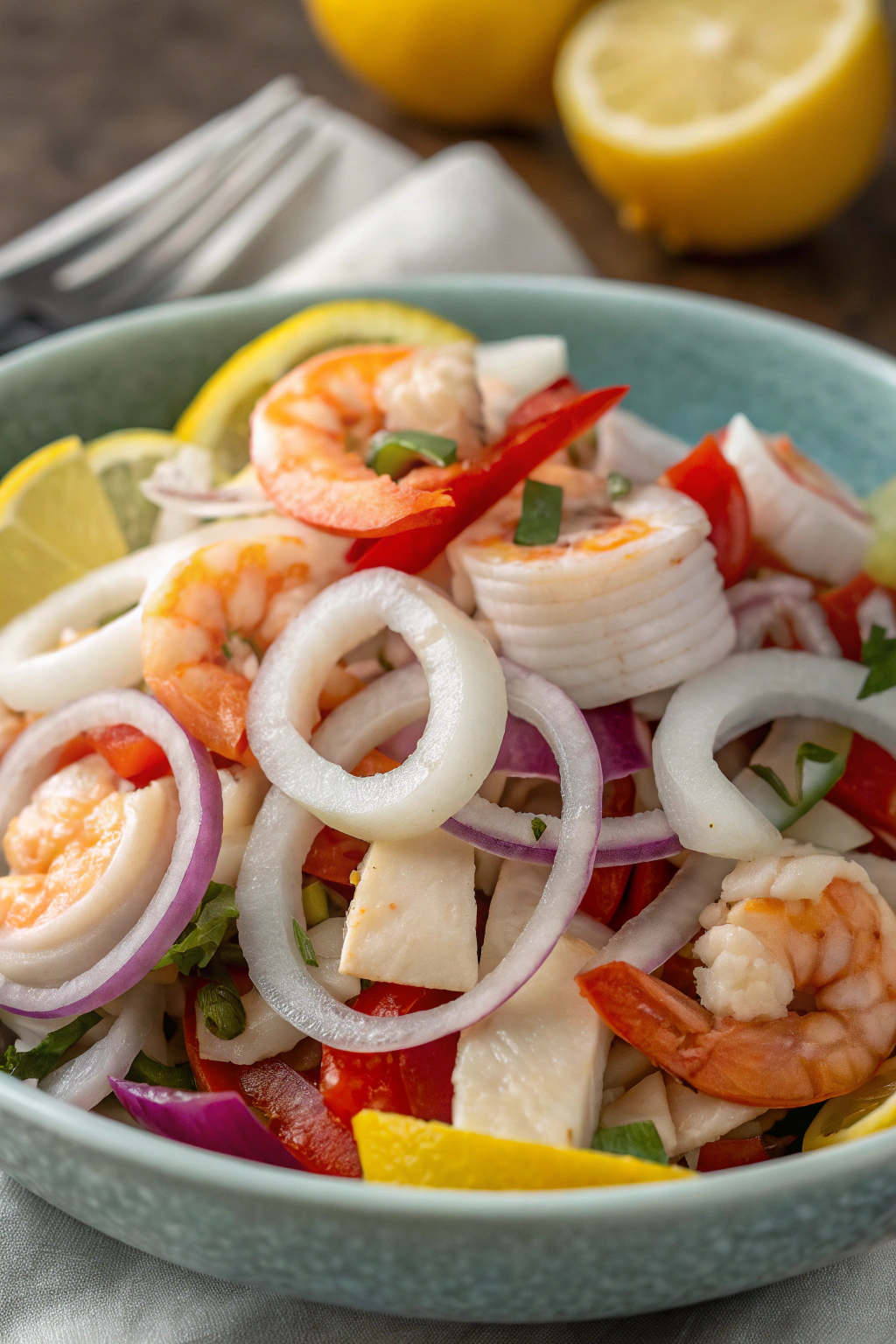
Italian Seafood Salad hits every craving at once with bright lemon, briny seafood, and a garlicky, herby kick that tastes like a summer afternoon on the Amalfi coast. It works for anyone who wants a light, protein-packed dish that feels special but comes together in about 45 minutes, start to finish. I first made a version of this for a tiny apartment dinner party in Brooklyn, and my friends still text me about it years later.
Why Make This Italian Seafood Salad at Home
Homemade Italian Seafood Salad tastes fresher than anything from a deli case, and you control every detail from the amount of garlic to how much heat you add. You pick high quality seafood, adjust the acidity, and keep the texture perfectly tender instead of rubbery.
You also save serious money when you cook it at home, especially if you use frozen seafood and pantry staples. The salad holds well, so you prep it ahead for holidays, cookouts, or easy lunches that feel restaurant level without the restaurant bill.
“This Italian Seafood Salad tasted like a vacation on a plate, and my family fought over the leftovers.” ★★★★★
Ingredients You Need
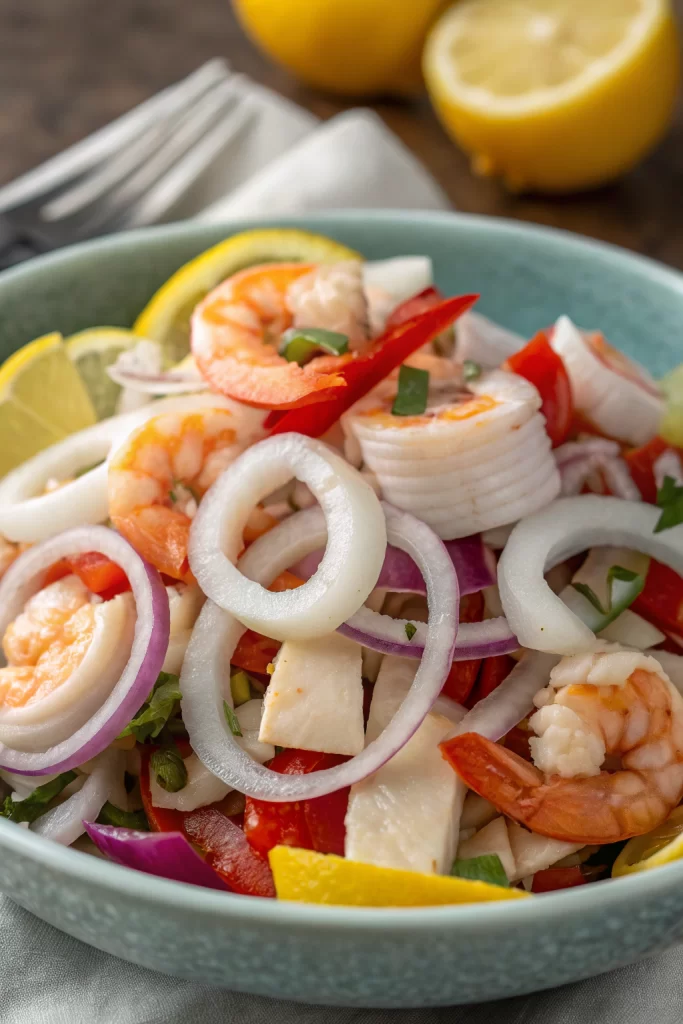
Seafood
- 1 pound medium shrimp, peeled and deveined
- Use 21/25 or 26/30 size for a nice bite. Frozen shrimp work great; thaw in cold water and pat dry.
- 1 pound calamari, cleaned, bodies sliced into rings, tentacles left whole
- Many grocery stores sell cleaned tubes and tentacles in the freezer section.
- 1 pound mussels or small clams, scrubbed and debearded if needed
- You can swap with pre-cooked mussel meat from the freezer aisle for a shortcut.
- 8 ounces firm white fish, cut into 1 inch chunks
- Cod, halibut, haddock, or even tilapia hold up well.
- 8 ounces bay scallops or quartered sea scallops
- If they look very wet, pat them dry so they do not water down the salad.
You can adjust the mix based on what you find fresh or on sale. Just keep the total seafood weight around 4 to 4½ pounds for the dressing amount.
Dressing and Flavor Base
- ½ cup extra virgin olive oil
- Choose a fruity, medium-bodied oil; California Olive Ranch or Colavita both work well.
- ⅓ cup fresh lemon juice, plus more to taste
- Fresh juice matters here; bottled lemon juice tastes flat.
- 3 tablespoons red wine vinegar
- This adds tang that balances the richness of the olive oil.
- 4 large garlic cloves, very finely minced or grated
- Use a microplane if you want the garlic to melt into the dressing.
- 1 teaspoon Dijon mustard
- This helps the dressing cling to the seafood and adds a subtle tang.
- 1 teaspoon kosher salt, plus more to taste
- ½ teaspoon freshly ground black pepper
- ½ to 1 teaspoon crushed red pepper flakes
- Adjust based on your heat tolerance.
- 1 teaspoon dried oregano
- Rub it between your fingers to wake up the flavor.
- 2 tablespoons chopped fresh parsley
- 2 tablespoons chopped fresh basil
- 1 tablespoon chopped fresh dill (optional but highly recommended)
Vegetables and Add-ins
- 1 small red onion, very thinly sliced
- Soak in cold water for 10 minutes if you want a milder bite.
- 1 small fennel bulb, cored and thinly sliced
- This adds crunch and a light anise flavor that pairs beautifully with seafood.
- 1 cup celery, thinly sliced
- 1 cup roasted red peppers, sliced into strips
- Jarred roasted peppers save time; look for ones packed in water or olive oil.
- ½ cup pitted Kalamata or Castelvetrano olives, halved
- 2 tablespoons capers, rinsed
- Zest of 1 lemon
- The zest adds bright citrus aroma without extra acidity.
Pantry Shortcuts and Substitutions
- Use a frozen seafood medley bag if you want a shortcut; just check that it includes shrimp, calamari, and mussels or clams.
- Swap red wine vinegar with white wine vinegar or sherry vinegar if that is what you have.
- Use jarred minced garlic in a pinch, but cut the amount slightly since it tastes more intense.
- Skip fennel if you cannot find it and add extra celery for crunch.
Equipment List
- Large stock pot or Dutch oven for cooking seafood
- Large bowl for mixing the salad
- Small bowl or jar with lid for shaking the dressing
- Sharp chef’s knife and cutting board
- Slotted spoon or spider strainer
- Colander
- Tongs or large spoon for tossing
Tips & Mistakes
- Poach seafood gently in simmering, not boiling, water so it stays tender instead of chewy.
- Salt the cooking water like pasta water to season the seafood from the inside out.
- Cook each type of seafood separately, since shrimp, calamari, fish, and mussels all need different times.
- Shock cooked seafood in an ice bath to stop cooking and keep the texture firm and juicy.
- Dry the seafood well before tossing with dressing so the flavors stay bold and not watered down.
- Taste the dressing before you add it and adjust lemon, salt, and chili flakes to your liking.
- Slice the vegetables thin so they blend with the seafood instead of stealing the show.
- Chill the salad at least 1 to 2 hours so the flavors mingle, but do not marinate more than 24 hours or the acid can toughen the seafood.
- Use good olive oil, since it carries a lot of the flavor in this Italian Seafood Salad.
- Add fresh herbs near serving time so they stay bright and green.
- Do not overcrowd the pot when you cook seafood; work in batches so everything cooks evenly.
- Toss the salad gently so you keep the fish pieces and scallops intact.
How to Make Italian Seafood Salad
Step 1: Mix the dressing
Add olive oil, lemon juice, red wine vinegar, garlic, Dijon, salt, pepper, red pepper flakes, oregano, and lemon zest to a small bowl or jar. Whisk or shake until the dressing looks glossy and emulsified. Taste and adjust with more lemon, salt, or chili flakes as needed. Set it aside so the flavors meld while you cook the seafood.
Step 2: Prep vegetables and aromatics
Slice the red onion, fennel, celery, and roasted red peppers into thin pieces. Add them to a large mixing bowl along with olives, capers, and chopped fresh herbs. Toss them lightly with a few spoonfuls of the dressing so they start to soften and soak up flavor. Keep the bowl in the fridge while you cook the seafood.
Step 3: Set up the poaching liquid
Fill a large stock pot or Dutch oven with enough water to comfortably cover the seafood. Add a generous handful of kosher salt, a few lemon slices, and any herb stems you have from the parsley, basil, or dill. Bring the water to a gentle simmer over medium heat, not a rolling boil. Keep an ice bath ready in a separate bowl.
Step 4: Cook the shrimp
Add shrimp to the simmering water in a single layer. Cook 2 to 3 minutes, just until they turn pink and curl into a loose C shape. Scoop them out with a slotted spoon and transfer them straight into the ice bath. Once cool, drain them well and pat dry with paper towels.
Step 5: Cook the calamari
Add the calamari rings and tentacles to the same simmering water. Cook only 1 to 2 minutes, until they turn opaque and slightly firm. Move them to the ice bath, cool completely, then drain and pat dry. Overcooked calamari turns rubbery, so keep a close eye here.
Step 6: Cook the fish and scallops
Slide the fish chunks into the simmering water and cook 3 to 4 minutes, until the pieces feel firm and opaque in the center. Lift them gently with a slotted spoon so they do not break apart, then cool them in the ice bath. Add scallops to the pot and cook 2 to 3 minutes, until they turn opaque and slightly springy, then chill them as well. Drain and pat everything dry once cool.
Step 7: Cook the mussels or clams
Add mussels or clams to the pot and cover with a lid. Cook 4 to 6 minutes, checking and stirring once or twice, until all the shells open. Discard any that stay closed. Remove the meat from the shells once cool enough to handle and add it to the drained seafood pile.
Step 8: Combine seafood and vegetables
Add all the cooled, dried seafood to the bowl with the marinated vegetables. Pour about two thirds of the dressing over the top. Toss gently from the bottom up so you coat everything without breaking the fish. Taste and add more dressing, lemon juice, or salt as needed.
Step 9: Chill
Cover the bowl and chill the Italian Seafood Salad for at least 1 hour and up to 24 hours. Toss once or twice while it chills so the dressing distributes evenly. Right before serving, sprinkle on a little extra fresh parsley and a squeeze of lemon. Serve cold or at cool room temperature.
Variations I’ve Tried
I sometimes add small chunks of boiled Yukon gold potatoes to stretch the salad and make it more filling for a main course. They soak up the dressing beautifully and turn the dish into a full meal with some crusty bread on the side. Just cook the potatoes until tender, cool them, and fold them in gently.
For a slightly spicier version, I add a spoonful of Calabrian chili paste to the dressing for a smoky, fruity heat. If you prefer a lighter citrus profile, swap part of the lemon juice with orange juice and add orange zest for a sweet, sunny twist. You can also toss in cherry tomato halves right before serving for extra color and freshness.
If you avoid shellfish, you can build the salad with only fish and calamari and still get great flavor. Use extra olives and capers to keep that briny Italian vibe. I also like to add chopped artichoke hearts in that version for more texture and tang.
How to Serve Italian Seafood Salad
Serve Italian Seafood Salad on a big platter over a bed of crisp lettuce or arugula for a fresh, colorful presentation. Add lemon wedges around the edges so everyone can adjust the brightness on their own plate. Pair it with crusty bread, focaccia, or simple garlic toast and a side of roasted vegetables or a green salad. It works as a holiday starter, a light summer main, or a make-ahead lunch that tastes even better the next day.
How to store
- Store Italian Seafood Salad in an airtight container in the fridge for up to 2 days for best texture and flavor.
- Stir gently before serving leftovers and add a squeeze of fresh lemon and a drizzle of olive oil to wake up the flavors.
- I do not recommend freezing this salad, since the seafood can turn mushy and the vegetables lose their crunch after thawing.
- If you want to warm it slightly, let it sit at room temperature for 20 to 30 minutes instead of reheating, since direct heat can overcook the seafood.
Ingredients
Instructions
- Bring a large pot of salted water to a gentle boil. Prepare a large bowl with ice water and set aside.
- Add the shrimp to the boiling water and cook for 2–3 minutes, or until just pink and opaque. Use a slotted spoon to transfer the shrimp immediately to the ice water to stop the cooking. Drain well once chilled and place in a large mixing bowl.
- In the same pot, add the calamari and cook for 1–2 minutes, just until they turn opaque and curl slightly. Transfer to the ice water bath, cool, then drain and add to the bowl with the shrimp.
- Add the scallops to the boiling water and cook for 2–3 minutes, or until just cooked through. Transfer to the ice water, cool, drain, and add to the seafood bowl.
- Add the mussels to the pot with a splash of water if needed, cover, and steam over medium heat for 4–5 minutes, or until the shells open. Discard any mussels that do not open. Remove cooked mussels from their shells if desired, cool slightly, and add to the seafood mixture.
- In a small bowl, whisk together the olive oil, lemon juice, white wine vinegar, minced garlic, Dijon mustard, salt, black pepper, and red pepper flakes (if using) until emulsified.
- Add the celery, cherry tomatoes, red onion, capers, parsley, and basil (if using) to the bowl with the seafood. Pour the dressing over the mixture.
- Gently toss until all the seafood and vegetables are evenly coated with the dressing. Taste and adjust seasoning with additional salt, pepper, or lemon juice as needed.
- Cover and refrigerate for at least 1 hour to allow the flavors to meld. Toss again before serving.
- Serve chilled or at cool room temperature, with lemon wedges on the side if desired.
Notes
Approximate per serving (1/6 of recipe): 260 calories; fat 13 g; saturated fat 2 g; carbohydrates 7 g; fiber 1 g; sugars 3 g; protein 29 g; sodium 520 mg. Values are estimates and will vary based on specific seafood size, brands, and portion size.