

Juicy Roast Turkey Recipe tastes rich, savory, and buttery with crisp golden skin and tender meat, and it works perfectly for holiday dinners or any big family gathering in about 3 ½ to 4 hours total. This recipe fits cooks who want a reliable, juicy roast turkey without babysitting the oven all day. I still remember the first time my family stopped talking at the table because they focused completely on the turkey, and that silence felt like the highest compliment.
Why You Should Try This Juicy Roast Turkey Recipe
This Juicy Roast Turkey Recipe gives you moist white meat, flavorful dark meat, and shatteringly crisp skin without complicated techniques. You follow simple steps, use common ingredients, and still get a centerpiece that tastes like you hired a private chef.
You can prep most of it ahead, which keeps your kitchen calm on the big day. The method works for beginners and still satisfies picky food nerds like me who obsess over juicy slices and deep flavor.
“This Juicy Roast Turkey Recipe turned my usual dry bird into the star of dinner, and my family asked for seconds before I even sat down. ★★★★★”
Ingredients You’ll Need
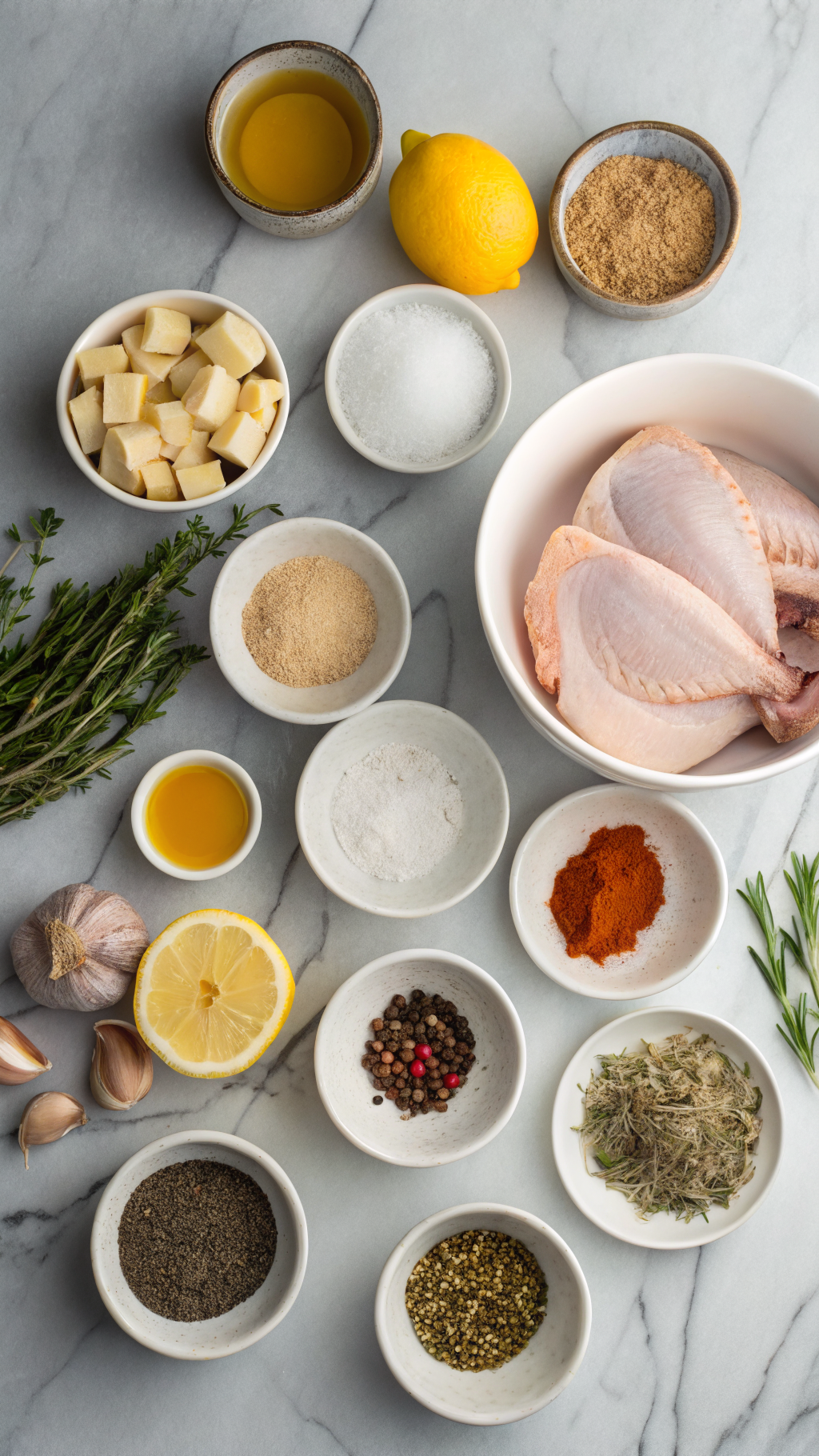
Turkey
- 1 whole turkey, 12 to 14 pounds, thawed if frozen
- I prefer a natural or minimally processed bird without added brine, since we season it ourselves.
- 2 teaspoons kosher salt per pound of turkey (about 4 to 5 tablespoons total)
- Use Diamond Crystal if possible; if you use Morton, reduce slightly since it tastes saltier.
- 2 teaspoons freshly ground black pepper
Herb Butter
- 1 cup (2 sticks) unsalted butter, softened
- 2 tablespoons olive oil
- 1 tablespoon fresh lemon juice
- 2 teaspoons lemon zest
- 4 cloves garlic, finely minced or pressed
- 2 tablespoons fresh chopped rosemary
- 2 tablespoons fresh chopped thyme
- 2 tablespoons fresh chopped parsley
- 1 teaspoon paprika
- 1 teaspoon onion powder
- 1 teaspoon garlic powder
- 1 teaspoon poultry seasoning (optional but tasty pantry shortcut)
Inside the Turkey
- 1 medium yellow onion, quartered
- 1 head garlic, halved horizontally
- 1 lemon, quartered
- 2 celery stalks, cut into chunks
- 2 carrots, cut into chunks
- 3 to 4 fresh thyme sprigs
- 3 to 4 fresh rosemary sprigs
Roasting Pan & Basting
- 2 cups low sodium chicken or turkey broth
- Boxed broth works great; I often use Swanson or a store brand.
- 1 cup water
- 2 tablespoons olive oil for brushing the skin before roasting, if needed
- Extra broth for basting if the pan dries out
Optional Flavor Boosters
- ½ teaspoon smoked paprika for a subtle smoky note
- 1 teaspoon brown sugar in the herb butter for a hint of caramelized flavor
- Extra lemon wedges for serving
Equipment List
- Large roasting pan with a rack
- If you do not have a rack, use a bed of carrots, celery, and onions under the turkey.
- Instant read thermometer or probe thermometer
- Kitchen twine
- Paper towels
- Small bowl and spoon for mixing herb butter
- Basting brush or spoon
- Aluminum foil
- Cutting board large enough for the turkey
- Sharp carving knife
Tips & Tricks
- Pat the turkey very dry with paper towels so the skin crisps instead of steaming.
- Salt the turkey at least 12 hours ahead, and up to 48 hours, so the seasoning penetrates deep into the meat.
- Keep the butter soft but not melted so it clings to the turkey and stays under the skin.
- Gently slide your fingers under the breast skin to loosen it, then tuck herb butter directly on the meat for maximum juiciness.
- Roast the turkey at a higher temperature at the start to set the skin, then lower the heat so the meat cooks gently.
- Use an instant read thermometer and pull the turkey when the thickest part of the breast hits 160°F and the thigh hits 170°F.
- Tent the turkey loosely with foil if the skin browns too quickly, and move the pan to a lower oven rack.
- Let the turkey rest at least 30 minutes so the juices redistribute and the meat slices cleanly.
- Save the pan drippings and browned bits for gravy; they hold a ton of flavor.
- If you feel nervous about carving, practice on a rotisserie chicken once or twice before the big day.
How to Make Juicy Roast Turkey

1: Thaw and Prep the Turkey
Place the frozen turkey in the fridge several days before you plan to roast it, and allow about 24 hours of thawing time for every 4 to 5 pounds. Set the turkey on a rimmed tray to catch any drips. Once thawed, remove the turkey from the packaging, pull out the neck and giblets from the cavity, and pat everything very dry with paper towels.
Trim any large excess fat around the neck and cavity opening. Tuck the wing tips behind the shoulders so they do not burn. Set the turkey on a rack in the roasting pan, breast side up.
2: Dry Brine the Turkey
Sprinkle kosher salt all over the turkey, including inside the cavity and under the skin where you can reach. Use about 2 teaspoons of salt per pound of turkey. Add the black pepper over the entire surface.
Place the uncovered turkey in the fridge for at least 12 hours and up to 48 hours. This step seasons the meat deeply and helps the skin crisp beautifully.
3: Mix the Herb Butter
In a small bowl, combine the softened butter, olive oil, lemon juice, lemon zest, minced garlic, rosemary, thyme, parsley, paprika, onion powder, garlic powder, poultry seasoning, and any optional smoked paprika or brown sugar. Stir until the mixture looks smooth and evenly blended. Taste a tiny bit and adjust salt or lemon if you want brighter flavor. Keep the herb butter at room temperature so it spreads easily. If your kitchen runs warm, chill it briefly so it stays spreadable and not liquid.

4: Season and Stuff the Turkey
Remove the turkey from the fridge about 45 minutes before roasting so it comes closer to room temperature. Gently loosen the skin over the breast and thighs with your fingers, careful not to tear it. Rub a generous amount of herb butter directly on the meat under the skin.
Spread the remaining herb butter all over the outside of the turkey, including the legs and back. Stuff the cavity loosely with onion, garlic, lemon, celery, carrots, and herb sprigs. Tie the legs together with kitchen twine to help the turkey cook evenly.
5: Set Up the Roasting Pan
Pour the broth and water into the bottom of the roasting pan. This liquid catches drippings and keeps the environment moist, which helps prevent dry meat. If you do not use a rack, scatter extra chopped vegetables in the pan and set the turkey on top.
Position an oven rack in the lower third of the oven. Preheat the oven to 425°F so it reaches temperature before the turkey goes in.
6: Start Roasting at High Heat
Place the turkey in the hot oven and roast at 425°F for 30 minutes. This initial blast of heat helps the skin turn golden and crisp. Keep an eye on the skin color, and rotate the pan if your oven browns more on one side.
If any spots darken too quickly, lightly tent that area with a small piece of foil. Do not fully cover the turkey at this stage so the skin continues to brown.
7: Lower the Heat and Continue Roasting
After 30 minutes, lower the oven temperature to 325°F. Baste the turkey lightly with pan juices using a spoon or brush. Return the turkey to the oven and roast until the internal temperature reaches 160°F in the thickest part of the breast and 170°F in the thigh.
Check the temperature after about 2 hours, then every 20 to 30 minutes. If the pan dries out, add more broth or water so the drippings do not burn. Tent the turkey loosely with foil if the skin reaches your ideal color before the meat finishes cooking.
8: Rest the Turkey
Once the turkey hits the target temperatures, remove the pan from the oven. Transfer the turkey carefully to a large cutting board or platter. Tent it loosely with foil and let it rest for at least 30 minutes and up to 45 minutes.
Use this time to make gravy from the pan drippings and finish your side dishes. The rest period allows the juices to settle back into the meat, which keeps every slice moist and flavorful.
9: Carve
Remove the kitchen twine and any aromatics from the cavity. Slice off the legs and thighs, then separate the drumsticks from the thighs at the joint. Cut the breast meat away from the bone in large pieces, then slice across the grain into thick, juicy slices.
Arrange the meat on a warm platter and spoon a little hot gravy or pan juices over the top. Garnish with fresh herbs and lemon wedges if you like, then serve your Juicy Roast Turkey Recipe with your favorite sides.
What to Serve with Juicy Roast Turkey
This Juicy Roast Turkey Recipe pairs beautifully with creamy mashed potatoes, classic turkey gravy, and a bright cranberry sauce for contrast. Add roasted vegetables like carrots, Brussels sprouts, or green beans for color and texture. A simple green salad with a light vinaigrette helps balance the richness of the turkey and sides.
For drinks, serve sparkling water with citrus slices, apple cider, or a festive punch with fruit and ginger ale so everyone at the table can enjoy it.
Storage Options
- Store leftover turkey in shallow airtight containers in the fridge for up to 4 days, and keep the meat sliced for easier reheating.
- Freeze portions of turkey tightly wrapped in plastic and then in a freezer bag for up to 3 months, and label the bag with the date and amount.
- Reheat turkey gently in a covered baking dish with a splash of broth at 300°F until warm, or warm slices in a skillet with a bit of butter or broth.
- Use leftover turkey in sandwiches, salads, soups, and casseroles so nothing goes to waste and you enjoy the Juicy Roast Turkey Recipe all week.
Ingredients
Instructions
- Preheat the oven to 325°F (165°C). Set a rack in a large roasting pan.
- Remove the turkey giblets and neck from the cavity. Pat the turkey dry with paper towels, inside and out.
- In a small bowl, combine softened butter, olive oil, salt, black pepper, garlic powder, onion powder, dried thyme, dried rosemary, and paprika to form a paste.
- Gently loosen the skin over the turkey breasts with your fingers and rub some of the butter mixture directly onto the meat under the skin. Rub the remaining mixture all over the outside of the turkey.
- Stuff the cavity with the lemon quarters, onion quarters, smashed garlic cloves, and fresh herb sprigs.
- Tie the legs together with kitchen twine and tuck the wing tips under the body. Pour the broth into the bottom of the roasting pan.
- Place the turkey breast-side up on the rack and transfer to the oven. Roast for about 3 to 3 1/2 hours, or until a meat thermometer inserted into the thickest part of the thigh (without touching bone) registers 165°F (74°C). Baste the turkey with pan juices every 45–60 minutes.
- If the skin browns too quickly, tent the turkey loosely with aluminum foil and continue roasting until done.
- Remove the turkey from the oven and transfer to a cutting board. Tent loosely with foil and let rest for at least 20–30 minutes before carving to keep the meat juicy.
- Carve the turkey and serve with the pan juices or your favorite gravy.
Notes
Approximate per serving (about 1/12 of turkey with skin): 320 calories; fat 17 g; saturated fat 6 g; carbohydrates 1 g; fiber 0 g; sugars 0 g; protein 40 g; sodium 340 mg. Values will vary based on turkey size, added seasonings, and portion size.