
Creme Brulee Recipe tastes like silky vanilla custard under a shatteringly crisp caramel sugar top, basically the fancy cousin of pudding that went to culinary school. This Creme Brulee Recipe works for date nights, dinner parties, or solo dessert emergencies and takes about 1 hour total, plus chilling time. I still remember torching my very first batch in a tiny apartment kitchen and nearly waking the neighbors with how loud I cracked that sugar top.
Why Creme Brulee Recipe Is Worth It
This Creme Brulee Recipe uses simple ingredients but delivers restaurant-level results. You mix cream, egg yolks, sugar, and vanilla, then bake them gently until the custard sets with a creamy, smooth texture.
You also prep it ahead, so you handle the custard earlier in the day and caramelize the sugar right before serving. That timing keeps stress low and makes you look like you hired a pastry chef.
“This Creme Brulee Recipe tastes like a five-star dessert that secretly came from a handful of pantry staples and a cheap kitchen torch. ★★★★★”
Ingredients You Need
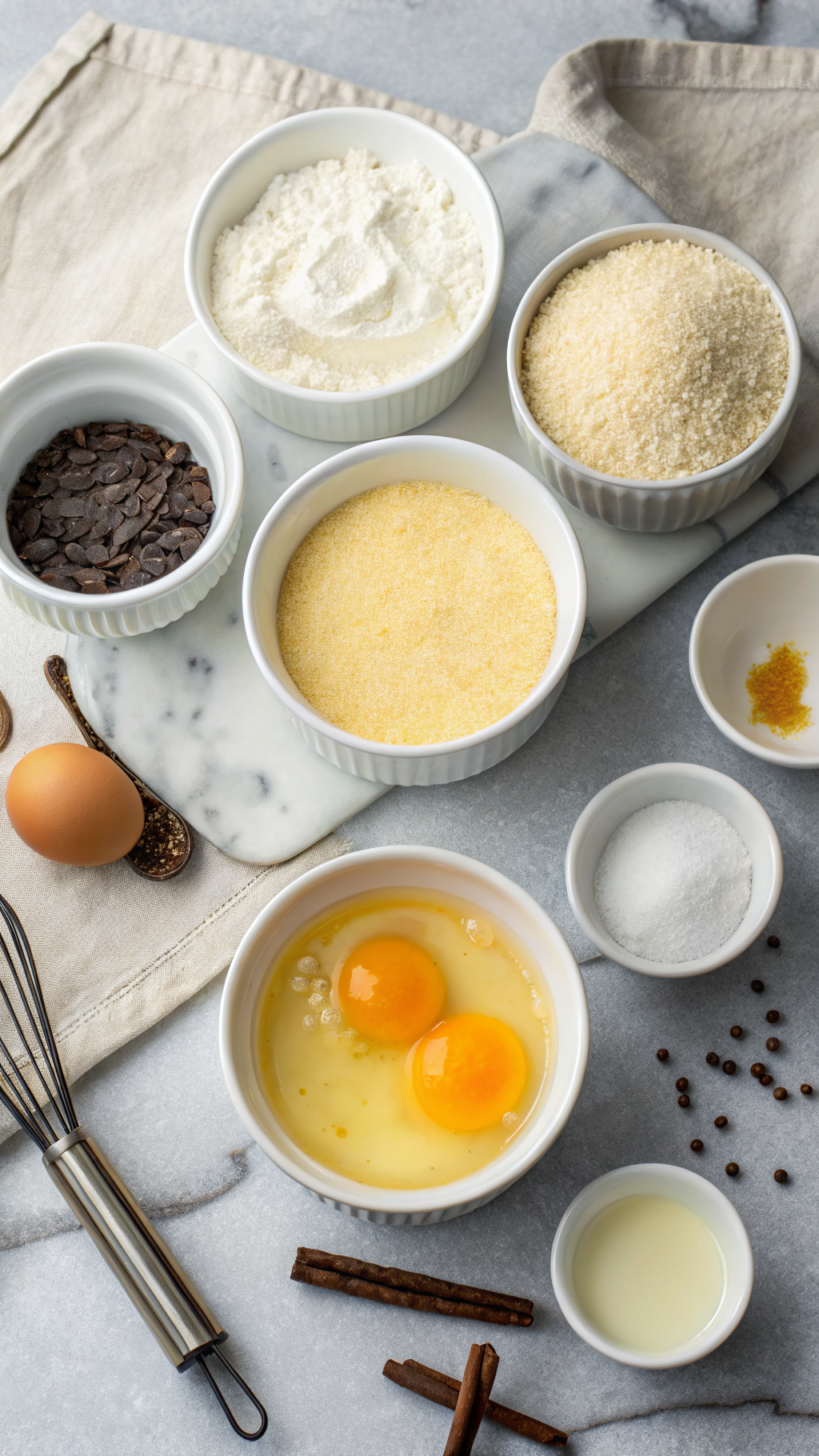
Custard base
- 2 cups heavy cream
- Use full-fat heavy cream for the richest texture. Avoid half-and-half, since it turns the custard thin.
- 5 large egg yolks
- Separate the yolks carefully so no whites sneak in, or the texture turns slightly rubbery.
- 1/2 cup granulated sugar
- Standard white sugar works best; organic cane sugar also works but may add a light caramel note.
- 1 1/2 teaspoons pure vanilla extract
- Use real vanilla extract or vanilla bean paste; skip imitation vanilla for this dessert.
- Pinch of fine sea salt
- Salt sharpens the flavor and keeps the custard from tasting flat.
Caramelized sugar top
- 4 to 6 teaspoons granulated sugar
- Use about 1 teaspoon per 4-ounce ramekin. Superfine sugar melts a bit faster, but regular granulated sugar works well.
Pantry shortcuts and substitutions
- Use vanilla bean paste instead of extract if you want visible vanilla specks without buying whole beans.
- Swap part of the heavy cream with whole milk only if you must; keep at least 75 percent heavy cream for a lush custard.
- Use coconut sugar for the top if you want a deeper caramel flavor, but watch it closely since it burns faster.
Equipment list
- 4 to 6 ramekins, 4 to 6 ounces each, oven safe
- Large baking dish or roasting pan that holds all ramekins
- Medium saucepan
- Mixing bowl with a pouring spout, if possible
- Whisk
- Fine mesh strainer
- Kitchen torch or oven broiler
- Kettle or pot for hot water
- Kitchen towel and tongs or oven mitts
Quick Tips & substitutions
- Use room temperature egg yolks so they blend smoothly with the warm cream.
- Heat the cream until it steams and tiny bubbles form at the edges; do not let it boil.
- Whisk the yolks and sugar until they look pale and slightly thick, which helps the custard set evenly.
- Temper the yolks by adding the warm cream slowly while you whisk constantly so the eggs do not scramble.
- Strain the custard through a fine mesh sieve to catch any bits of cooked egg or foam.
- Skim off surface bubbles with a spoon before baking to keep the top smooth.
- Place a kitchen towel in the baking dish under the ramekins so they do not slide around.
- Pour hot tap water or just-boiled water into the baking dish until it reaches halfway up the ramekins to create a gentle water bath.
- Bake at a lower temperature, around 275 to 300 degrees Fahrenheit, so the custard cooks evenly and stays creamy.
- Pull the custards when the edges look set but the centers still jiggle slightly like soft gelatin.
- Chill the custards for at least 4 hours, or overnight, before you add the sugar topping.
- Sprinkle a thin, even layer of sugar on top; thick sugar layers turn hard and bitter.
- Move the torch in circles and keep it a few inches from the surface so the sugar melts and browns without burning.
- Use the broiler if you do not own a torch; chill the custards very well first so they do not overheat.
- For dairy-free, use full-fat canned coconut milk and an extra yolk, but expect a slightly different texture and flavor.
How to Make Creme Brulee
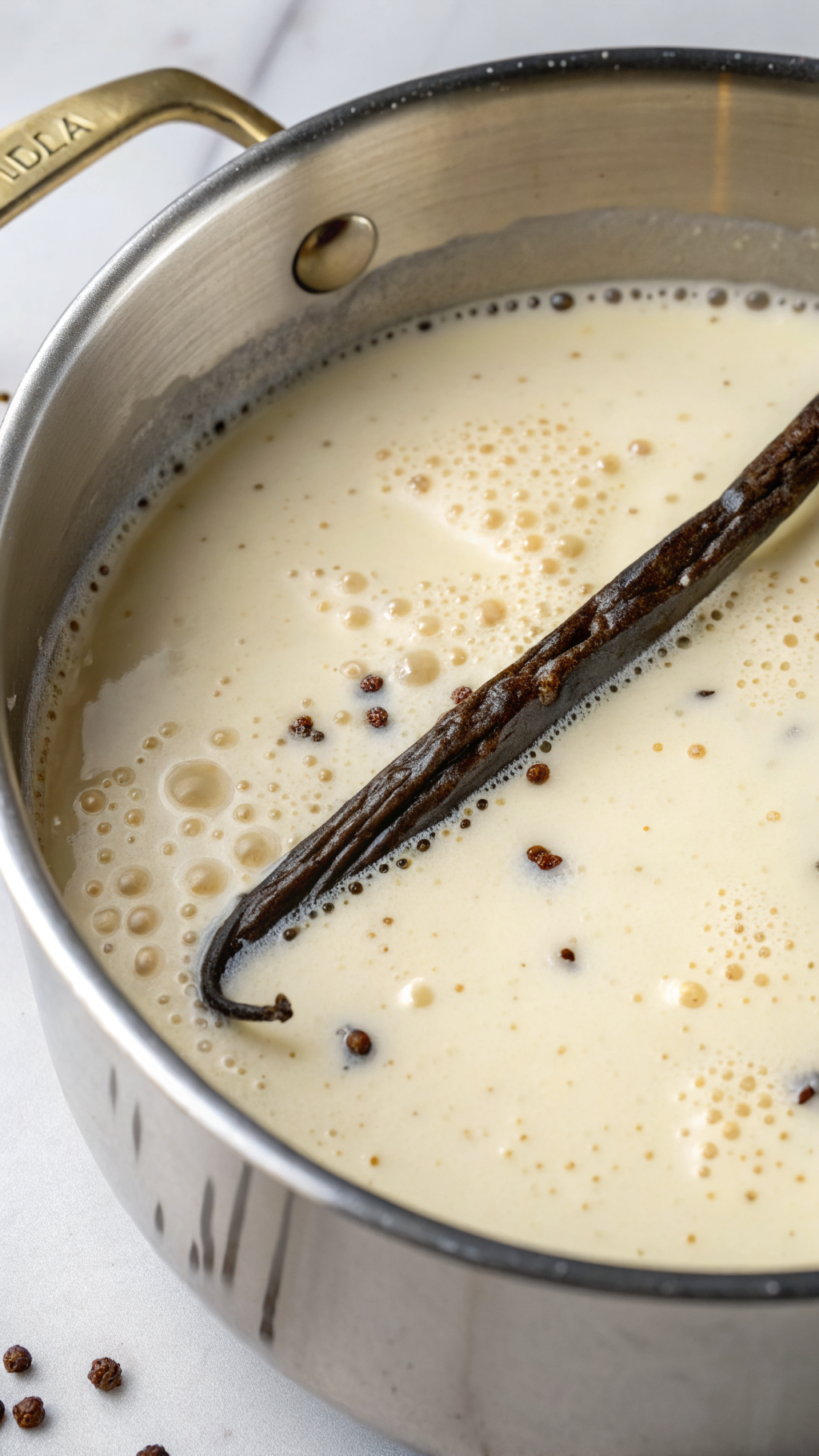
1: Prep the oven and ramekins
Preheat the oven to 300 degrees Fahrenheit. Set your ramekins in a large baking dish or roasting pan, leaving a little space between each one. Place a folded kitchen towel under them if you want extra stability.
2: Warm the cream
Pour the heavy cream into a medium saucepan. Heat it over medium-low heat until it steams and tiny bubbles appear around the edges. Turn off the heat and let it sit for a minute while you prep the yolks.
3: Mix yolks, sugar, and vanilla
In a mixing bowl, whisk the egg yolks, sugar, vanilla, and salt until the mixture looks pale and slightly thick. This step dissolves the sugar and gives the custard a smooth, silky texture. Keep whisking until no sugar grains remain along the sides of the bowl.
4: Temper the yolks
Slowly pour a small amount of the warm cream into the yolk mixture while you whisk constantly. Continue to add the cream in a thin stream, whisking the whole time so the yolks warm up gently. Once you add all the cream, the mixture should look smooth and uniform.
5: Strain and portion the custard
Set a fine mesh strainer over a clean bowl or large measuring cup. Pour the custard through the strainer to catch any bits of cooked egg or foam. Divide the strained custard evenly among the ramekins.
6: Set up the water bath
Place the baking dish with ramekins on the oven rack before you add water to avoid spills. Carefully pour hot water into the baking dish until it reaches halfway up the sides of the ramekins. Make sure no water splashes into the custard.
7: Bake the custards
Bake for 30 to 45 minutes, depending on your oven and the size of your ramekins. Check them by gently nudging a ramekin; the edges should look set while the center still jiggles slightly. If the whole custard waves like liquid, give it another 5 minutes and check again.
8: Cool and chill
Use tongs or oven mitts to remove the ramekins from the water bath and set them on a cooling rack. Let them reach room temperature, then cover each ramekin with plastic wrap. Chill in the refrigerator for at least 4 hours, or overnight for the best texture.
9: Add the sugar topping
Right before serving, remove the custards from the fridge and pat any condensation dry with a paper towel. Sprinkle about 1 teaspoon of sugar evenly over each custard, tilting the ramekin so the sugar coats the entire surface. Tap out any excess sugar if it piles up in one spot.
10: Caramelize the sugar
Use a kitchen torch to melt and brown the sugar, moving the flame in small circles across the surface. Aim for a deep golden color with a few darker spots for flavor, but stop before the sugar turns black. Let the sugar cool for 1 to 2 minutes so it hardens into that signature crackly top.
Recipe Variations
- Gluten-free version: Use the base recipe as written, since it already avoids gluten; just double-check vanilla and sugar brands if you stay strict.
- Dairy-free version: Swap heavy cream with full-fat canned coconut milk and add one extra yolk; use coconut sugar on top for a deeper flavor.
- Vegan version: Use a plant-based custard mix with coconut cream and cornstarch, plus vanilla; chill it well, then top with sugar and torch.
- Low carb version: Use a granulated erythritol or monk fruit blend in the custard and on top; torch gently since some sweeteners melt differently.
- Coffee Creme Brulee Recipe: Steep a tablespoon of instant espresso powder in the warm cream for a mocha vibe.
- Citrus twist: Add a teaspoon of orange or lemon zest to the custard and strain well for a bright, fresh flavor.
- Chocolate version: Whisk 2 to 3 ounces of finely chopped dark chocolate into the warm cream before you temper the yolks.
Ways to Serve Creme Brulee
- Top with a few fresh berries like raspberries, strawberries, or blueberries.
- Add a small dollop of lightly sweetened whipped cream on the side.
- Serve with crisp butter cookies or shortbread for texture contrast.
- Pair with hot coffee, espresso, hot chocolate, or herbal tea.
- Sprinkle a tiny pinch of flaky sea salt on the caramel top for a sweet-salty finish.
Storage Success
Store leftover Creme Brulee Recipe in the refrigerator, covered tightly with plastic wrap or lids. Keep the custards without the sugar topping for up to 3 days for the best flavor and texture. Add the sugar and caramelize right before serving, since the sugar top softens in the fridge. If you need to store already torched custards, keep them chilled and eat them within 24 hours for the best crunch you can salvage.
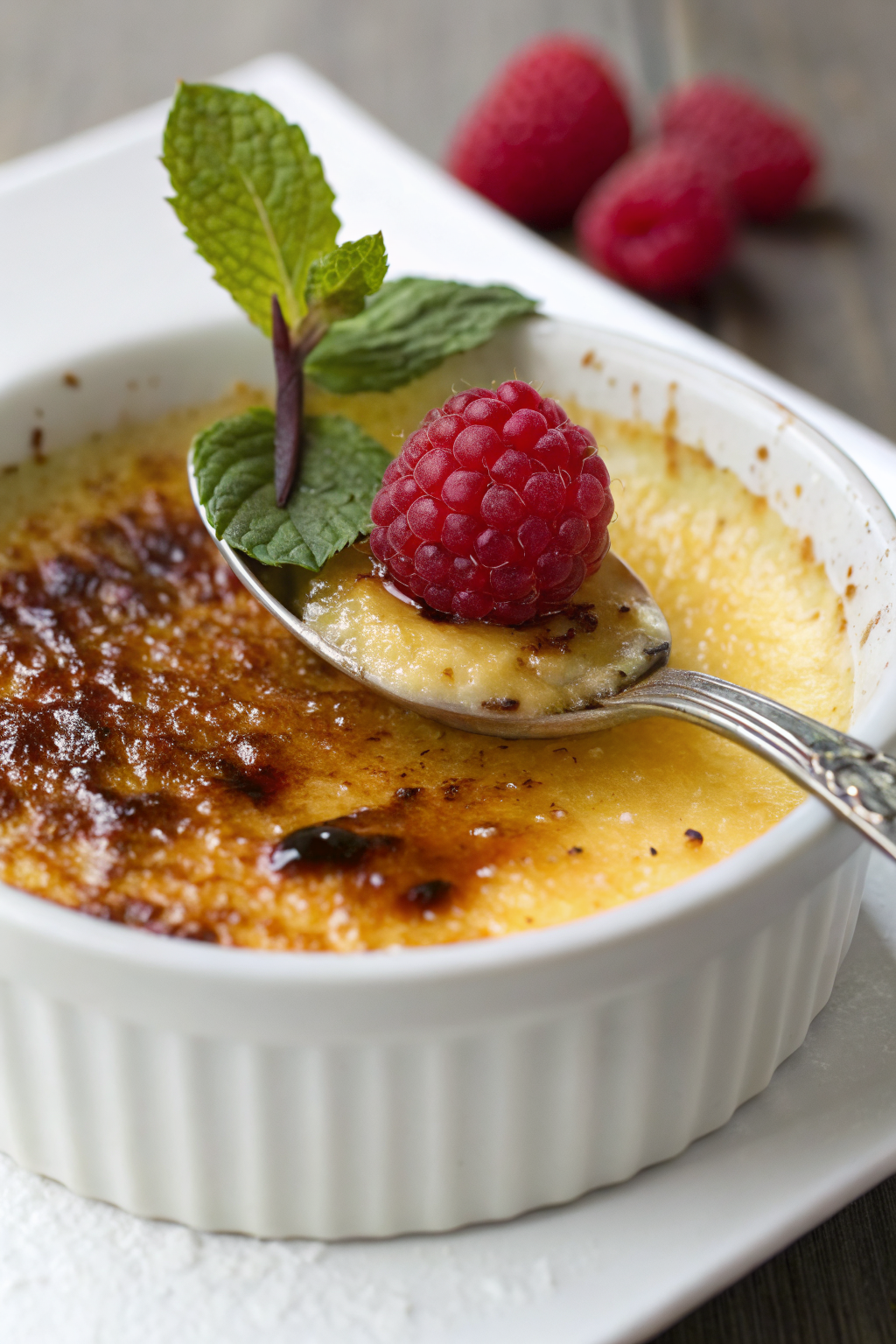
Creme Brulee Recipe
Ingredients
Instructions
- Preheat the oven to 300°F (150°C). Place 6 shallow ramekins in a deep baking dish.
- In a small saucepan, heat the heavy cream and vanilla over medium heat until just steaming, not boiling. Remove from heat and let stand 5 minutes.
- In a mixing bowl, whisk together the egg yolks, 1/2 cup granulated sugar, and salt until pale and slightly thickened.
- Slowly pour the warm cream into the yolk mixture, whisking constantly to avoid scrambling the eggs.
- Strain the custard through a fine-mesh sieve into a large measuring cup or bowl with a spout to remove any cooked egg bits.
- Divide the custard evenly among the ramekins. Pour hot water into the baking dish to reach about halfway up the sides of the ramekins, creating a water bath.
- Bake for 30–40 minutes, or until the edges are set but the centers still have a slight wobble when gently shaken.
- Remove the ramekins from the water bath and let cool to room temperature, then cover and refrigerate for at least 4 hours or until fully chilled.
- Just before serving, sprinkle about 1 tablespoon of granulated sugar evenly over each chilled custard.
- Use a kitchen torch to melt and caramelize the sugar until deep golden and crisp, or place under a broiler for 2–4 minutes, watching carefully to prevent burning. Let the sugar harden for a minute, then serve.
Notes
Approximate per serving (1 of 6): 340 calories; fat 27 g; saturated fat 16 g; carbohydrates 21 g; fiber 0 g; sugars 20 g; protein 4 g; sodium 95 mg. Values will vary based on brands, add-ins, and portion size.