
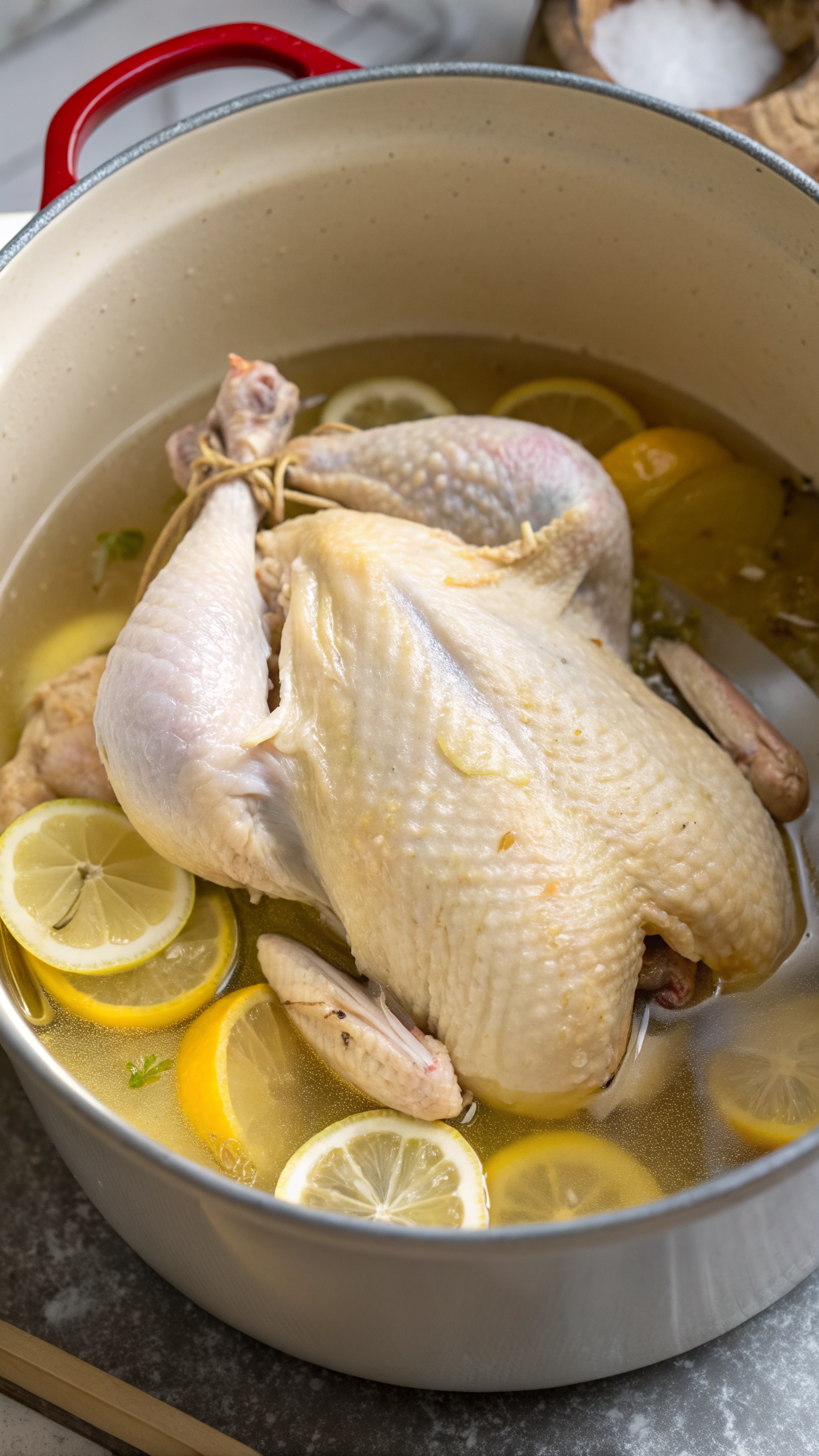
Chicken brining is a simple technique that improves flavor, texture, and juiciness before cooking. It works for whole chicken or parts and can be done wet (saltwater solution) or dry (salt and seasonings). Below is a structured guide to how to brine chicken safely and consistently.
How To Brine Chicken?
Brine chicken by soaking it in a salt solution (about 5–8% salt in water) or coating it with salt (dry brine) before cooking. Submerge or coat the chicken, refrigerate, and let the salt penetrate. Rinse lightly (for wet brine if desired), pat dry, then cook to 165°F (74°C).
Key Steps to Brine Chicken
1. Choose Brine Type
- Wet brine (saltwater)
- Dry brine (salt only)
- Sprinkle salt (and optional spices) directly on chicken
- No added water, less mess, great for crisp skin
2. Basic Ratios and Times
- Wet brine ratio
- About 5–8% salt by weight (roughly ¼ cup kosher salt per 1 quart / 1 liter water)
- Typical brining times
- Boneless breasts: 30–90 minutes
- Bone-in pieces: 1–4 hours
- Whole chicken: 8–24 hours
3. How to Wet Brine Chicken
- Dissolve salt (and optional sugar) in part of the water; use warm water to help dissolve.
- Add remaining cold water and ice to fully cool the brine.
- Submerge chicken completely in a non-reactive container.
- Cover and refrigerate for the recommended time.
- Remove chicken, optionally rinse lightly, and pat very dry before cooking.
4. How to Dry Brine Chicken
- Pat chicken dry.
- Sprinkle kosher salt evenly over all surfaces, under skin where possible.
- Place on a rack over a tray, uncovered or loosely covered, in the refrigerator.
- Refrigerate for the recommended time; longer times benefit whole chicken.
- Do not rinse; simply pat dry and cook.
Types of Brines for Chicken (Categorized List)
Simple Brines
- Basic salt brine
- Water + kosher salt
- Suitable for any cooking method
- Salt and sugar brine
- Water + salt + small amount of sugar
- Promotes browning and mild sweetness
Aromatic Brines
- Herb brine
- Citrus brine
- Add lemon/orange slices, zest, and herbs
- Spiced brine
Special-Purpose Brines
- Buttermilk brine
- Buttermilk + salt; often used before frying
- Tenderizes and adds tang
- Dry brine blends
Why Brining Chicken Works
- Improves moisture retention
Salt alters muscle proteins so they hold more water, helping chicken stay juicy after cooking. - Enhances seasoning throughout
Salt moves into the meat, seasoning it more evenly than surface-only salting. - Improves texture
Proper brining can lead to a more tender, less stringy bite, especially in lean cuts like chicken breast. - Supports browning and flavor development
Some brines (especially with sugar or buttermilk) help browning and deepen flavor when roasted, grilled, or fried.
Cooking Tips for Brined Chicken
- Target internal temperature
- Cook chicken to 165°F (74°C) in the thickest part (USDA guideline).
- Average cooking times (after brining, at common oven temps)
- Boneless breasts at 400°F (204°C): about 15–25 minutes
- Bone-in thighs at 400°F (204°C): about 30–40 minutes
- Whole chicken at 375°F (190°C): about 18–20 minutes per pound
- Surface drying
- After brining, pat chicken very dry to promote browning and crisp skin.
- Salt awareness
- Reduce or skip extra salt in rubs, marinades, or sauces because brined chicken is already seasoned.
- Cooking methods that pair well with brined chicken
- Food safety
- Always brine chicken in the refrigerator (≤40°F / 4°C).
- Discard used liquid brine; do not reuse or consume.
- Wash and sanitize any surfaces that contact raw chicken or brine.
Storage and Freezing Guidelines for Brined Chicken
- Before cooking (after brining)
- Keep raw, brined chicken in the refrigerator and cook within 1 day after brining is complete.
- Keep covered or well wrapped to avoid cross-contamination and odor transfer.
- After cooking
- Refrigerate cooked chicken within 2 hours of cooking.
- Store in airtight containers for 3–4 days in the refrigerator.
- Freezing brined chicken
- Reheating tips
Frequently Asked Questions
How long should I brine chicken?
Brine time depends on size and cut. Boneless chicken breasts usually need 30–90 minutes. Bone-in pieces benefit from 1–4 hours. Whole chicken typically needs 8–24 hours. Avoid excessively long brining, which can lead to overly salty or mushy texture.
Should I rinse chicken after brining?
Light rinsing is optional after a wet brine to remove surface salt, followed by thorough drying. After a dry brine, most cooks skip rinsing and simply pat the chicken dry. If you rinse, clean the sink and nearby surfaces carefully to maintain food safety.
Can I freeze chicken after brining?
Yes. After brining, pat chicken dry, wrap it tightly, and freeze. Raw brined chicken keeps quality for about 2–3 months. Label with date and type of brine. Thaw in the refrigerator before cooking and follow standard cooking temperature guidelines.
Is brining chicken necessary?
Brining is not required but is useful for lean cuts like chicken breast that dry out easily. It improves seasoning and moisture retention, especially for roasting and grilling. For quick weeknight cooking or recipes with sauces, brining is optional but can still be beneficial.
Can I over-brine chicken?
Yes. Over-brining can make chicken too salty and give it a soft, almost cured texture. Follow recommended times: under 2 hours for small pieces and under 24 hours for whole chicken. When in doubt, use the shorter end of the time range and adjust next time.