
Spicy Korean Chicken Recipe hits with sweet heat, sticky sauce, and juicy chicken that tastes like takeout from your favorite Korean spot. It suits busy weeknights, game days, or meal prep, and you can get it on the table in about 40 minutes. I first tested this version for a Sunday Netflix binge and ended up eating it straight from the pan, so consider that your warning.
Why You Should Try This Spicy Korean Chicken Recipe
This Spicy Korean Chicken Recipe brings bold gochujang heat, garlicky depth, and a glossy, slightly sticky glaze that clings to every bite. The sauce balances spicy, sweet, and savory flavors, so it satisfies chili lovers and milder eaters when you tweak the heat.
You cook everything in one pan, so cleanup stays simple and weeknight friendly. The recipe uses easy-to-find ingredients from a regular grocery store, with a few pantry shortcuts that keep the flavor big and the effort small.
“This Spicy Korean Chicken Recipe tastes like restaurant-quality Korean chicken at home, with juicy meat and a glossy, spicy-sweet glaze that disappears fast. ★★★★★”
Ingredients You’ll Need
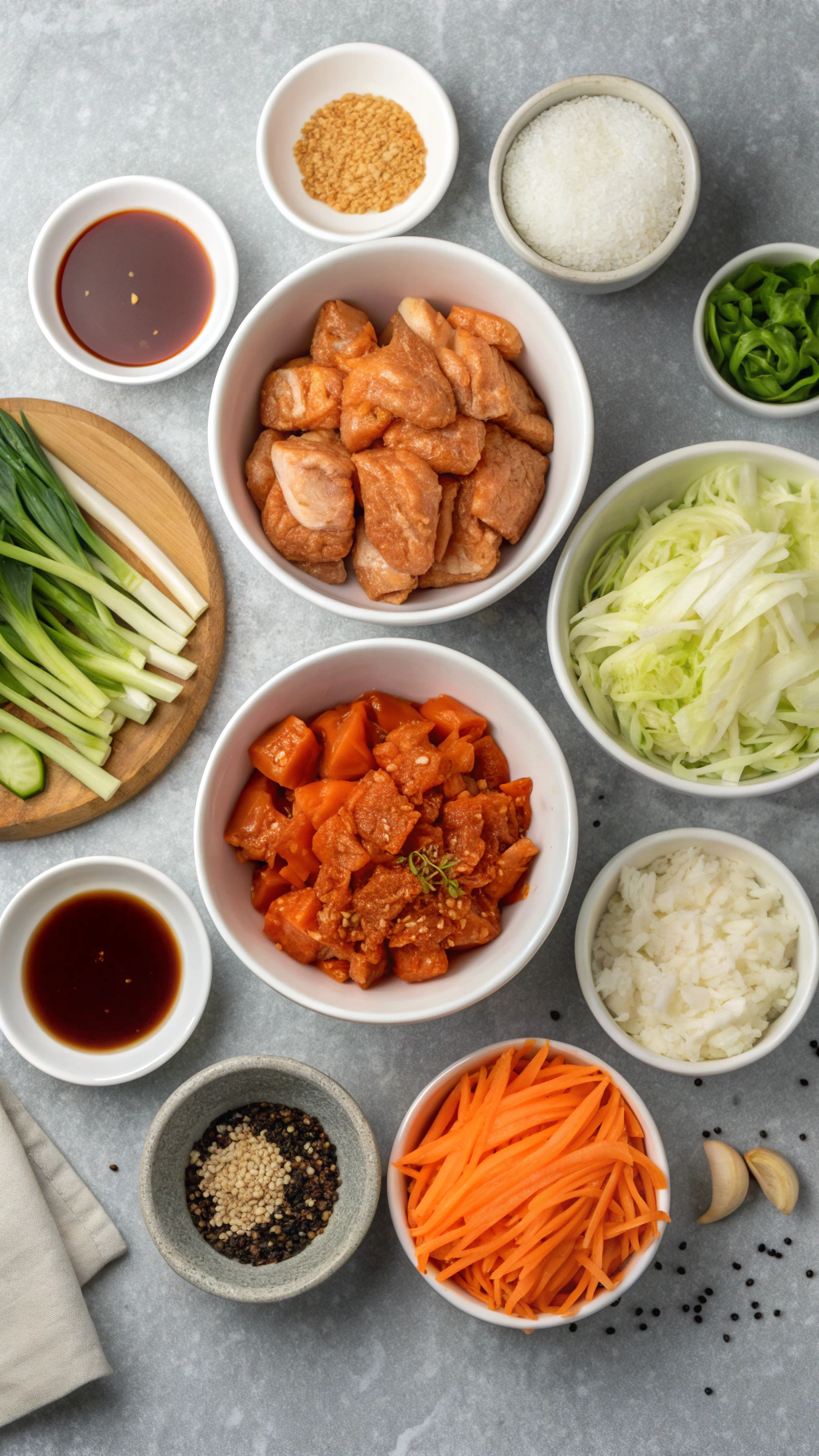
Chicken
- 2 pounds boneless, skinless chicken thighs, trimmed and cut into bite-size pieces
- Thighs stay juicy and forgiving, even if you cook them a minute too long.
- 1 tablespoon soy sauce
- 1 tablespoon rice vinegar
- 1 teaspoon toasted sesame oil
- 1 teaspoon cornstarch
- 1/2 teaspoon kosher salt
- 1/2 teaspoon black pepper
You can swap chicken breasts for thighs if you prefer leaner meat, but watch the cook time so they stay tender. Use firm tofu cubes or cauliflower florets for a vegetarian version and keep the same marinade.
Spicy Korean sauce
- 3 tablespoons gochujang (Korean red chili paste)
- I like brands such as Chung Jung One or CJ Haechandle for balanced heat.
- 1 tablespoon gochugaru (Korean red pepper flakes), or less for milder heat
- 3 tablespoons soy sauce
- 2 tablespoons dark brown sugar, packed
- 1 tablespoon honey
- 2 tablespoons rice vinegar
- 3 cloves garlic, minced
- 1 tablespoon fresh ginger, minced or grated
- 2 tablespoons water
- 1 teaspoon cornstarch
Use gochujang from the Asian aisle or online; it keeps in the fridge for months and works in many spicy recipes. If you cannot find gochugaru, use crushed red pepper flakes and start with half the amount.
Veggies and aromatics
- 1 tablespoon neutral oil (canola, avocado, or grapeseed)
- 1 small yellow onion, thinly sliced
- 1 small carrot, cut into matchsticks or thin slices
- 1 small red bell pepper, thinly sliced
- 3 green onions, sliced (white and green parts separated)
You can toss in zucchini, mushrooms, or cabbage if you need a fridge clean-out night. I often add extra onion for more sweetness and texture.
Garnishes
- 1 teaspoon toasted sesame oil, for finishing
- 1 tablespoon toasted sesame seeds
- Extra sliced green onions
These toppings add crunch and nutty flavor, so I never skip them. Use pre-toasted sesame seeds from the Asian aisle as an easy shortcut.
Pantry shortcuts & substitutions
- Use jarred minced garlic and ginger when you feel tired or rushed.
- Swap brown sugar with coconut sugar or white sugar if needed.
- Use tamari or low-sodium soy sauce if you watch your salt intake.
- Use apple cider vinegar if you run out of rice vinegar, though the flavor turns slightly fruitier.
Equipment list
- Large skillet or sauté pan (10 to 12 inches)
- Medium mixing bowl for marinating chicken
- Small bowl for sauce
- Cutting board and sharp knife
- Measuring cups and spoons
- Spatula or wooden spoon
Tips & Tricks
- Cut chicken into even pieces so it cooks at the same rate and stays juicy.
- Pat chicken dry with paper towels before marinating so the sauce clings better.
- Marinate at least 15 minutes; if you have time, chill it for 30 to 60 minutes for deeper flavor.
- Adjust heat by changing gochugaru: less for mild, more for spicy, or skip it and keep only gochujang.
- Use medium-high heat to sear the chicken so it browns and caramelizes instead of steaming.
- Do not crowd the pan; cook chicken in two batches if needed to keep that nice sear.
- Stir the sauce mixture well so cornstarch dissolves and the glaze thickens evenly.
- Thin the sauce with a splash of water if it thickens too much while it simmers.
- Taste before serving and tweak with a pinch of sugar for sweetness or a splash of vinegar for brightness.
- Serve over hot rice so the extra sauce soaks in and turns the rice into a bonus treat.
How to Make Spicy Korean Chicken
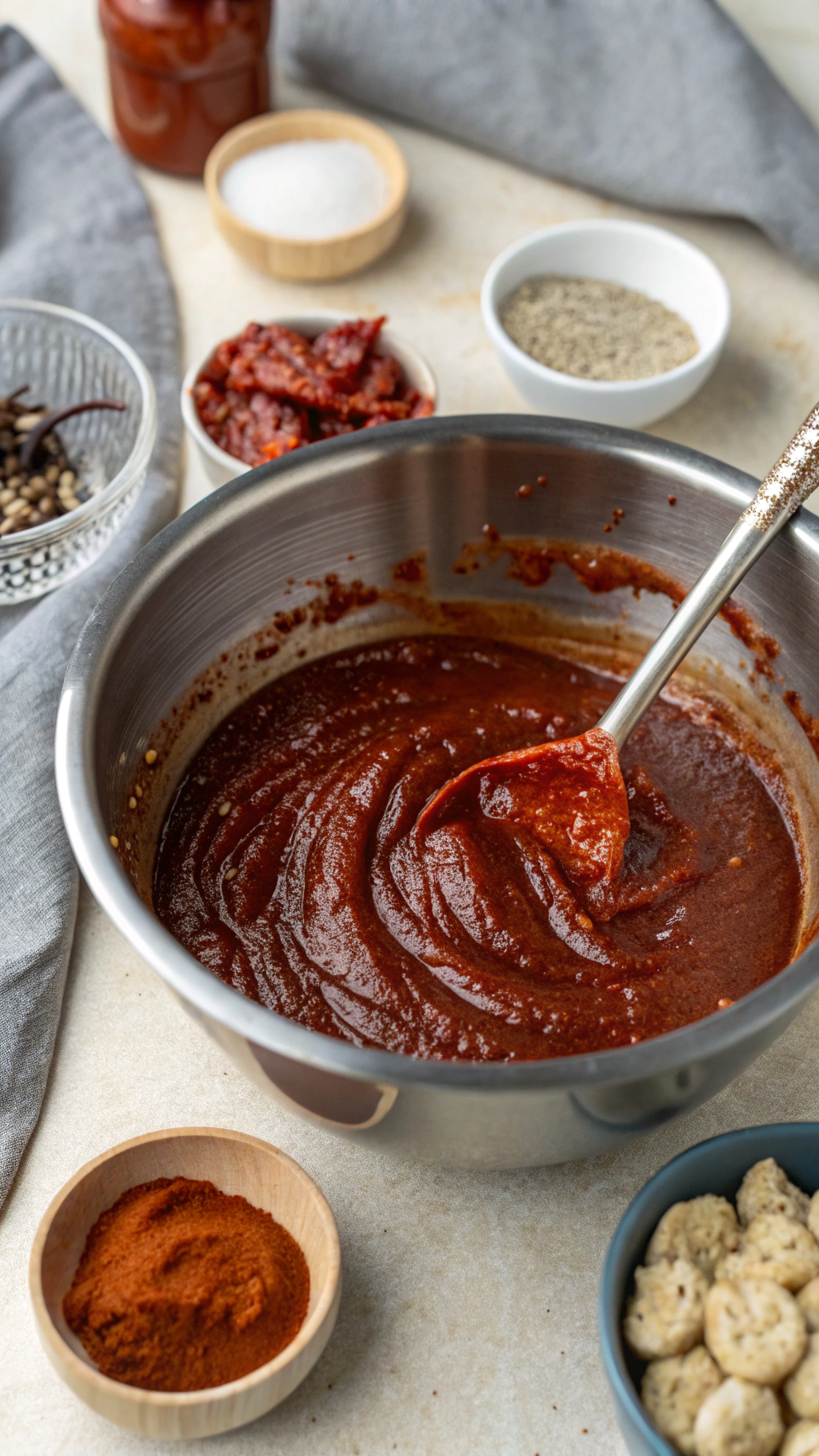
1: Marinate the chicken
Add chicken pieces to a medium bowl. Pour in soy sauce, rice vinegar, sesame oil, cornstarch, salt, and pepper. Toss until every piece looks coated and glossy.
Cover and chill for at least 15 minutes while you prep the sauce and veggies. If you plan ahead, marinate up to 4 hours for extra flavor.
2: Mix the spicy Korean sauce
In a small bowl, whisk gochujang, gochugaru, soy sauce, brown sugar, honey, rice vinegar, garlic, ginger, water, and cornstarch. Stir until the mixture looks smooth and no cornstarch lumps remain. Taste a tiny bit and adjust sweetness or heat to your liking.
Set the bowl near the stove so you can grab it quickly when the chicken finishes searing. This sauce thickens fast once it hits the hot pan.
3: Sauté veggies and aromatics
Heat oil in a large skillet over medium heat. Add sliced onion, carrot, bell pepper, and the white parts of the green onions. Cook and stir until the veggies soften slightly and the onions turn translucent, about 5 to 7 minutes.
Scrape the veggies onto a plate and keep them nearby. They will finish cooking in the sauce with the chicken.
4: Sear the marinated chicken
Increase the heat to medium-high. Add a light drizzle of oil if the pan looks dry, then add the marinated chicken in a single layer. Leave a little space between pieces so they brown instead of steam.
Cook 4 to 5 minutes on the first side until the edges look browned and the bottom develops color. Flip and cook another 3 to 4 minutes until the chicken cooks through and no pink remains in the center.
5: Add sauce and veggies
Lower the heat to medium. Pour the spicy Korean sauce over the chicken and stir to coat every piece. Add the sautéed veggies back into the pan.
Stir and simmer 3 to 5 minutes until the sauce bubbles and thickens into a glossy glaze. If it thickens too much, add a tablespoon of water at a time until it reaches your favorite consistency.
6: Garnish
Turn off the heat. Drizzle the final teaspoon of sesame oil over the chicken and toss. Sprinkle sesame seeds and the green parts of the green onions on top.
Taste one last time and adjust with a tiny splash of soy sauce or vinegar if you want more punch. Try not to eat half the pan while you “taste test” like I do.
What to Serve with Spicy Korean Chicken
Serve this Spicy Korean Chicken Recipe over hot steamed white rice, brown rice, or jasmine rice so the spicy-sweet sauce soaks into every grain. Add simple sides like cucumber salad, steamed broccoli, or sautéed green beans for freshness and crunch. Kimchi, pickled radish, or a basic cabbage slaw also balance the heat and richness.
For a fun twist, tuck the chicken into lettuce leaves with rice and veggies for easy wraps. Kids often enjoy it with less gochugaru and a side of plain rice and sliced cucumbers.
Storage Options
- Store leftover Spicy Korean Chicken Recipe in an airtight container in the fridge for up to 4 days.
- Chill leftovers completely before you cover and freeze them for up to 2 months.
- Reheat gently in a skillet over medium heat with a splash of water until hot and saucy again.
- Use the microwave for quick lunches, heating in short bursts and stirring often so the chicken warms evenly.
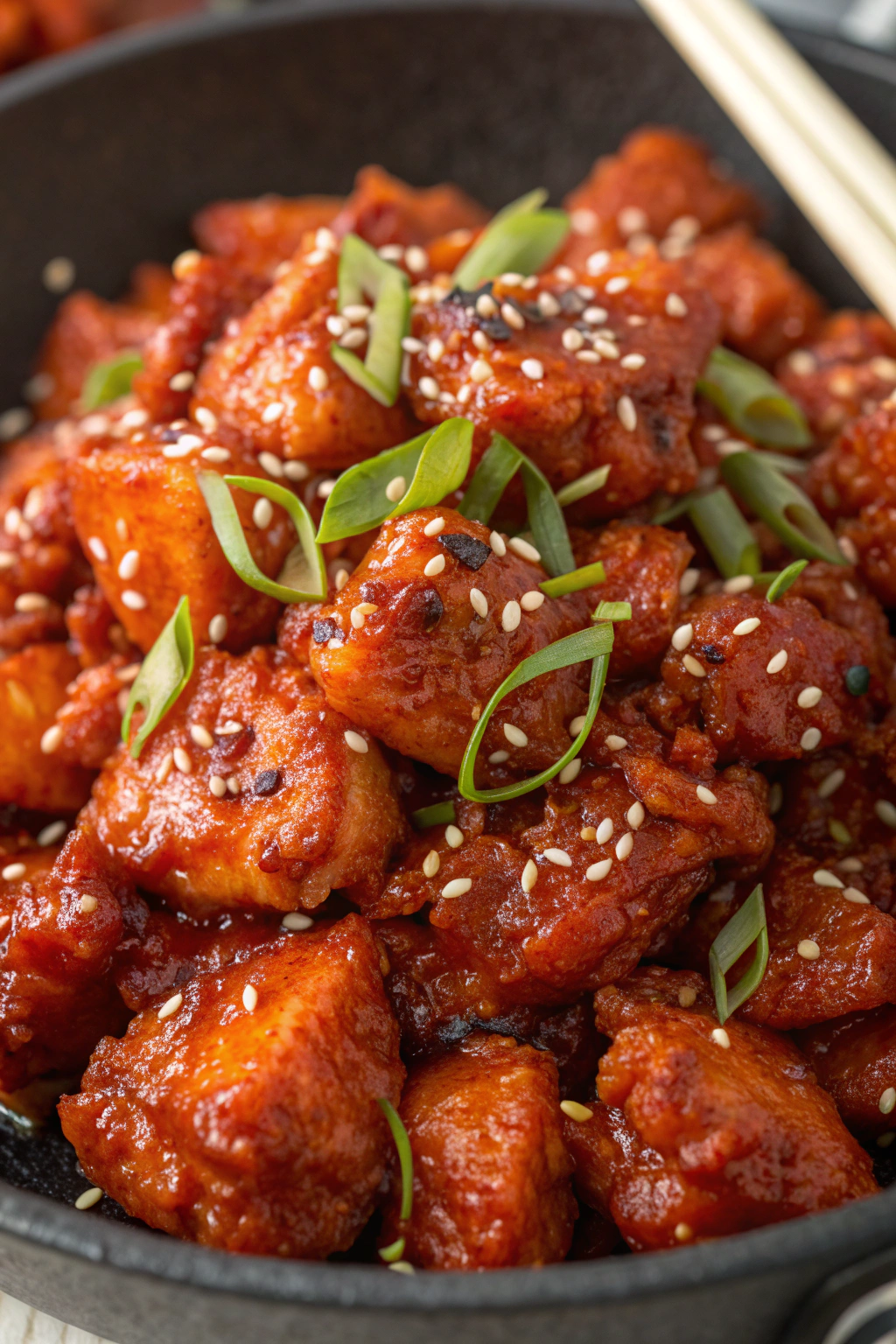
Spicy Korean Chicken Recipe
Ingredients
Instructions
- In a medium bowl, whisk together gochujang, gochugaru (if using), soy sauce, brown sugar, rice vinegar, sesame oil, garlic, ginger, and water to make the marinade and sauce.
- Add the chicken pieces to the bowl and toss until evenly coated. Let marinate for at least 15 minutes (or up to 2 hours in the refrigerator).
- Heat the neutral oil in a large skillet over medium-high heat. Add the sliced onion and carrot and cook for 3–4 minutes until starting to soften.
- Add the marinated chicken along with all the sauce to the skillet. Spread into an even layer and cook, stirring occasionally, for 8–10 minutes until the chicken is mostly cooked through.
- Stir in the chopped cabbage and continue to cook for another 5–7 minutes, until the cabbage is tender and the sauce has thickened and coats the chicken.
- Remove from heat and sprinkle with sliced green onions and toasted sesame seeds if desired. Serve hot with steamed rice and side dishes.
Notes
Approximate per serving (1/4 of recipe, without rice): 340 calories; fat 15 g; saturated fat 3 g; carbohydrates 20 g; fiber 2 g; sugars 12 g; protein 31 g; sodium 980 mg. Values are estimates and will vary based on specific ingredients, brands, and portion sizes.