
Tomato Pesto Recipe hits every craving at once: sweet-tart tomatoes, nutty Parmesan, fresh basil, and a garlicky kick that clings to pasta like it means it. It works for busy weeknights, date nights, or meal prep, and you can pull it together in about 20 minutes, start to finish. I first made a version of this in a tiny apartment kitchen with a $15 blender, so you and your equipment will handle it just fine.
Why Make This Tomato Pesto Recipe at Home
Homemade tomato pesto tastes brighter, fresher, and more customizable than anything in a jar. You control the salt, the garlic level, and the texture, so the flavor fits your taste instead of the other way around.
You also stretch simple pantry ingredients into several meals. A single batch of this Tomato Pesto Recipe can coat pasta, top chicken, fill sandwiches, and upgrade eggs, which saves time and money.
“This Tomato Pesto Recipe tastes like summer in a jar and turns basic pasta into something restaurant-level in minutes. ★★★★★”
Ingredients You Need
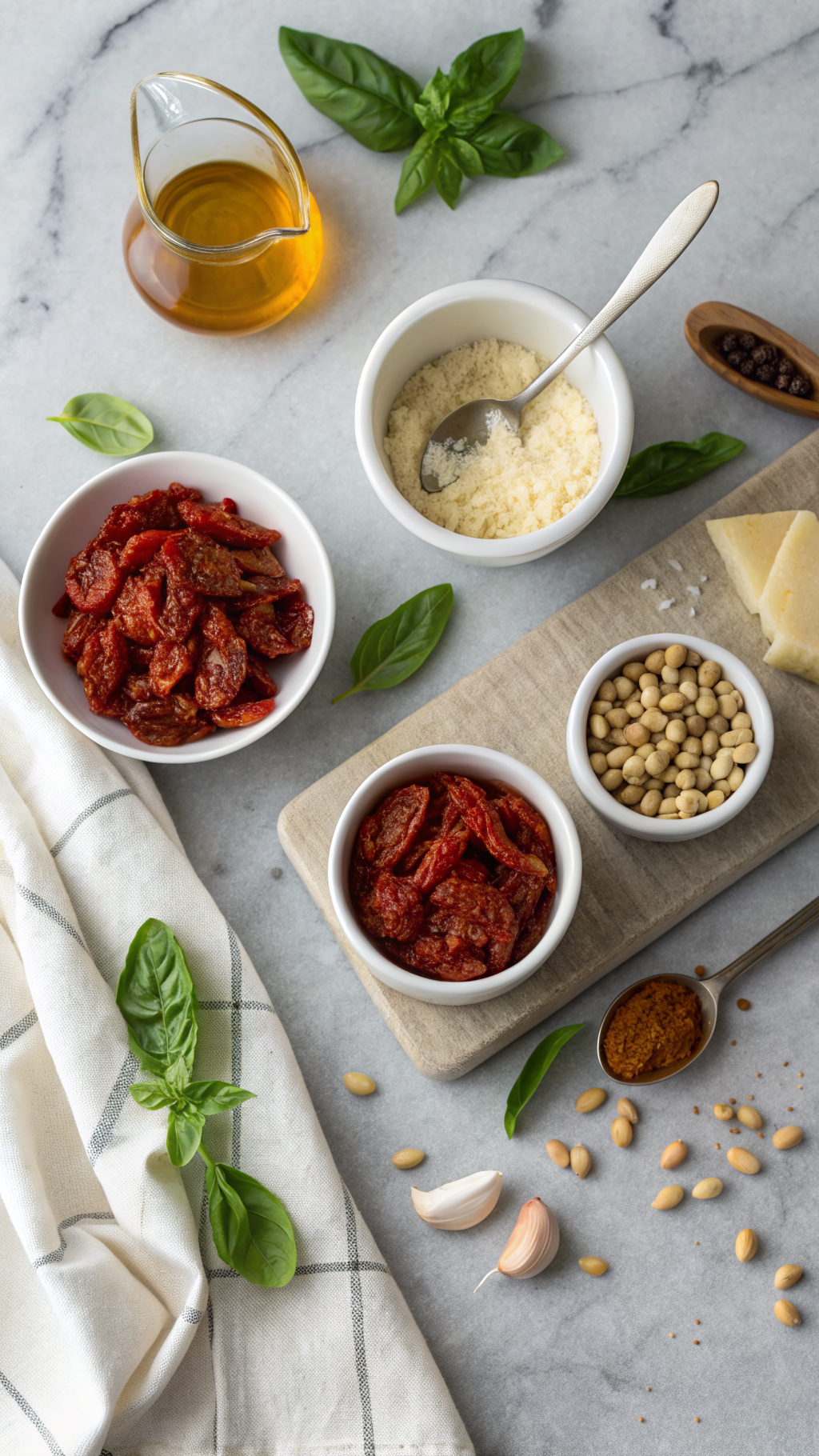
Main ingredients
- Tomatoes
- Fresh basil leaves
- Garlic
- 2 to 3 cloves, peeled
- Use fresh cloves, not the jarred chopped garlic, which tastes sharper and less clean.
- Nuts
- Parmesan cheese
- Olive oil
- 1/2 to 2/3 cup extra-virgin olive oil
- Start with 1/2 cup and add more for a looser, saucier pesto.
- Choose a medium, fruity oil; super peppery oils can overpower the tomatoes.
- Salt and black pepper
- Red pepper flakes (optional)
- 1/4 teaspoon for a gentle heat
- Add more if you like a spicy Tomato Pesto Recipe.
- Lemon juice
- 1 to 2 teaspoons fresh lemon juice
- It brightens the tomatoes and keeps the pesto from tasting heavy.
Optional flavor boosters
- 1 to 2 oil-packed sun-dried tomatoes, patted dry, for deeper tomato flavor
- 1 teaspoon tomato paste for extra richness
- 1 teaspoon sugar or honey if your tomatoes taste very acidic
Pantry shortcuts and substitutions
- Use canned fire-roasted tomatoes when fresh tomatoes look pale and bland.
- Swap Parmesan with Pecorino Romano for a saltier, sharper pesto; reduce added salt.
- Replace pine nuts with toasted sunflower seeds for a nut-free version.
- Use frozen basil cubes in winter and add a handful of fresh parsley to wake up the flavor.
Equipment list
- Food processor or high-speed blender
- Small skillet for toasting nuts
- Cutting board and sharp knife
- Measuring cups and spoons
- Spatula to scrape down the sides
- Airtight jars or containers for storage
Tips & Mistakes
- Toast the nuts until lightly golden, not dark, to avoid a bitter pesto.
- Dry the basil and tomatoes well after rinsing so extra water does not thin the sauce.
- Pulse the garlic and nuts first so you avoid big garlic chunks in the final pesto.
- Add olive oil in a slow stream while the processor runs to keep the texture silky.
- Taste the pesto before adding more salt because Parmesan already adds plenty.
- Use fresh lemon juice at the end to brighten flavor instead of dumping it in early.
- Avoid over-blending; stop when the pesto looks slightly textured, not baby-food smooth.
- Cool hot pasta slightly before tossing with pesto so the heat does not dull the fresh flavor.
- Store pesto with a thin layer of olive oil on top to keep the surface from darkening.
- Skip metal bowls for long storage; use glass jars to keep the flavor clean.
How to Make Tomato Pesto Recipe
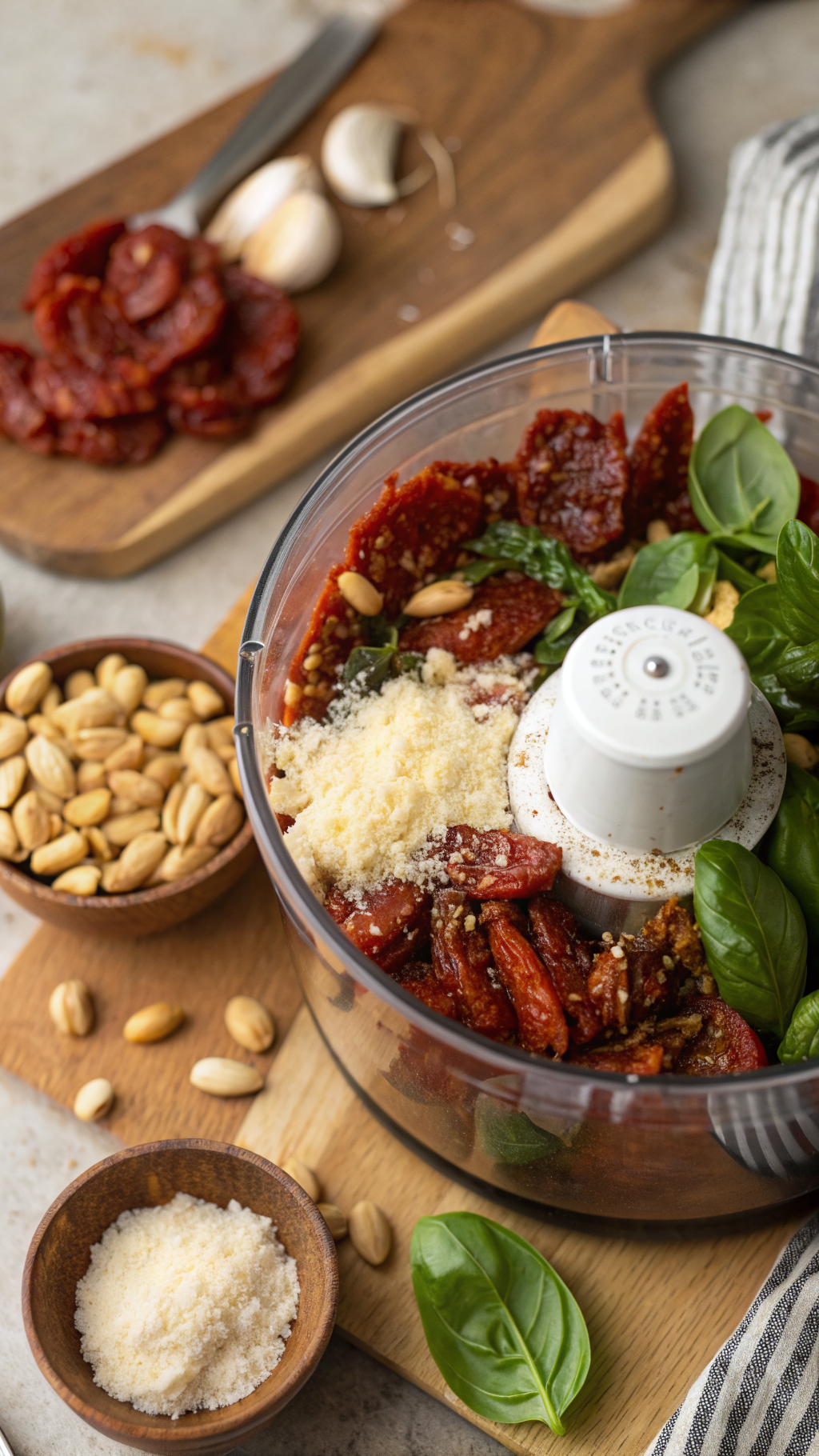
Step 1: Prep the tomatoes and basil
Rinse the cherry tomatoes and pat them dry, then slice them in half. Rinse the basil leaves, spin them dry, and blot with a clean towel so no water pools in the processor. Pick off any black or slimy basil leaves so they do not add bitterness.
Step 2: Toast the nuts
Place the pine nuts in a dry skillet over medium heat. Shake the pan every 20 to 30 seconds until the nuts turn lightly golden and smell nutty, about 3 to 4 minutes. Transfer them to a plate right away so they do not keep cooking.
Step 3: Build the flavor base
Add the toasted nuts and garlic cloves to the bowl of a food processor. Pulse several times until the mixture looks finely chopped. Scrape down the sides so no big garlic pieces hide at the bottom.
Step 4: Add tomatoes, basil, and seasonings
Add the halved tomatoes, basil leaves, salt, black pepper, and red pepper flakes to the processor. If you use sun-dried tomatoes or tomato paste, add them now. Pulse until everything looks finely chopped and combined but still a bit chunky.
Step 5: Stream in the olive oil
Turn the processor to low and slowly pour in 1/2 cup olive oil through the feed tube. Watch the texture as it thickens and smooths out. Add up to 2 more tablespoons of oil if you want a looser Tomato Pesto Recipe for pasta or drizzling.
Step 6: Finish with cheese and lemon
Add the grated Parmesan and 1 teaspoon lemon juice. Pulse a few times until the cheese blends in and the pesto looks thick and spreadable. Taste and adjust with more salt, lemon juice, or red pepper flakes as needed.
Step 7: Use or store
Use the tomato pesto right away with hot pasta, on toast, or as a sauce for chicken or vegetables. If you plan to store it, spoon it into clean jars and smooth the top. Pour a thin layer of olive oil over the surface to protect the color and flavor.
Variations I’ve Tried
I swap half the basil with baby spinach or arugula when my basil stash runs low, which adds a peppery bite and keeps the color bright. I also use smoked almonds instead of pine nuts for a subtle smoky Tomato Pesto Recipe that tastes great on grilled chicken. Sometimes I add a roasted red pepper and a pinch of smoked paprika for a sweeter, deeper flavor that works well on flatbreads.
For a dairy-free version, I skip the Parmesan and add 2 tablespoons of nutritional yeast plus a bit more salt. I also tried a roasted tomato pesto version where I roast the cherry tomatoes with olive oil and garlic until they caramelize, then blend everything; that version tastes richer and slightly jammy. When I want a thicker spread for sandwiches, I cut the oil a bit and pulse less so the texture stays chunky.
How to Serve Tomato Pesto Recipe
Toss the Tomato Pesto Recipe with hot pasta and a splash of pasta cooking water so the sauce clings to every noodle. Spread it on toasted bread, focaccia, or flatbread and top with fresh mozzarella, sliced tomatoes, or grilled vegetables. Use it as a sauce for baked chicken, spoon it over roasted potatoes, or swirl it into warm rice or quinoa. It also tastes great as a dip with raw veggies or spooned over scrambled eggs for a quick breakfast upgrade.
How to store
- Fridge: Spoon the tomato pesto into a clean glass jar, smooth the top, and cover with a thin layer of olive oil. Seal and refrigerate for up to 5 to 6 days.
- Freezer: Portion the pesto into ice cube trays or small containers, freeze until solid, then transfer to freezer bags. Keep frozen for up to 3 months and label with the date.
- Reheating / using from storage: Thaw overnight in the fridge or at room temperature for 20 to 30 minutes. Stir well, add a splash of olive oil or warm pasta water to loosen, and taste for salt and lemon before serving.
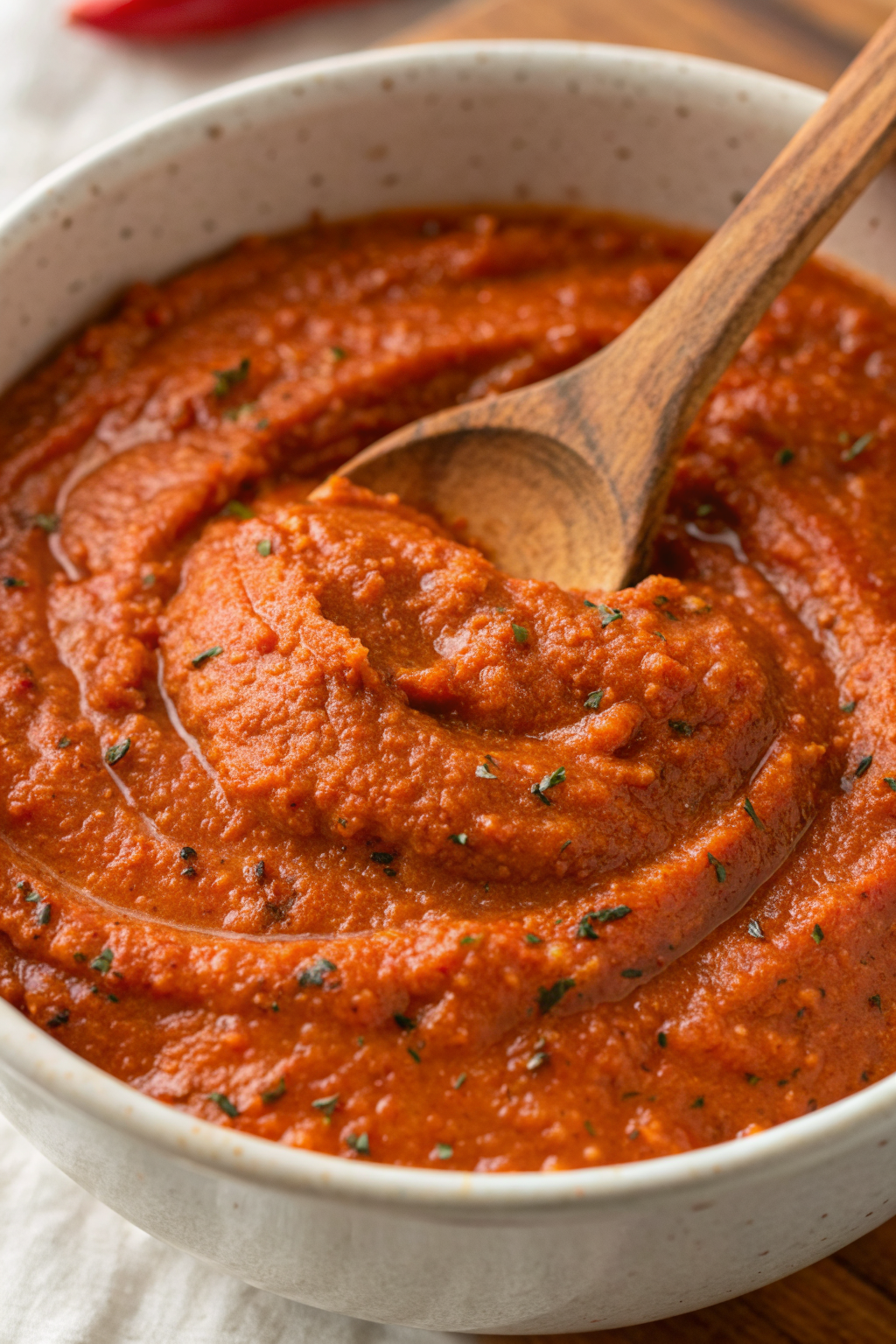
Tomato Pesto Recipe
Ingredients
Instructions
- Add sun-dried tomatoes, basil, Parmesan, pine nuts, and garlic to a food processor.
- Pulse several times until the mixture is finely chopped.
- With the motor running, slowly drizzle in the olive oil (and a little reserved tomato oil if desired) until the pesto reaches a thick but spoonable consistency.
- Season with salt and black pepper to taste, then pulse once or twice to combine.
- Transfer to a jar or bowl, cover, and refrigerate until ready to use. Serve with pasta, as a spread, or as a dip.
Notes
Approximate per 2-tablespoon serving: 120 calories; fat 11 g; saturated fat 2.5 g; carbohydrates 3 g; fiber 1 g; sugars 2 g; protein 3 g; sodium 160 mg. Values will vary based on specific ingredient brands, oil amounts, and portion size.