
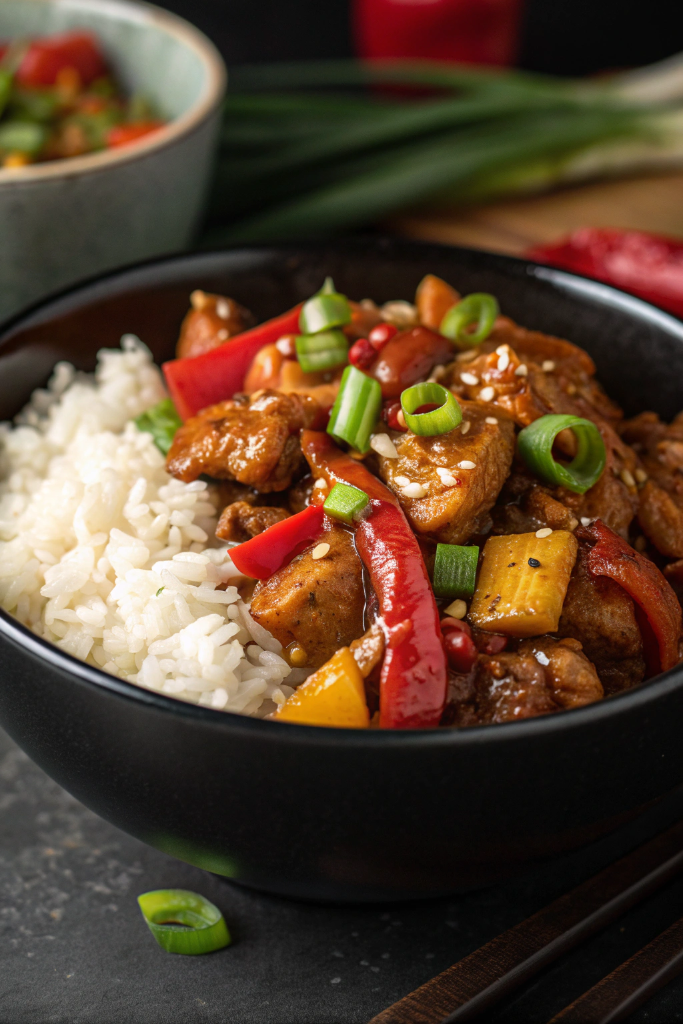
Chicken dishes vary widely across global cuisines. “Compow chicken” is most likely a misspelling or variation of “Kung Pao chicken,” a classic Chinese stir-fry known for its spicy, savory, and slightly sweet sauce with peanuts and vegetables. Below is a clear guide to what this dish typically includes and how it is prepared.
What Is Compow Chicken?
Compow chicken usually refers to Kung Pao chicken, a Chinese stir‑fried dish made with diced chicken, dried chilies, Sichuan peppercorns, peanuts, and vegetables in a salty‑sweet, slightly tangy sauce. It is known for a balance of heat, umami, and mild numbing spice, often served over steamed rice.
Key components of Compow (Kung Pao) chicken
Core ingredients
- Diced boneless chicken (typically breast or thigh)
- Dried red chilies
- Sichuan peppercorns
- Roasted peanuts
- Garlic and ginger
- Scallions or bell peppers
Sauce elements
- Light soy sauce
- Dark soy sauce (optional, for color)
- Rice vinegar or Chinese black vinegar
- Sugar
- Shaoxing wine or cooking wine (optional)
- Cornstarch slurry for thickening
Common variations
- Added vegetables (zucchini, carrots, celery, onions)
- Cashews instead of peanuts
- Reduced chilies for milder heat
- Use of chicken thighs for more richness
Flavor profile of Compow (Kung Pao) chicken
- Spicy heat from dried chilies
- Mild numbing sensation from Sichuan peppercorns
- Savory depth from soy sauce and aromatics
- Slight sweetness balancing the spice
- Light tang from vinegar
Cooking Tips for Compow (Kung Pao) Chicken
- Cut chicken into small, uniform cubes for quick, even cooking.
- Marinate briefly with soy sauce, cornstarch, and a little oil to keep it tender.
- Stir‑fry over high heat in a wok or large skillet.
- Add peanuts near the end to keep them crunchy.
Basic cooking guidelines:
- Chicken is fully cooked at 165°F (74°C).
- Average stir‑fry time: 5–8 minutes for diced chicken over medium‑high to high heat.
- Cook aromatics (garlic, ginger, chilies) briefly to release fragrance without burning.
- Add sauce at the end and simmer 1–2 minutes until thickened and glossy.
Storage and Freezing Guidelines
- Refrigerate leftover Compow chicken in an airtight container within 2 hours of cooking.
- Keep in the refrigerator for 3–4 days at or below 40°F (4°C).
- For freezing, cool completely, then store in freezer‑safe containers or bags for up to 2–3 months.
- Reheat in a skillet over medium heat with a small splash of water to loosen the sauce, or use a microwave in short intervals, stirring between bursts until steaming hot (165°F / 74°C).
Frequently Asked Questions
Is Compow chicken the same as Kung Pao chicken?
In most cases, yes. “Compow chicken” is commonly a misspelling or menu variation of “Kung Pao chicken,” referring to the same or very similar spicy Chinese stir‑fried chicken with peanuts and chilies.
Is Compow (Kung Pao) chicken very spicy?
It can be moderately to highly spicy, depending on the number and type of dried chilies used and whether their seeds are included. Heat can be reduced by using fewer chilies, removing seeds, or adding more vegetables and sauce to dilute the intensity.
Can I make Compow chicken without peanuts?
Yes. You can omit peanuts for allergy or preference reasons. Common substitutes include roasted cashews, sunflower seeds, or leaving nuts out entirely. The dish will lose some of its traditional crunch but remain a recognizable Kung Pao‑style chicken stir‑fry.
How long does Compow chicken take to cook?
Active cooking time is short. Once ingredients are prepped, stir‑frying the chicken, vegetables, and sauce typically takes 8–12 minutes. Ensure the chicken pieces reach an internal temperature of 165°F (74°C) before serving.
Can I make Compow chicken ahead of time?
Yes. Compow chicken can be cooked, cooled, and refrigerated for 3–4 days. For best texture, cook the stir‑fry fresh and only prepare sauce and chopped ingredients in advance, then combine and cook just before serving.
Can I freeze cooked Compow (Kung Pao) chicken?
Yes. Freeze cooled Compow chicken in airtight containers or freezer bags for up to 2–3 months. Thaw overnight in the refrigerator before reheating. Stir‑frying briefly after thawing helps refresh the sauce and texture.