
Shiratama Dango Japanese Dessert Recipe tastes chewy, bouncy, and lightly sweet, and it carries me back to my Tokyo backpacking days. If you want a simple dessert for texture-lovers and a total time of about 20 minutes, this one fits the bill.
Easy Shiratama Dango Japanese Dessert Recipe
Shiratama Dango Japanese Dessert Recipe shines because shiratamako (glutinous rice flour made from short-grain rice) delivers that signature mochi-like bounce without fuss. The dough mixes in minutes, boils in a flash, and cools quickly in an ice bath. You get instant gratification with a clean, delicate flavor that pairs with almost any topping.
You can tweak the texture by adjusting water or swapping in silken tofu for extra tenderness. The method stays consistent, so you get reliable results whether you serve them plain, with kinako sugar, or under a drizzle of syrup. I love how this dessert scales easily for a crowd or a quiet night in.
Ingredients You’ll Need
- Shiratamako (glutinous rice flour), 100 g (about 3/4 cup)
- Pantry swap: Mochiko works in a pinch but yields a slightly softer chew; start with a little less water.
- Brand note: I like Koda Farms for mochiko and any Japanese brand for shiratamako.
- Granulated sugar, 1–2 tbsp (optional, for a touch of sweetness in the dough)
- Water, 90–110 ml, ice-cold
- Texture tip: Add water gradually to hit a soft, pliable “earlobe” feel.
- Optional tofu variation: Silken tofu, 120 g (use in place of most of the water for extra tender dango; add a splash of water only if needed)
- For serving (mix and match):
- Kinako sugar: 2 tbsp kinako + 1–2 tbsp sugar + tiny pinch of salt
- Anko (sweet red bean paste), store-bought or homemade
- Kuromitsu or brown sugar syrup (maple + a touch of molasses works as a shortcut)
- Fresh fruit (sliced strawberries, mango, or peaches)
- Matcha syrup (matcha whisked with a little hot water and sugar)
- Ice water for shocking the dango after boiling
Equipment:
- Digital scale or measuring cups, mixing bowl, silicone spatula
- Pot of boiling water, slotted spoon, and an ice bath
- Small bowl for coatings; skewers or toothpicks if you want classic dango sticks
How to Make Shiratama Dango Japanese Dessert Recipe
- Prep: 10 minutes
- Cook: 5 minutes
- Total: 15–20 minutes
- Mix the dough. Add shiratamako and sugar to a bowl. Pour in cold water a little at a time while mixing with a spatula, then knead by hand until smooth and pliable. If you use silken tofu, mash it into the flour first, then add a splash of water only if the dough feels dry.
- Shape the dango. Roll the dough into a log and cut into 12–16 equal pieces. Roll each piece into a marble-smooth ball, then press a tiny dimple in the center of each ball to help them cook evenly.
- Boil and float. Bring a pot of water to a strong simmer. Slide in the balls, stir once to prevent sticking, and cook until they float, about 1–2 minutes. Keep cooking 1–2 more minutes for a set, chewy center.
- Chill and drain. Lift the dango with a slotted spoon and plunge them into an ice bath for 30–60 seconds. Drain well so coatings stick.
- Finish and serve. Toss warm or cooled dango in kinako sugar, spoon over anko, or drizzle with syrup. Skewer if you want the classic look, then serve right away.
Expert tips & Mistakes to Avoid
- Weigh the flour for consistency; cups vary.
- Add water slowly; a few drops can swing the texture.
- Aim for a soft, smooth dough; dry cracks mean you need a touch more moisture.
- Press a small dimple in each ball for even cooking and less center gumminess.
- Stir right after you add them to the pot so nothing sticks to the bottom.
- Let them float, then give them an extra minute or two to set the chew.
- Chill briefly; long soaks in ice water can dull the texture.
- Coat or sauce after draining; wet surfaces shed toppings.
- Serve soon after cooking; refrigeration firms them up.
- If they feel too firm later, rewarm briefly in hot water to bring back the bounce.
Variations I’ve Tried
- Gluten-free: The base is rice flour, so it fits a gluten-free menu; pick GF toppings and sauces.
- Vegan: The dough and most toppings like anko and kinako are plant-based; choose dairy-free ice cream if you add it.
- Tofu swap: Use silken tofu to make extra tender dango with a slightly richer taste.
- Mochiko version: Use mochiko when shiratamako isn’t available; add water gradually since it hydrates differently.
- Flavor the dough: Knead in 1–2 tsp matcha, black sesame powder, cocoa, or citrus zest.
- Filled dango: Wrap the dough around tiny anko balls for a bite-size surprise.
- Mitarashi glaze: Simmer 2 tbsp soy sauce, 3 tbsp sugar, 4 tbsp water, and 1 tsp cornstarch until glossy.
How to Serve Shiratama Dango
Serve warm or chilled with anko, kinako sugar, or a drizzle of kuromitsu. Pair with hot sencha, iced matcha, or a scoop of vanilla or yuzu ice cream. I also love a fruit bowl on the side, since the clean, chewy dango plays nicely with juicy berries or sliced mango.
Make-Ahead and Storage
- Prep ahead: Keep unshaped dough wrapped in plastic for up to 4 hours in the fridge; shape right before cooking.
- Fridge: Store cooked dango (uncoated) in an airtight container for up to 24 hours; they firm up, which suits skewers and glazing.
- Reheat: Dip refrigerated dango in hot water for 20–30 seconds or microwave under a damp paper towel for 10–15 seconds to bring back the chew.
- Freeze: Lay uncooked balls on a tray, freeze until solid, then bag for up to 1 month. Boil from frozen and add about 1 minute to the cook time. Keep toppings separate until serving.
Nutrition Information
Calories: about 180 per serving (6 plain pieces, no toppings).
Protein: low; Carbs: high from rice flour; Fat: minimal. Tofu dough adds a touch of protein, while kinako adds some protein and fat; syrups and anko raise carbs.
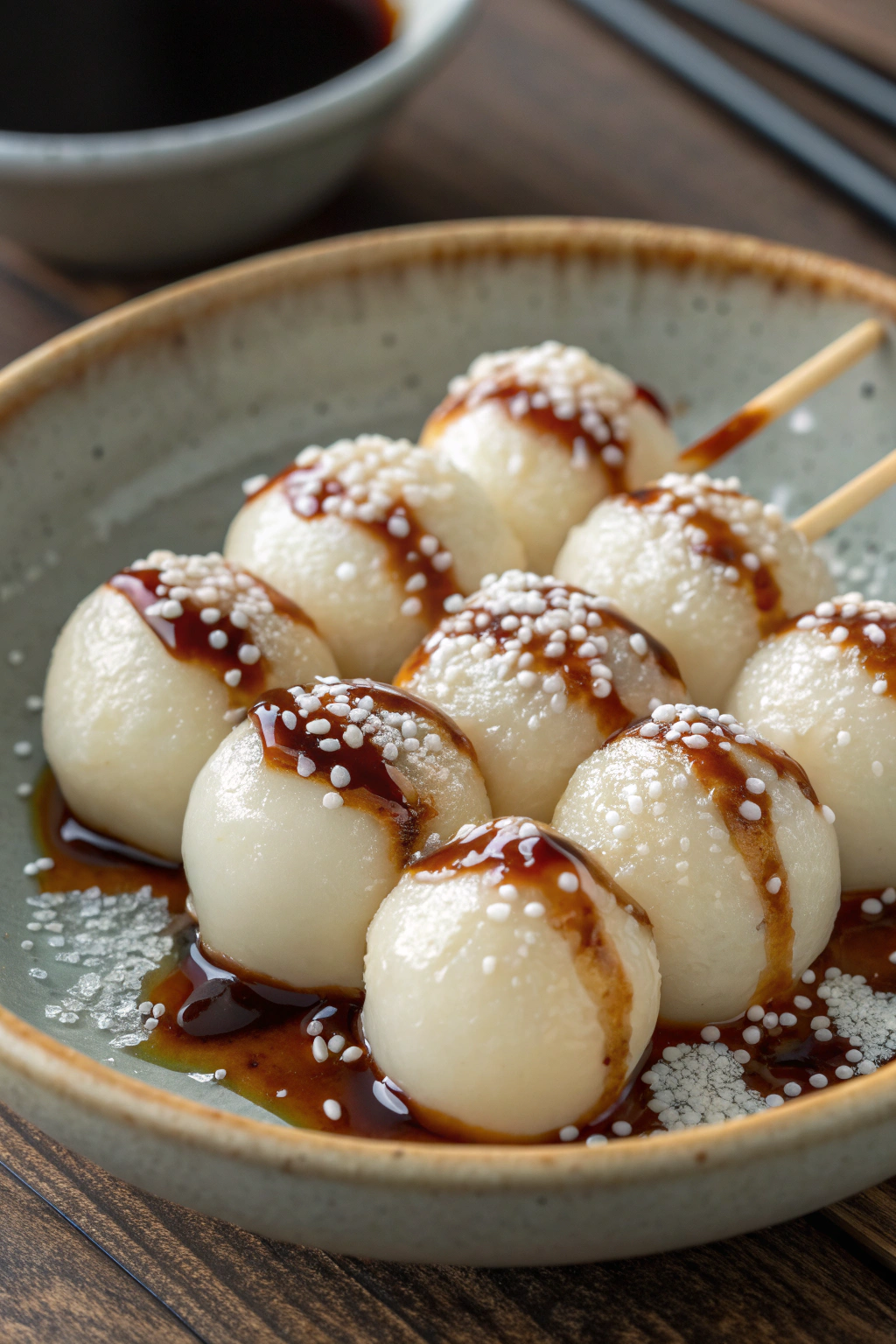
Shiratama Dango Japanese Dessert
Ingredients
Instructions
- In a bowl, combine shiratamako and sugar (if using). Gradually add water and knead until a soft, smooth dough forms.
- Divide the dough into small, equal pieces and roll each piece into a ball about the size of a marble.
- Bring a pot of water to a boil. Carefully drop the dough balls into the boiling water.
- Once the dango floats to the surface, let it cook for another minute, then remove with a slotted spoon.
- Place cooked dango immediately into a bowl of cold water to cool.
- Drain and serve with anko, sliced fruits, or a dusting of kinako as desired.