
Gyudon Japanese Beef Rice Bowl Recipe is my weeknight comfort bowl when I want big flavor with minimal effort. I fell for gyudon during a Tokyo layover where a steamy bowl saved me from jet lag and hanger in one go. You get ribbons of tender beef, sweet onions, and a savory-slightly-sweet dashi-soy broth soaking into fluffy rice. It suits busy cooks, students, and anyone craving a cozy Japanese donburi that lands on the table in about 25 minutes.
Easy Gyudon Japanese Beef Rice Bowl Recipe
Gyudon Japanese Beef Rice Bowl Recipe shines because thin-sliced beef cooks in minutes and stays tender in a lightly sweet, umami-rich broth. The combo of dashi, soy sauce, mirin, and sake hits salty, sweet, and savory notes that taste balanced and comforting. Sweet onions melt into the broth and turn silky, so every spoonful feels satisfying without heaviness.
I use dashi for depth, but I also keep hondashi granules on hand for a fast pantry shortcut. I slice the beef very thin or buy pre-sliced shabu-shabu packs from the Asian market. The result tastes restaurant-level, and you still wash just one pan.
Ingredients You’ll Need
• Servings: 4
Broth and aromatics
- 1 cup dashi stock (or 1 cup water + 1 tsp hondashi granules; low-sodium beef broth works in a pinch)
- 1/4 cup low-sodium soy sauce (Yamasa or Kikkoman work great; use tamari for gluten-free)
- 3 tbsp mirin (hon-mirin for best flavor; use “aji-mirin” if that’s what you have)
- 2 tbsp sake (dry sherry works)
- 1–1.5 tbsp sugar (adjust to taste; honey works)
- 1-inch knob fresh ginger, thinly sliced
Beef and onions
- 1 lb (450 g) very thinly sliced beef (ribeye, chuck, or pre-sliced shabu-shabu beef)
- 2 medium yellow onions, thinly sliced (about 4 cups)
- 1 tsp neutral oil, optional (only if your pan sticks)
For serving
- 4 cups hot cooked Japanese short-grain rice (Koshihikari or Calrose)
- Beni shoga (pickled red ginger), to taste
- 2 scallions, thinly sliced
- Shichimi togarashi, to taste
- 4 soft eggs (onsen, poached, or jammy), optional
- Toasted sesame seeds, optional
Pantry notes and swaps
- No sake: use 2 tbsp water + 1 tsp rice vinegar + 1/2 tsp sugar.
- No mirin: use 2 tbsp water + 1 tbsp sugar, then taste and tweak.
- Gluten-free: use tamari and a gluten-free dashi or homemade kombu-shiitake stock.
How to Make Gyudon Japanese Beef Rice Bowl
Prep: 10 minutes • Cook: 15 minutes • Total: about 25 minutes
- Cook the rice: Rinse 2 cups Japanese short-grain rice until the water runs mostly clear, then cook in a rice cooker or on the stovetop. Keep it hot and fluffy for serving.
- Slice and prep: Thinly slice onions. If slicing beef at home, chill it in the freezer for 20–30 minutes so you can slice paper-thin pieces.
- Mix the broth: In a bowl, whisk dashi, soy sauce, mirin, sake, sugar, and ginger until the sugar dissolves.
- Soften the onions (5–7 minutes): Add onions and the broth to a wide skillet or shallow pot. Bring to a lively simmer over medium heat and cook until onions turn tender and sweet.
- Add the beef (2–3 minutes): Spread beef slices into the simmering broth in a single layer. Nudge them under the surface so they cook evenly, and cook just until the pink fades.
- Skim and balance (1 minute): Skim any foam for a clean-tasting broth. Taste and adjust with a pinch of sugar or a splash of soy to hit your sweet-salty spot.
- Assemble bowls: Mound hot rice in bowls. Spoon beef, onions, and a little broth over the top.
- Finish and serve: Add beni shoga, scallions, and shichimi togarashi. Crown each bowl with a soft egg if you like and serve right away.
Expert tips & Mistakes to Avoid
- Slice thin for tenderness: Chill the beef before slicing so you get shabu-shabu thin ribbons that cook in seconds.
- Don’t boil the beef: Keep a gentle simmer; high heat can tighten the beef and turn it tough.
- Use dashi for depth: Hondashi granules make a fast, flavorful stock; beef broth works but tastes heavier.
- Balance the sweetness: Start with 1 tbsp sugar, then fine-tune. Too sweet? Add a splash of soy and a bit more dashi.
- Mind the salt: Use low-sodium soy, especially if you use hondashi. You can always add more at the end.
- Skim the broth: Skim foam for a clean, clear flavor and better presentation.
- Rice matters: Use Japanese short-grain rice for that sticky, fluffy bite. Other rice won’t soak the broth the same way.
- Don’t drown the rice: Spoon just enough broth to coat and moisten so the bowl stays balanced, not soupy.
Variations I’ve Tried
- Gluten-free: Use tamari and gluten-free dashi. Check mirin labels since some brands add wheat-based ingredients.
- No alcohol: Swap sake and mirin with water plus a touch of rice vinegar and extra sugar, then adjust to taste.
- Low-carb: Serve over cauliflower rice or shirataki “rice.”
- Extra veg: Add sliced shiitakes, enoki, or a handful of spinach in the last minute. Napa cabbage works too.
- Spicy: Add a drizzle of rayu (chili oil) or sprinkle extra shichimi togarashi.
- Cheese gyudon: Melt a thin slice of mild cheese over the hot beef for a yoshoku-style twist.
- Vegan “gyu”-don style: Use pressed tofu or thick-cut mushrooms (shiitake + oyster) and simmer in kombu-shiitake dashi with soy and mirin.
What to Serve With it
I pair gyudon with a simple miso soup and a crisp cucumber salad dressed with rice vinegar and sesame oil. Quick-pickled veggies or store-bought takuan add crunch and a little tang that cuts the richness. Blanched bok choy or sautéed spinach rounds out the greens without stealing the spotlight. For drinks, I like chilled green tea, light beer, or sparkling water with lemon.
Make-Ahead and Storage
Make-ahead: Mix the broth base up to 4 days in advance and keep it chilled. Slice onions a day ahead and keep them covered. Cook rice close to serving so it stays fluffy, or reheat leftover rice with a splash of water and a covered steam in the microwave.
Storage and reheating: Chill leftover beef and onions in an airtight container for up to 3 days; store rice separately for best texture. Reheat the beef gently in a saucepan or in the microwave with a splash of water or dashi to keep everything juicy. Freeze the beef-onion mixture for up to 1 month if you want longer storage; thaw overnight and warm gently. Add eggs and fresh toppings right before serving.
Nutrition Information
Approximate per serving with rice and without egg: 600–650 calories; 30–35 g protein; 85–95 g carbs; 18–24 g fat. The numbers shift based on the beef cut (ribeye runs richer than top round) and how much sugar you add. A soft egg adds about 70 calories and 6 g protein. If you use tamari and kombu-shiitake stock, sodium and flavor will vary, so season to taste.
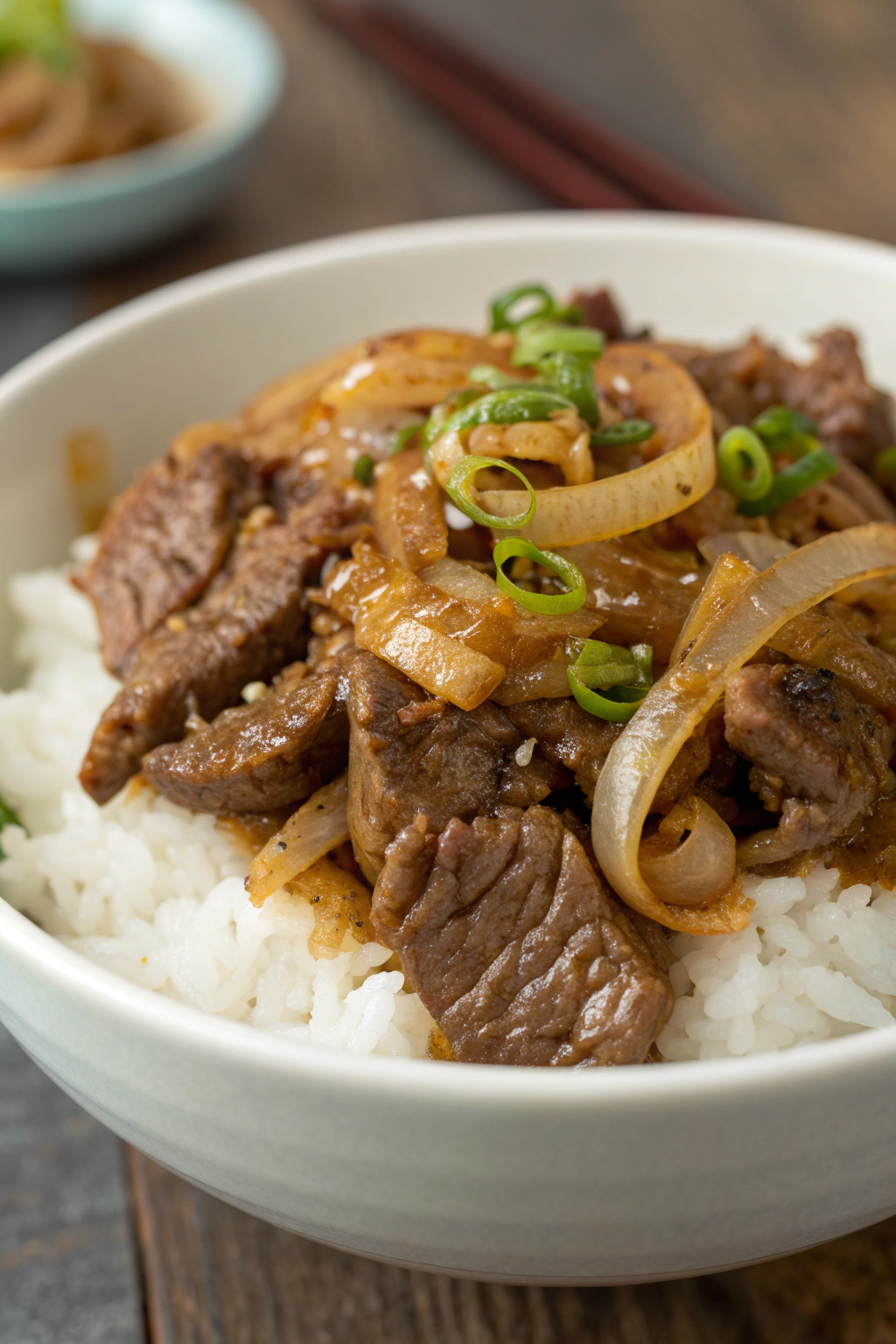
Gyudon Japanese Beef Rice Bowl Recipe
Ingredients
Instructions
- In a pan, combine dashi, soy sauce, mirin, sugar, and sake, and bring to a gentle boil over medium heat.
- Add the sliced onions and simmer until they become soft and translucent.
- Add the thinly sliced beef to the pan, separating the pieces. Cook until the beef changes color, about 2–3 minutes.
- Reduce heat and simmer everything together for an additional 3–5 minutes to allow the flavors to blend.
- Scoop hot cooked rice into bowls. Spoon the beef and onion mixture with some sauce over the top.
- Garnish with pickled red ginger and sliced spring onions if desired. Serve immediately.