
How to Make Homemade Sausage tastes juicy, savory, a little rustic, and way better than anything that sits in plastic at the store. It works for curious home cooks who want a weekend project that takes about 1 ½ to 2 hours of active time, plus chilling. I grew up in the Midwest where sausage counts as its own food group, so this recipe lives very close to my heart and my freezer.
Why Homemade Sausage Recipe Is Worth It
You control everything: the meat quality, the fat level, the salt, and the seasonings. That means no mystery ingredients, no weird sweetness, and no “why does this taste like breakfast candy” moments.
You also get incredible texture. Freshly ground meat cooks up juicy, with a satisfying bite that pre-packed links rarely match. Once you learn the basics, you can season a batch for breakfast, pizza, pasta, or grilling without changing the core method.
“This homemade sausage tastes like a butcher shop special and ruined store-bought links for my whole family in one weekend.” ★★★★★
Ingredients You Need
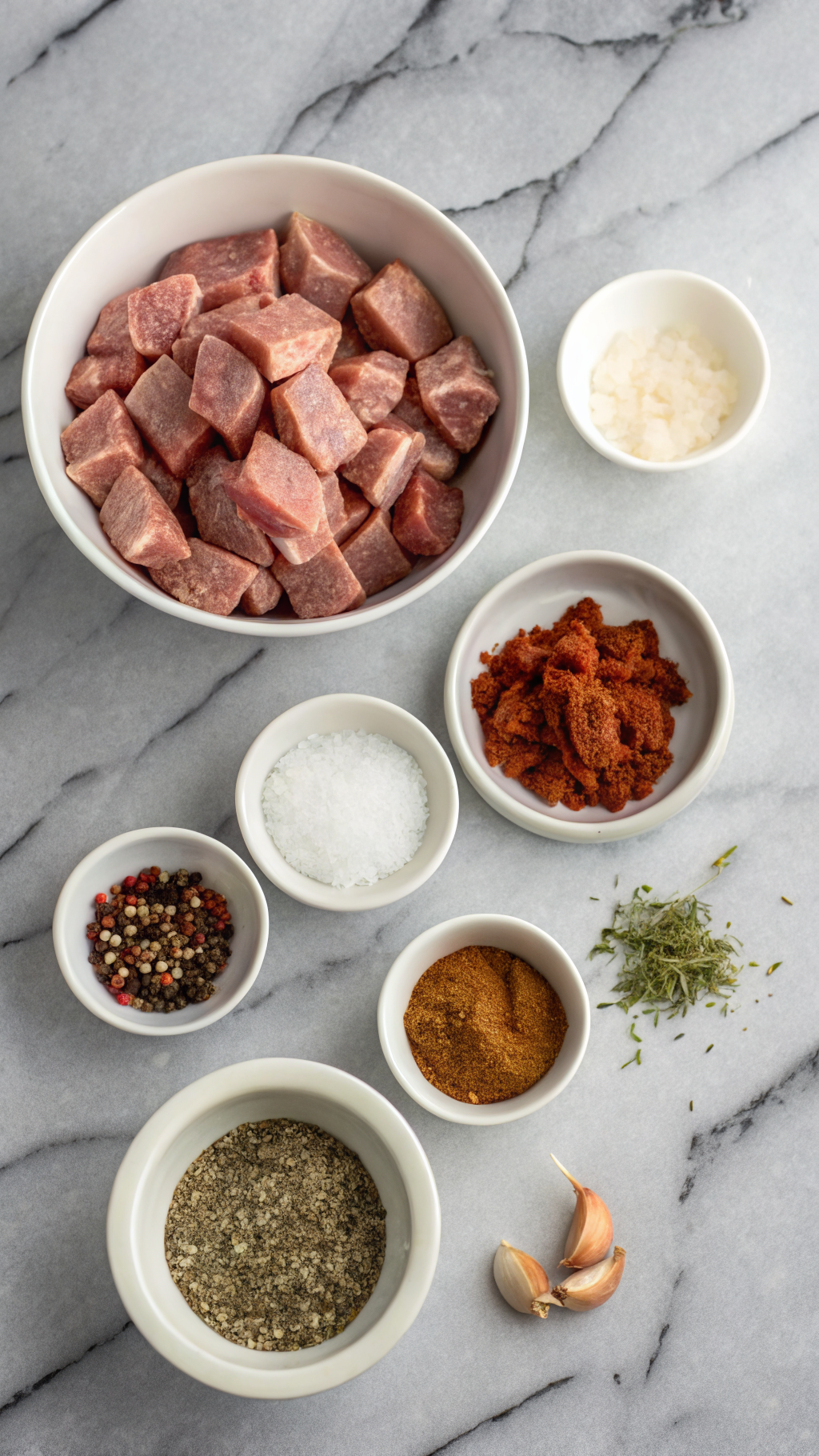
Meat and fat
- 3 pounds pork shoulder, well marbled, trimmed of tough skin
- 8 to 10 ounces pork fatback or very fatty pork belly
- 1 to 2 tablespoons ice-cold water, as needed for texture
I like pork shoulder because it stays juicy and affordable. If your shoulder looks lean, add a bit more fatback so the mix hits roughly 70 percent meat to 30 percent fat.
Seasoning base
- 1 tablespoon kosher salt (Diamond Crystal; use 2 teaspoons if you use Morton)
- 2 teaspoons freshly ground black pepper
- 2 teaspoons garlic powder or 4 cloves fresh garlic, very finely minced
- 2 teaspoons onion powder
- 1 tablespoon sweet paprika
- 1 teaspoon smoked paprika, optional for a subtle smoky note
- 1 teaspoon crushed red pepper flakes, more or less to taste
- 1 tablespoon brown sugar or maple sugar, optional for breakfast-style sausage
You can swap garlic powder with granulated garlic without any trouble. If you use fresh garlic, mince it very fine so it blends evenly and does not clump.
Optional flavor add-ins
- 1 tablespoon fennel seeds, lightly crushed, for Italian-style sausage
- 1 teaspoon dried thyme or oregano
- 1 teaspoon dried sage for breakfast sausage
- 2 tablespoons very cold milk for a slightly softer texture
- 2 tablespoons finely chopped fresh parsley for a brighter flavor
Casings and equipment
- 10 to 15 feet natural hog casings, rinsed and soaked in warm water
- Meat grinder with coarse and medium plates
- Sausage stuffer attachment or dedicated stuffer
- Large mixing bowl, preferably metal and chilled
- Food-safe gloves, optional but helpful
- Baking sheet or tray for holding links
- Instant-read thermometer for checking doneness
If you do not want to use casings, you can shape the mix into patties or loose sausage for sauces and pizzas. A stand mixer with a grinder and stuffer attachment works very well for home sausage making.
Quick Tips & substitutions
- Chill the meat and fat until very firm so the grinder cuts cleanly instead of smearing.
- Slice meat and fat into 1 inch strips so they feed through the grinder easily.
- Use pork shoulder or Boston butt for the best balance of flavor and fat.
- Swap up to one third of the pork with dark meat chicken or turkey for a lighter version.
- Keep all equipment cold; place grinder parts in the freezer for 20 minutes before grinding.
- Mix the sausage by hand until it looks sticky and cohesive; that texture helps links stay juicy.
- Test a small patty in a skillet so you can adjust salt and spices before stuffing casings.
- Use collagen casings if natural hog casings feel intimidating; they work well for beginners.
- Skip casings entirely and form patties if you want the flavor without the extra step.
- Use smoked paprika and a pinch of liquid smoke for a grill-style flavor without a smoker.
How to Make Homemade Sausage
Prep the meat and casings
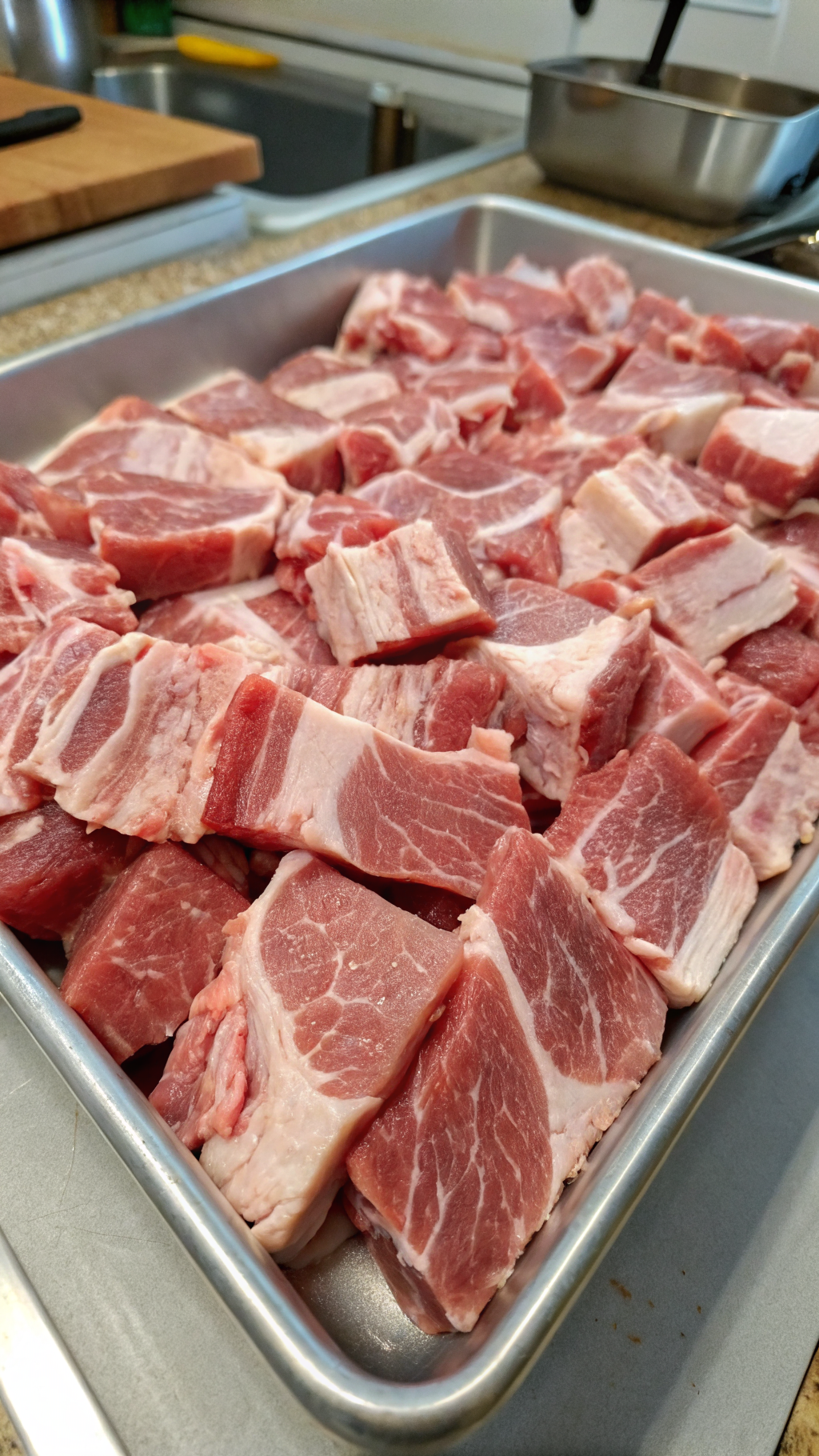
Trim the pork shoulder and fatback of any tough skin or silverskin, but keep the soft fat. Cut everything into 1 inch chunks or strips and spread them on a tray. Place the tray and grinder parts in the freezer for 20 to 30 minutes until the meat feels very firm but not frozen solid.
Rinse the hog casings under cool running water, inside and out. Let them soak in warm water while you grind and season the meat. This step softens the casings and makes them easier to slide onto the stuffer.
Grind the meat
Set up your grinder with the coarse plate. Feed the chilled meat and fat through the grinder into a large chilled bowl. Alternate meat and fat pieces so the grind mixes evenly.
If the meat starts to smear or look mushy, stop and chill everything again for 10 to 15 minutes. For a finer texture, grind the mixture a second time through a medium plate. Keep the bowl of ground meat in the fridge while you measure the seasonings.
Season and mix
Sprinkle the salt, pepper, garlic, onion powder, paprikas, red pepper, sugar, and any herbs over the ground meat. Drizzle in 1 tablespoon of ice-cold water. Mix with your hands, squeezing and folding, until the mixture looks sticky and uniform.
The mix should cling to your hand when you lift it. If it feels crumbly or dry, add another teaspoon or two of cold water and mix again. This step develops a good bind so the sausage slices cleanly and stays juicy.
Test the flavor
Pinch off a small patty of sausage mixture. Cook it in a lightly oiled skillet over medium heat until browned and cooked through. Taste for salt, heat, and herb balance.
Adjust the seasoning in the main bowl if needed. Add more salt in small pinches, more crushed red pepper for heat, or extra herbs for a stronger style. Mix again until everything looks even.
Prep the stuffer and casings
Set up your sausage stuffer or stuffer attachment on the grinder. Drain the casings and run fresh water through them one more time. Slide one end of a casing onto the stuffer tube, bunching the rest up like an accordion.
Tie a knot at the end of the casing, or leave a few inches to tie later if you prefer. Keep the remaining casings in warm water so they stay pliable. Work with one casing at a time so they do not tangle.
Stuff the sausage
Fill the stuffer with sausage mixture, pressing out any air pockets. Start the stuffer slowly while you guide the casing off the tube with one hand. Let the casing fill firmly but not so tight that it looks stretched to the limit.
Keep a steady pace so the sausage fills evenly. When you reach the end of the casing, leave a few inches empty and cut the casing. Tie off the end with a knot, then set the long coil on a tray.
Form links
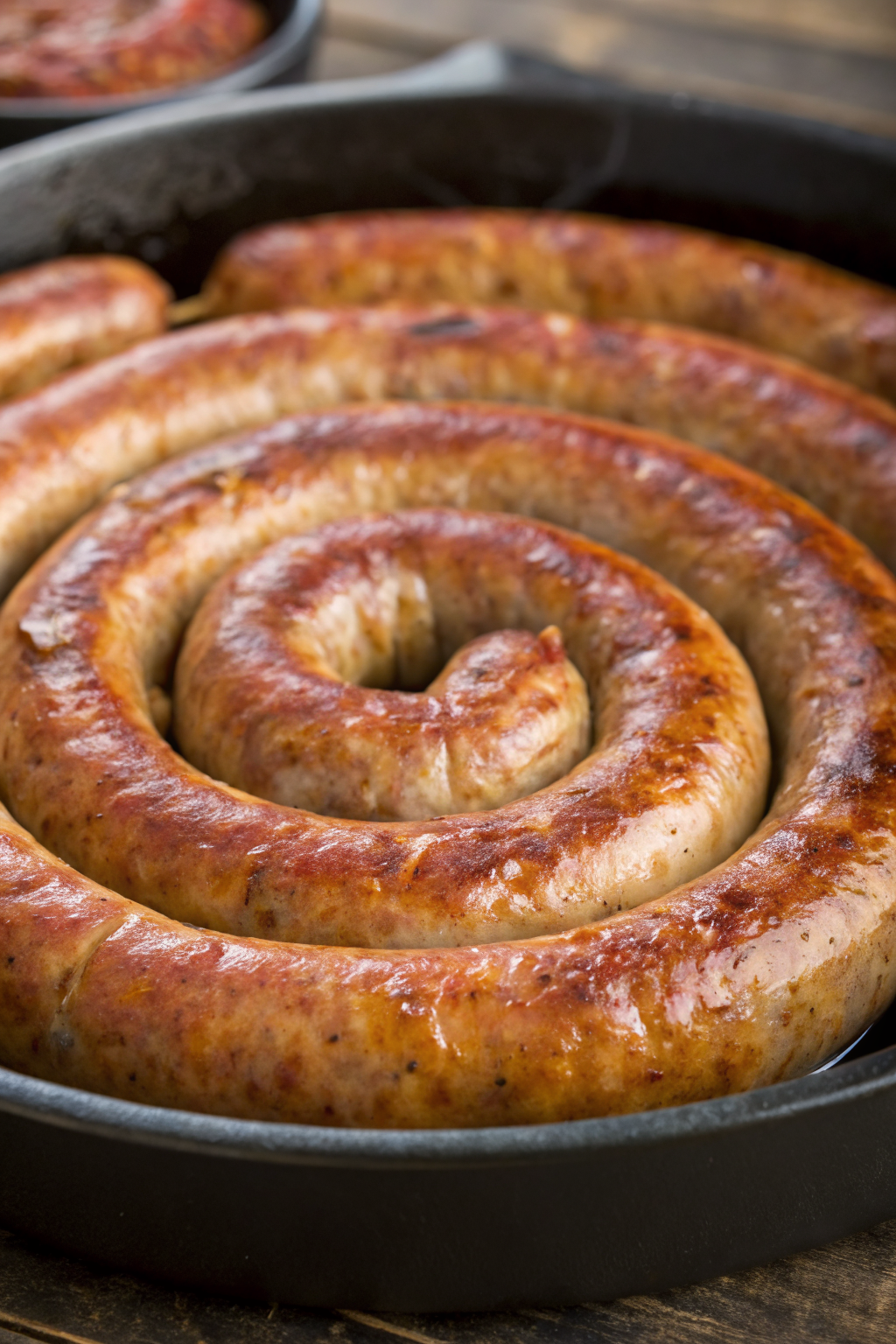
Starting a few inches from one end, pinch the sausage to mark your first link, about 5 to 6 inches long. Twist that section away from you 4 to 5 times. Move down the coil, pinch another section, and twist it toward you so the links stay tight.
Alternate twist directions as you work down the coil. If a casing looks too tight and threatens to burst, prick a tiny hole with a needle to release air. Lay finished links on a tray and chill them for at least 1 hour to firm up.
Cook the sausage
For skillet cooking, place links in a skillet with a splash of water and cover. Simmer over medium heat until the water evaporates and the sausage cooks through, then brown on all sides. Aim for an internal temperature of 160°F for pork sausage.
For oven cooking, place links on a parchment-lined sheet and bake at 375°F for 20 to 25 minutes, turning once, until they reach 160°F. For grilling, cook over medium heat and turn often so the casings brown evenly without burning. Let links rest a few minutes before you slice or serve them.
Recipe Variations
- Breakfast style: Add 1 teaspoon dried sage, ½ teaspoon thyme, and 1 to 2 tablespoons maple syrup or brown sugar.
- Italian style: Add 1 tablespoon crushed fennel seeds, 1 teaspoon oregano, and a pinch of chili flakes.
- Herb and garlic: Add extra fresh garlic, chopped parsley, and a squeeze of lemon juice in the mix.
- Low carb: Skip any sugar and focus on herbs, garlic, and paprika for flavor.
- Gluten free: Use only pure spices and herbs without anti-caking blends; most basic versions already stay gluten free.
- Chicken or turkey: Use dark meat poultry with skin and add 2 tablespoons olive oil to keep it juicy.
- Vegan style idea: Use firm tofu or tempeh crumbles, olive oil, and the same spice blend, then form patties instead of links.
Ways to Serve Homemade Sausage
- Slice over creamy polenta with sautéed peppers and onions.
- Serve with scrambled eggs, hash browns, and fruit for a hearty breakfast.
- Crumble into tomato sauce for pasta or lasagna.
- Add sliced links to sheet pan roasted vegetables and potatoes.
- Use as a pizza topping with peppers, onions, and mozzarella.
- Tuck into toasted rolls with mustard and sauerkraut or grilled onions.
Storage Success
Let cooked sausage cool to room temperature, then chill it within 2 hours in a covered container. Store cooked links in the fridge for up to 4 days, or freeze them for 2 to 3 months in freezer bags with as much air pressed out as possible. For uncooked links, chill them overnight to let the flavors settle, then cook within 2 days or freeze on a tray before bagging. Label everything with the date so future you does not play freezer mystery sausage bingo.
How to Make Homemade Sausage
Ingredients
Instructions
- Place the pork shoulder and pork fat in the freezer for 20–30 minutes until very cold but not frozen; this helps the meat grind cleanly.
- Chill the grinder parts (blade, plate, and auger) in the freezer at the same time for more efficient grinding.
- Rinse the hog casings under cool running water, then soak them in warm water for at least 30 minutes to soften.
- In a large bowl, toss the chilled pork and fat with salt, pepper, fennel seeds, paprika, oregano, garlic, and red pepper flakes if using, until the pieces are evenly coated.
- Set up your meat grinder with a medium grinding plate. Feed the seasoned meat and fat through the grinder into a chilled mixing bowl.
- Pour the cold water and red wine vinegar over the ground meat. Using clean hands, mix thoroughly for 1–2 minutes until the mixture becomes sticky and cohesive.
- Cover and refrigerate the sausage mixture for at least 30 minutes (or up to overnight) to let the flavors meld and keep the mixture cold.
- Heat a small skillet over medium heat. Form a tablespoon of sausage mixture into a patty and cook through, about 3–4 minutes per side.
- Taste the cooked patty and adjust the raw mixture as needed with additional salt, pepper, or spices.
- Fit your sausage stuffer or grinder with a stuffing tube. Slide a length of soaked casing onto the tube, leaving a 6-inch tail at the end.
- Tie a knot at the end of the casing tail, then begin feeding the sausage mixture through the stuffer, supporting the casing as it fills so it stays firm but not overly tight.
- Continue until you reach the end of the casing, leaving another 6-inch tail, and tie it off securely.
- Twist the long coil into 4–6 inch links, alternating twisting direction so the links do not unravel. Use a sterilized pin to prick any air bubbles.
- For fresh sausage, cook links over medium heat on the stovetop or grill until browned and the internal temperature reaches 160°F (71°C), about 15–20 minutes.
- To store, refrigerate uncooked sausage links for up to 2 days or freeze them, well wrapped, for up to 3 months.
Notes
Approximate per serving (1/8 of recipe, about one 4-ounce cooked sausage link): 360 calories; fat 31 g; saturated fat 11 g; carbohydrates 2 g; fiber 0 g; sugars 1 g; protein 18 g; sodium 640 mg. Values are estimates and will vary based on the exact cut of meat, fat content, casing type, and added seasonings.