
Vanilla Cake Recipe tastes like a soft, buttery cloud with a rich vanilla flavor, a tender crumb, and just enough sweetness to keep you going back for another forkful. It uses simple pantry ingredients, stays budget-friendly, and works for birthdays, potlucks, or weeknight cravings in about 1 hour from start to finish. I have baked some version of this cake for more than a decade, and my family still argues over the last slice.
Reasons To Try This Vanilla Cake Recipe
This vanilla cake recipe gives you a moist, fluffy crumb that slices cleanly and never turns dry or dense. You mix everything in basic bowls with no fancy gadgets, so beginners feel confident and experienced bakers still enjoy the result.
You customize it easily with different frostings, fillings, and toppings, so it fits kids’ parties, holidays, or simple afternoon snacks. The batter also works for cupcakes or a small sheet cake, which saves time when you need dessert for a crowd.
“Soft, flavorful, and gone in minutes at our family party, this Vanilla Cake Recipe instantly became our new go-to dessert. ★★★★★”
Ingredients You Need
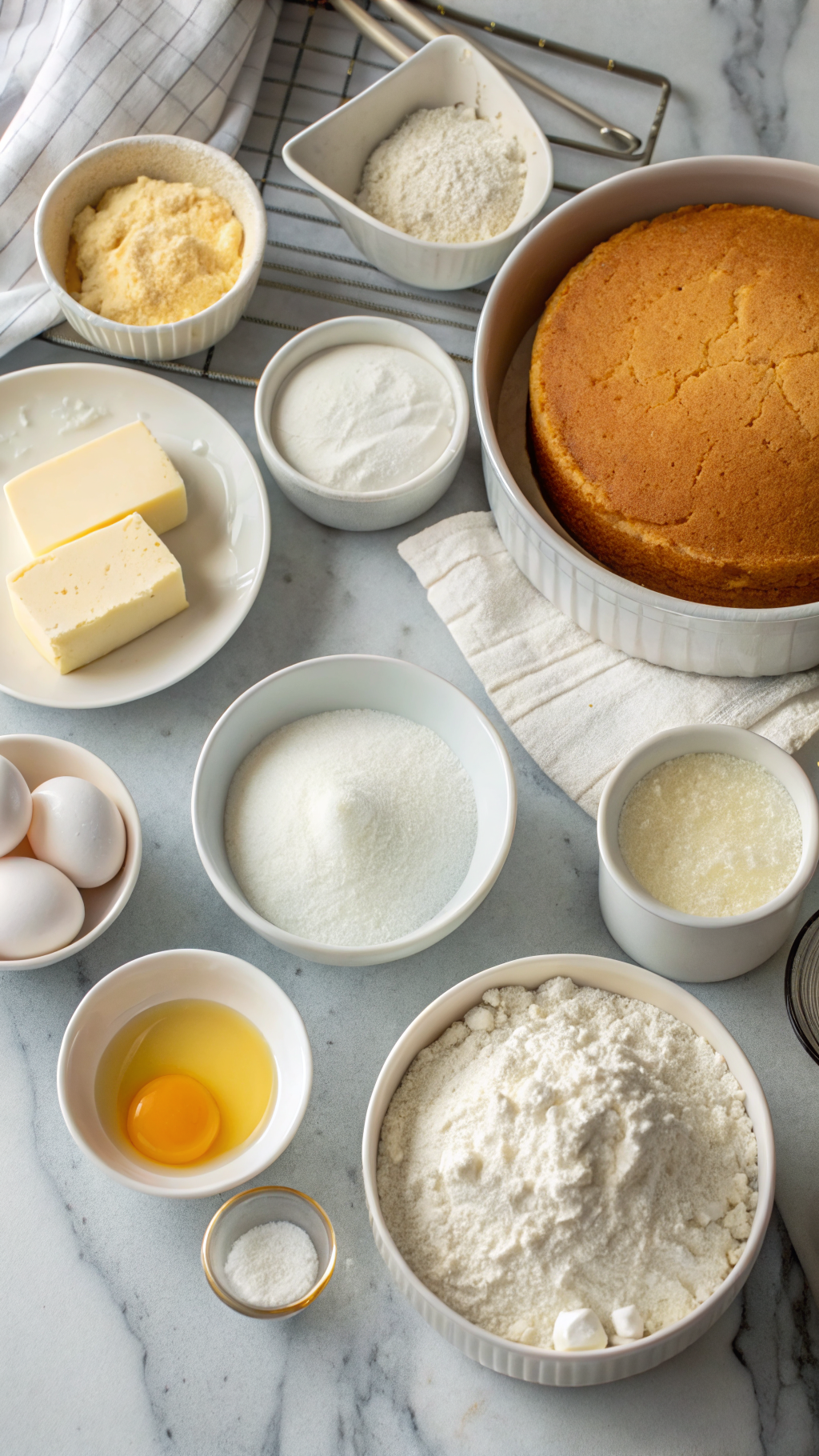
Dry ingredients
- 2 ½ cups (300 g) all-purpose flour, spooned and leveled
- 2 teaspoons baking powder
- ½ teaspoon baking soda
- ½ teaspoon fine sea salt or table salt
Wet ingredients
- 1 cup (2 sticks / 226 g) unsalted butter, softened to room temperature
- 1 ¾ cups (350 g) granulated sugar
- 4 large eggs, at room temperature
- 2 teaspoons pure vanilla extract or vanilla bean paste
- 1 cup (240 ml) whole milk, at room temperature
- ¼ cup (60 ml) sour cream or plain Greek yogurt, at room temperature
Frosting ingredients (simple vanilla buttercream)
- 1 cup (2 sticks / 226 g) unsalted butter, softened
- 3 ½ to 4 cups (420 to 480 g) powdered sugar, sifted for the smoothest texture
- 2 to 3 tablespoons heavy cream or milk
- 1 ½ teaspoons pure vanilla extract
- Pinch of salt, to balance the sweetness
Pantry shortcuts and brand notes
Use any good supermarket all-purpose flour; I often grab King Arthur or Gold Medal for consistent results. Choose real vanilla extract instead of imitation, since vanilla carries the main flavor in this cake. Use store brand sugar, milk, and sour cream without worry, since they perform just as well as premium brands in this recipe.
If you only have salted butter, use it and reduce the added salt to a pinch in both cake and frosting. If you run low on sour cream, replace it with full-fat yogurt or extra milk plus 1 teaspoon of white vinegar. For dairy-free needs, use your favorite neutral plant milk and vegan butter, and keep the same measurements.
Equipment list
- Two 8 inch round cake pans or one 9 by 13 inch pan
- Parchment paper
- Mixing bowls
- Hand mixer or stand mixer with paddle attachment
- Rubber spatula
- Measuring cups and spoons or a kitchen scale
- Cooling rack
- Offset spatula or butter knife for frosting
Tips
- Bring butter, eggs, and dairy to room temperature so the batter mixes smoothly.
- Line pans with parchment and grease the sides so the cake releases cleanly.
- Whip butter and sugar until light and fluffy to build structure and a tender crumb.
- Add eggs one at a time and mix just until combined to avoid a dense cake.
- Alternate dry ingredients with milk and sour cream to keep the batter silky.
- Do not overmix once you add flour; stop as soon as you see no dry streaks.
- Bake on the middle rack and rotate pans halfway through for even browning.
- Test with a toothpick; pull the cake when it comes out with a few moist crumbs.
- Cool layers completely before frosting so the buttercream stays smooth.
- Use a crumb coat of frosting, chill, then finish with a thicker layer for clean sides.
How to Make Vanilla Cake
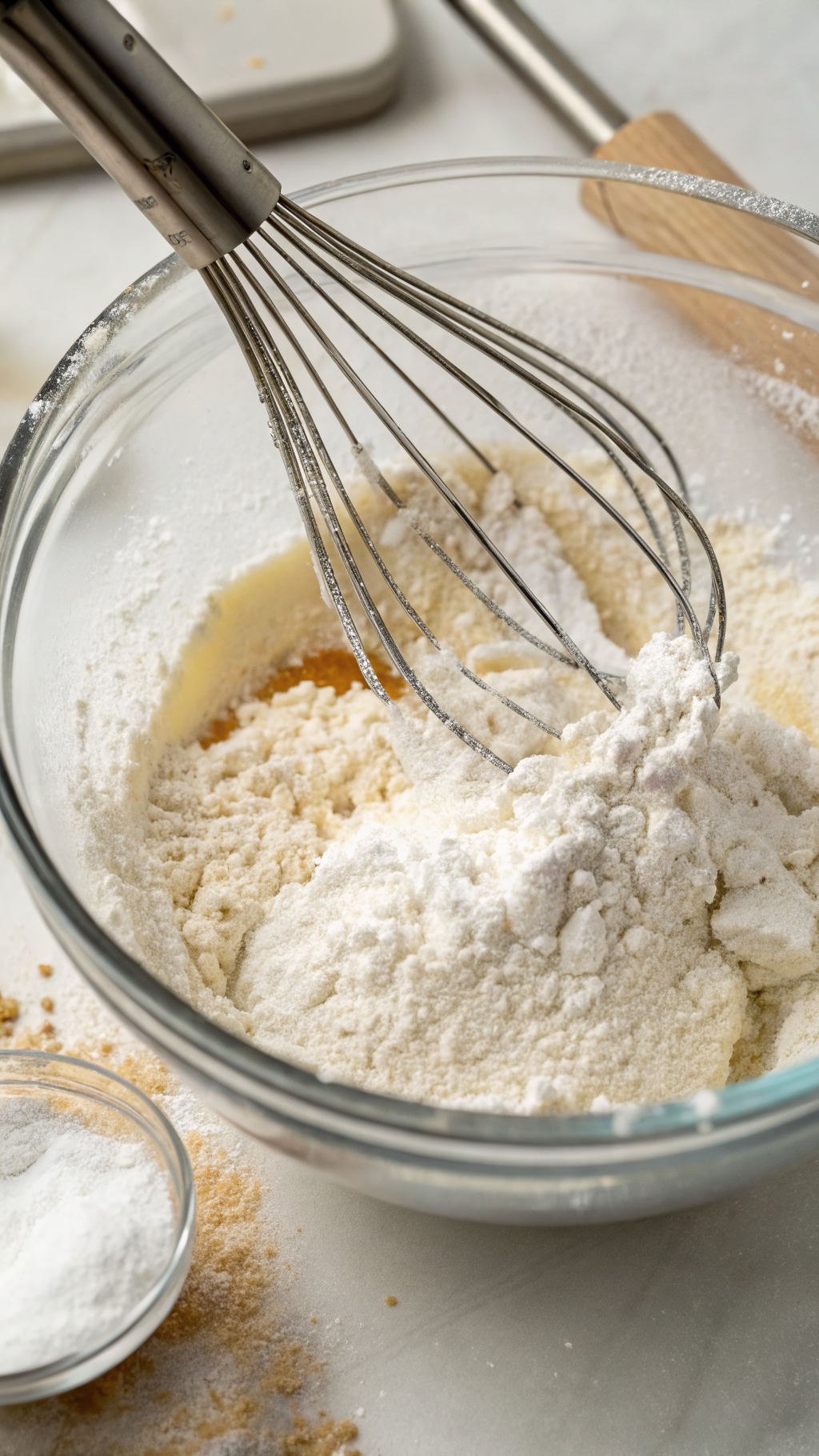
1: Prep the pans and oven
Heat your oven to 350°F (175°C). Grease two 8 inch round pans with butter or nonstick spray, then line the bottoms with parchment circles. Lightly flour the sides and tap out any excess so the cake does not stick.
2: Mix the dry ingredients
In a medium bowl, whisk together flour, baking powder, baking soda, and salt. Break up any flour clumps so the dry mixture looks even and light. Set this bowl aside so you can add it in stages.
3: Cream butter and sugar
In a large mixing bowl, beat the softened butter with a hand mixer or stand mixer on medium speed for about 1 minute until creamy. Add the granulated sugar and beat 3 to 4 minutes until the mixture looks pale and fluffy. Scrape down the sides of the bowl once or twice so everything mixes evenly.
4: Add eggs and vanilla
Add the eggs one at a time, mixing on low to medium speed after each addition until the yolk disappears. Pour in the vanilla extract or vanilla bean paste and mix again until combined. The batter may look slightly thick and glossy at this stage, which works perfectly.
5: Combine wet and dry ingredients
Add one third of the dry ingredients to the butter mixture and mix on low just until combined. Pour in half of the milk and all of the sour cream, then mix again on low. Add another third of the dry ingredients, the remaining milk, then the final third of the dry mixture, mixing gently after each addition until no dry streaks remain.
Use a rubber spatula to fold the batter a few times from the bottom of the bowl. Check for hidden pockets of flour and smooth them out. The batter should look thick but pourable and silky.
6: Fill pans and bake
Divide the batter evenly between the prepared pans and smooth the tops with a spatula. Tap each pan lightly on the counter to release any large air bubbles. Place the pans on the middle rack and bake for 25 to 30 minutes, until a toothpick in the center comes out with a few moist crumbs.
If you use a 9 by 13 inch pan, pour all the batter into the pan and bake for 30 to 35 minutes. Start checking at the earlier time, since every oven runs a bit different. The cake should spring back lightly when you touch the center.
7: Cool the cake layers
Set the pans on a cooling rack and let the cakes cool in the pans for 10 to 15 minutes. Run a knife around the edges, then flip each layer onto the rack and peel off the parchment. Let the cakes cool completely, about 45 minutes, before you frost them.
8: Make the vanilla buttercream
In a clean bowl, beat the softened butter on medium speed for 1 to 2 minutes until creamy and smooth. Add powdered sugar 1 cup at a time, mixing on low after each addition so it does not puff everywhere. Pour in vanilla, a pinch of salt, and 2 tablespoons of cream or milk, then beat on medium high for 2 to 3 minutes until fluffy.
Adjust the consistency by adding more powdered sugar to thicken or a splash of cream to loosen. Taste and add a tiny bit more salt if the frosting tastes too sweet. The buttercream should hold soft peaks and spread easily.
9: Frost and assemble
Place one cooled cake layer on a serving plate or cake stand. Spread a generous layer of frosting over the top, reaching all the way to the edges. Set the second layer on top, bottom side down for a flat surface.
Apply a thin layer of frosting over the top and sides to catch crumbs, then chill the cake for 15 to 20 minutes. Finish with a thicker coat of frosting and smooth it with an offset spatula. Add sprinkles, fresh berries, or simple swirls on top, then slice and serve.
Different Ways to Try It
- Gluten-free: Use a 1 to 1 gluten-free baking flour blend and add an extra tablespoon of milk if the batter looks thick.
- Dairy-free: Use vegan butter, plant milk like oat or almond, and coconut yogurt instead of sour cream.
- Egg-free: Use a commercial egg replacer or ¼ cup unsweetened applesauce per egg and expect a slightly denser crumb.
- Low sugar: Reduce sugar in the cake by ¼ cup and use a lighter frosting layer or a dusting of powdered sugar instead.
- Funfetti: Fold in ½ cup rainbow sprinkles into the batter at the end for a birthday-style vanilla cake.
- Citrus twist: Add 1 tablespoon lemon or orange zest with the sugar for a bright, fresh flavor.
- Chocolate chip: Stir in ¾ cup mini chocolate chips tossed in a spoonful of flour to keep them from sinking.
How to Serve Vanilla Cake
Serve this Vanilla Cake Recipe at room temperature so the crumb feels soft and the vanilla flavor shines. Slice it with a sharp knife and wipe the blade between cuts for neat pieces. Pair each slice with cold milk, hot coffee, or a mug of tea for a simple treat. Add fresh berries or a scoop of vanilla ice cream on the side when you want a little extra flair.
Make-Ahead and Storage Success
Bake the cake layers up to 2 days ahead, wrap them tightly in plastic, and keep them at room temperature until you frost. Store the frosted cake covered at room temperature for 1 to 2 days, or in the fridge for up to 5 days if your kitchen runs warm. Chill the cake to firm it up, then let slices sit at room temperature for 20 to 30 minutes before serving so the texture softens. Freeze unfrosted layers or leftover slices for up to 2 months, wrapped well, and thaw them in the fridge overnight before you enjoy them.
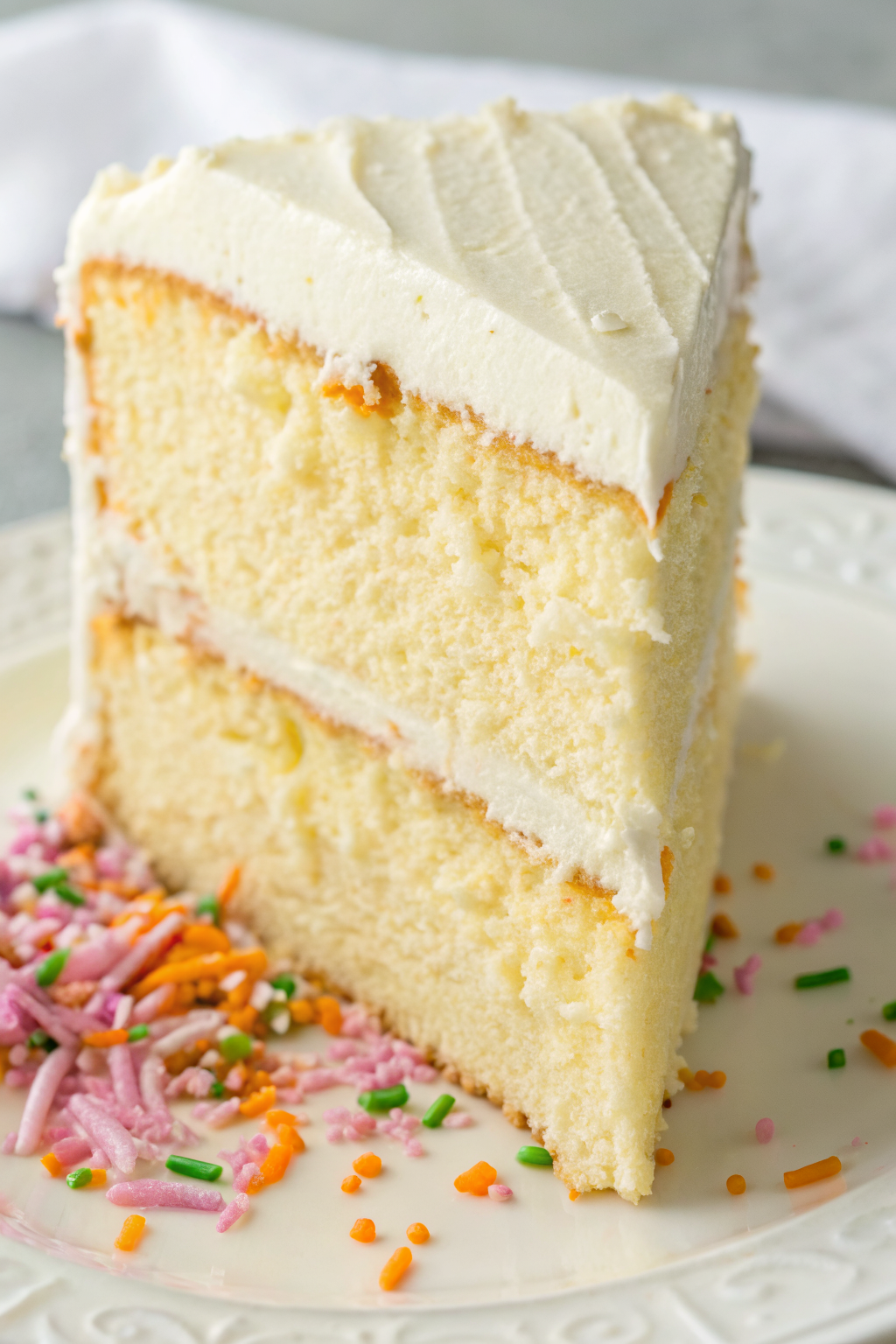
Vanilla Cake Recipe
Ingredients
Instructions
- Preheat the oven to 350°F (175°C). Grease and flour two 8-inch round cake pans or line the bottoms with parchment paper.
- In a medium bowl, whisk together the flour, baking powder, and salt. Set aside.
- In a large mixing bowl, beat the softened butter and granulated sugar together until light and fluffy, about 3–4 minutes.
- Add the eggs one at a time, beating well after each addition, then mix in the vanilla extract.
- Add the dry ingredients to the batter in three additions, alternating with the milk, beginning and ending with the dry ingredients. Mix on low just until combined; do not overmix.
- Divide the batter evenly between the prepared pans and smooth the tops with a spatula.
- Bake for 25–30 minutes, or until a toothpick inserted in the center comes out clean or with a few moist crumbs.
- Allow the cakes to cool in the pans for 10 minutes, then turn them out onto wire racks to cool completely.
- In a large bowl, beat the softened butter for 1–2 minutes until creamy.
- Gradually add the powdered sugar, 1 cup at a time, mixing on low speed until incorporated. Scrape down the sides of the bowl as needed.
- Add the vanilla extract and 2 tablespoons of cream or milk, then beat on medium-high for 2–3 minutes until light and fluffy. Add more cream or milk, a little at a time, to reach your desired consistency. Add a pinch of salt if desired to balance the sweetness.
- Place one cooled cake layer on a serving plate. Spread an even layer of frosting over the top, then place the second layer on top.
- Frost the top and sides of the cake with the remaining buttercream, smoothing or swirling as desired.
- Slice and serve, or refrigerate the cake for 20–30 minutes to help the frosting set before slicing.
Notes
Approximate per 1 slice (1/12 of cake, with frosting): 460 calories; fat 24 g; saturated fat 15 g; carbohydrates 58 g; fiber 0 g; sugars 43 g; protein 5 g; sodium 230 mg. Values will vary based on specific ingredients, brands, and portion size.